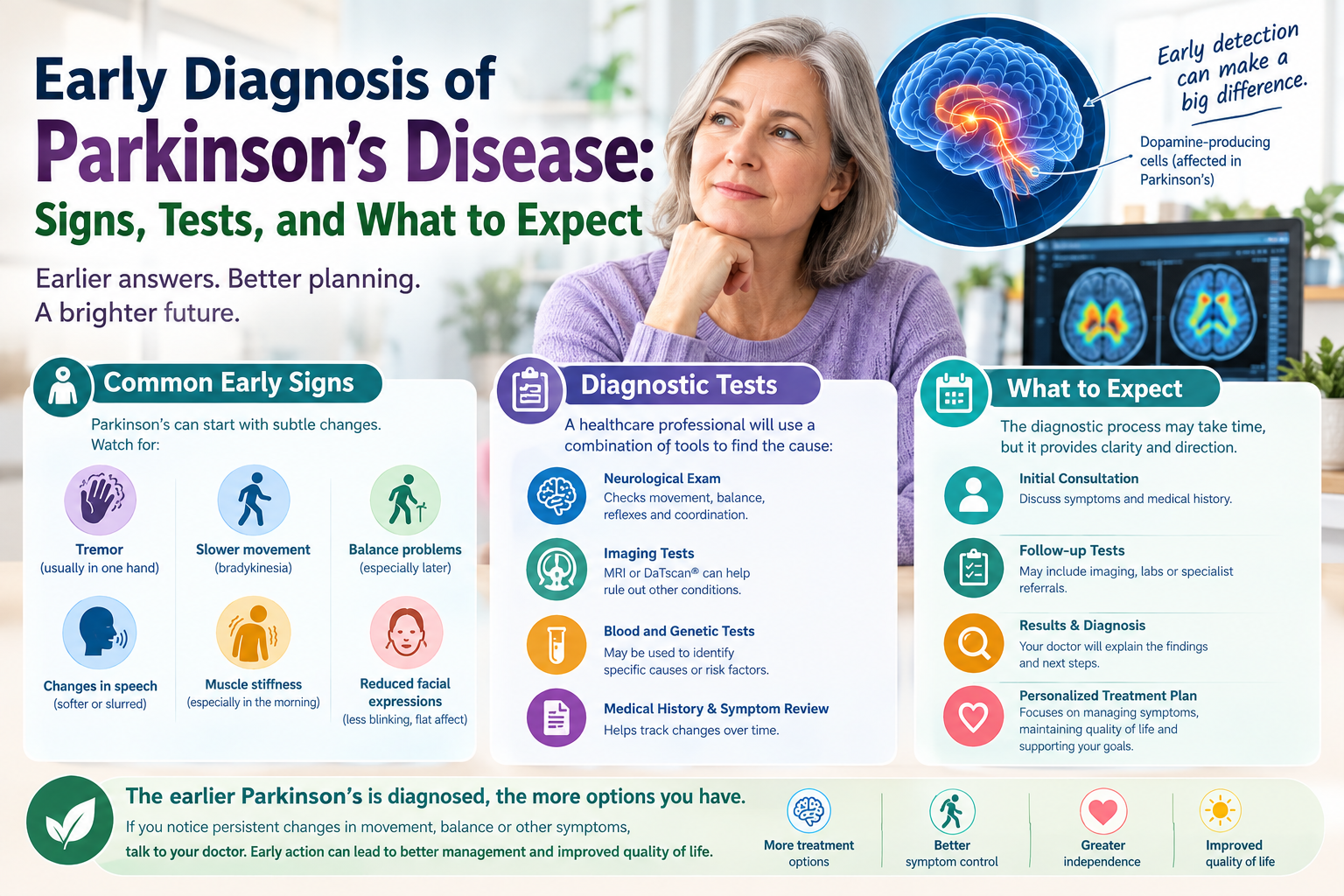
Parkinson’s disease is a progressive neurological disorder that becomes more common with age, but getting older does not mean that a person will develop Parkinson’s. The condition results from a combination of genetic, biological, and environmental factors, and these influences can change throughout life.
Understanding Parkinson’s disease risk factors by age can help people recognize why risk increases later in life, what factors may matter earlier, and which lifestyle choices can support overall brain health.
What Is Parkinson’s Disease?
Click Here To Watch Video to Treat Parkinson’s Disease Naturally!..
Parkinson’s disease affects the nervous system, particularly brain circuits involved in movement. One of the most important changes is the loss or dysfunction of dopamine-producing nerve cells in an area of the brain called the substantia nigra.
Dopamine helps the brain coordinate smooth and controlled movements. As dopamine signaling becomes impaired, symptoms such as tremor, stiffness, slowed movement, and balance problems can develop.
However, Parkinson’s is not only a movement disorder. People may also experience non-motor symptoms such as constipation, sleep problems, loss of smell, fatigue, anxiety, depression, and changes in thinking.
Researchers believe Parkinson’s usually develops through a combination of factors rather than one single cause.
Does Parkinson’s Risk Increase With Age?
Click Here To Watch Video to Treat Parkinson’s Disease Naturally!..
Yes. Age is the strongest established risk factor for Parkinson’s disease. The condition is most commonly diagnosed in older adults, although younger people can also develop it.
The risk does not suddenly appear at a particular birthday. Instead, biological changes that occur over many years may gradually make the brain more vulnerable.
As people age, several processes can become more important, including:
- Changes in brain cells
- Reduced cellular repair mechanisms
- Mitochondrial dysfunction
- Oxidative stress
- Changes in immune and inflammatory responses
- Accumulation of abnormal proteins
- Greater lifetime exposure to environmental factors
These changes do not guarantee Parkinson’s disease. They may simply increase susceptibility in people who already have other risk factors.
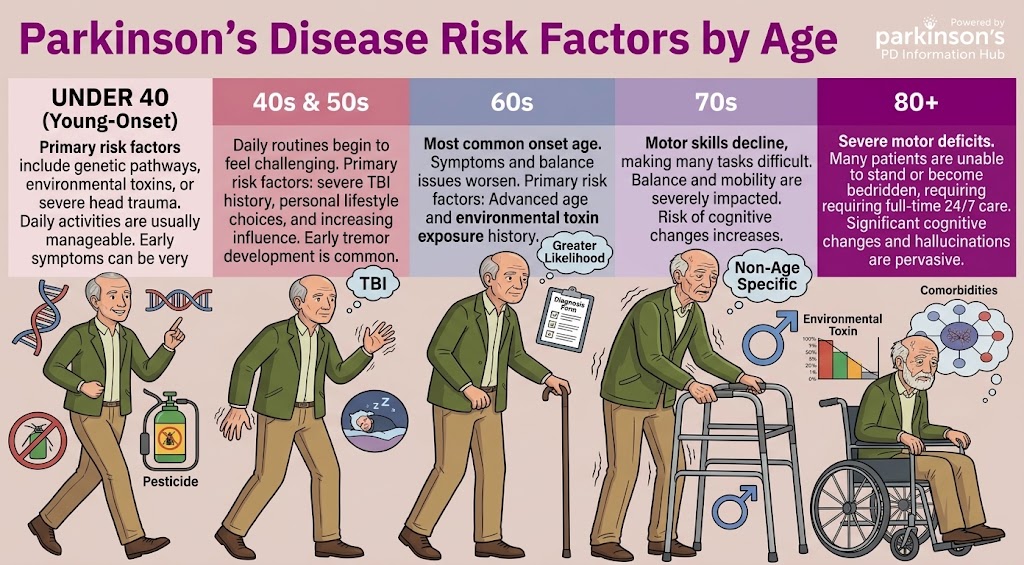
Parkinson’s Disease Risk Factors by Age
Click Here To Watch Video to Treat Parkinson’s Disease Naturally!..
Risk factors can be viewed differently depending on the stage of life. Some factors are particularly relevant to younger-onset Parkinson’s, while aging becomes increasingly important later in life.
Parkinson’s Risk Factors Before Age 40
Parkinson’s disease diagnosed before age 50 is often described as young-onset Parkinson’s disease, although definitions can vary.
Parkinson’s diagnosed at a younger age is relatively uncommon. When it occurs, genetic factors may deserve particular attention, especially when several family members have Parkinson’s or related neurological conditions.
Potential factors include:
1. Genetic Susceptibility
Certain genetic variants are associated with an increased risk of Parkinson’s disease. Examples include changes involving genes such as LRRK2, SNCA, PRKN (parkin), PINK1, and DJ-1.
Having a genetic variant does not necessarily mean someone will develop Parkinson’s. Some variants increase risk without guaranteeing disease.
Genetic testing may be considered in selected people, particularly those with young-onset Parkinson’s or a strong family history.
2. Family History
A close relative with Parkinson’s may increase a person’s risk compared with someone without a family history.
However, most people with Parkinson’s do not have a simple inherited form of the disease. Parkinson’s can occur because of a complex interaction between genes and other factors.
3. Environmental Exposures
Lifetime exposure to certain pesticides, solvents, and other environmental substances has been investigated as a possible Parkinson’s risk factor.
The relationship is complicated because exposure levels, duration, individual susceptibility, and other factors can differ substantially between people.
People working in agriculture, industrial environments, or occupations involving chemicals may want to follow appropriate workplace safety practices.
Parkinson’s Risk Factors From Age 40 to 59
During middle adulthood, both genetic susceptibility and cumulative environmental exposure may become increasingly relevant.
4. Cumulative Environmental Exposure
By middle age, a person may have accumulated decades of exposure to environmental factors.
Researchers have investigated associations between Parkinson’s disease and certain pesticides, solvents, air pollution, and other environmental exposures. However, exposure to one of these factors does not mean Parkinson’s will necessarily develop.
Reducing unnecessary exposure and following occupational safety recommendations are reasonable precautions.
5. Previous Head Injury
Repeated or significant traumatic brain injuries have been studied in relation to later neurological disease, including Parkinson’s.
The relationship is still being investigated, and a single head injury does not mean a person will develop Parkinson’s.
Preventing head injuries remains important for overall brain health. Wearing appropriate protective equipment during higher-risk activities and following safety practices can help.
6. Early Non-Motor Changes
Some symptoms can occur years before the classic movement symptoms of Parkinson’s.
Examples include:
- Reduced sense of smell
- Constipation
- REM sleep behavior disorder
- Depression or anxiety
- Changes in sleep
These symptoms are not specific to Parkinson’s disease and are common for many other reasons. Having one of them does not mean Parkinson’s is developing.
However, researchers study these features because they may sometimes appear before a formal diagnosis.
Parkinson’s Risk Factors After Age 60
After age 60, aging itself becomes increasingly important as a Parkinson’s risk factor.
The nervous system naturally undergoes changes with age. Cells may become less efficient at repairing damage, managing oxidative stress, maintaining energy production, and removing damaged proteins.
These processes may make dopamine-producing neurons more vulnerable in some individuals.
7. Normal Aging and Cellular Stress
Aging is associated with changes in mitochondria, the structures responsible for producing energy inside cells.
Brain cells have substantial energy requirements. Problems with cellular energy production may contribute to neuronal vulnerability.
Oxidative stress is another area of interest. When the balance between harmful reactive molecules and the body’s protective systems becomes disrupted, cellular damage may occur.
Researchers continue to investigate how aging-related cellular changes contribute to Parkinson’s.
8. Abnormal Protein Accumulation
Another important area of Parkinson’s research involves alpha-synuclein, a protein found naturally in nerve cells.
In Parkinson’s disease, abnormal forms of alpha-synuclein can accumulate and form structures known as Lewy bodies.
The exact role of these protein deposits remains an active area of research. Scientists are studying whether abnormal alpha-synuclein contributes directly to nerve-cell damage or is partly a consequence of other disease processes.
9. Neuroinflammation
The immune system in the brain also changes with aging.
Specialized immune cells called microglia help protect and maintain the brain. When activated excessively or for prolonged periods, they may contribute to inflammatory processes.
Researchers are investigating whether chronic neuroinflammation contributes to the development or progression of Parkinson’s disease.
Parkinson’s Risk Factors After Age 70
In the 70s and beyond, increasing age remains an important risk factor, but Parkinson’s should never be considered an inevitable part of aging.
Many people live into their 70s, 80s, or 90s without developing Parkinson’s.
At older ages, doctors may also need to distinguish Parkinson’s disease from other conditions that can cause similar symptoms.
For example, slowed movement, balance problems, stiffness, falls, and changes in walking can have many possible causes.
A neurological evaluation can help determine whether symptoms are consistent with Parkinson’s or another condition.
Other Factors That May Influence Parkinson’s Risk
Click Here To Watch Video to Treat Parkinson’s Disease Naturally!..
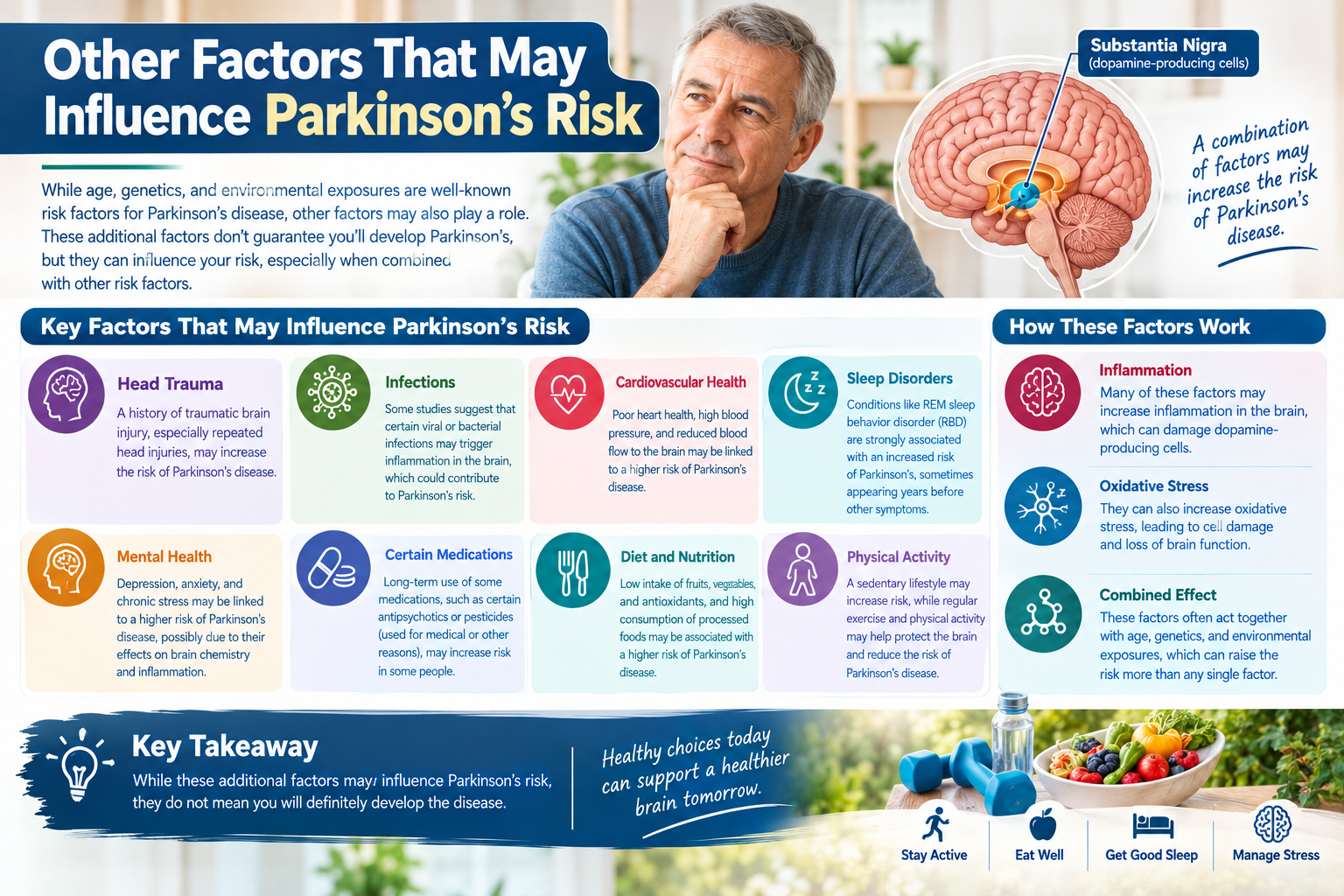
Age is important, but it is only one piece of the picture.
Sex
Parkinson’s disease is more common in men than women, although the reasons for this difference are not fully understood.
Researchers have investigated hormonal, genetic, biological, and environmental explanations.
Genetics
Genetics can influence susceptibility at any age.
A strong family history may be particularly relevant when symptoms begin at a younger age.
Environmental Factors
Certain occupational and environmental exposures have been studied as possible contributors to Parkinson’s risk.
More research is needed to determine exactly how specific exposures interact with genetics and aging.
Physical Activity
Regular physical activity is not a guaranteed way to prevent Parkinson’s disease, but exercise is strongly encouraged for general health and can be particularly valuable for people living with Parkinson’s.
Exercise may support strength, balance, mobility, cardiovascular health, and overall quality of life.
Overall Health
Conditions affecting cardiovascular and metabolic health may influence brain health. Maintaining healthy blood pressure, blood sugar, cholesterol, body weight, sleep, and activity levels can support overall neurological health.
These measures should not be viewed as a guaranteed method of preventing Parkinson’s.
Can You Prevent Parkinson’s Disease as You Get Older?
Click Here To Watch Video to Treat Parkinson’s Disease Naturally!..
There is currently no guaranteed way to prevent Parkinson’s disease.
Some risk factors, particularly age and inherited genetic susceptibility, cannot be changed.
However, people can take steps to support long-term brain and physical health.
Helpful habits include:
- Exercising regularly
- Eating a balanced, nutrient-rich diet
- Getting adequate sleep
- Maintaining social and mental activity
- Managing cardiovascular risk factors
- Avoiding unnecessary exposure to harmful chemicals
- Following workplace safety procedures
- Preventing head injuries
- Limiting unhealthy lifestyle habits
These habits promote general health and may support healthy aging, but they should not be presented as a guaranteed Parkinson’s prevention strategy.
When Should Older Adults Talk to a Doctor?
Developing one Parkinson’s-like symptom does not automatically mean that you have Parkinson’s disease.
However, it is worth discussing persistent or progressive symptoms with a healthcare professional.
Potential signs that deserve evaluation include:
- Tremor that occurs when a limb is relaxed
- Increasingly slow movements
- Muscle stiffness
- Smaller handwriting
- Reduced arm swing while walking
- Shuffling steps
- Difficulty turning or getting out of a chair
- Repeated freezing while walking
- Increasing balance problems
- Changes in speech or facial expression
- New or worsening movement difficulties
Early evaluation can help identify the cause of symptoms and determine whether further neurological assessment is needed.
Parkinson’s Disease Risk Factors: What Changes With Age?
Click Here To Watch Video to Treat Parkinson’s Disease Naturally!..
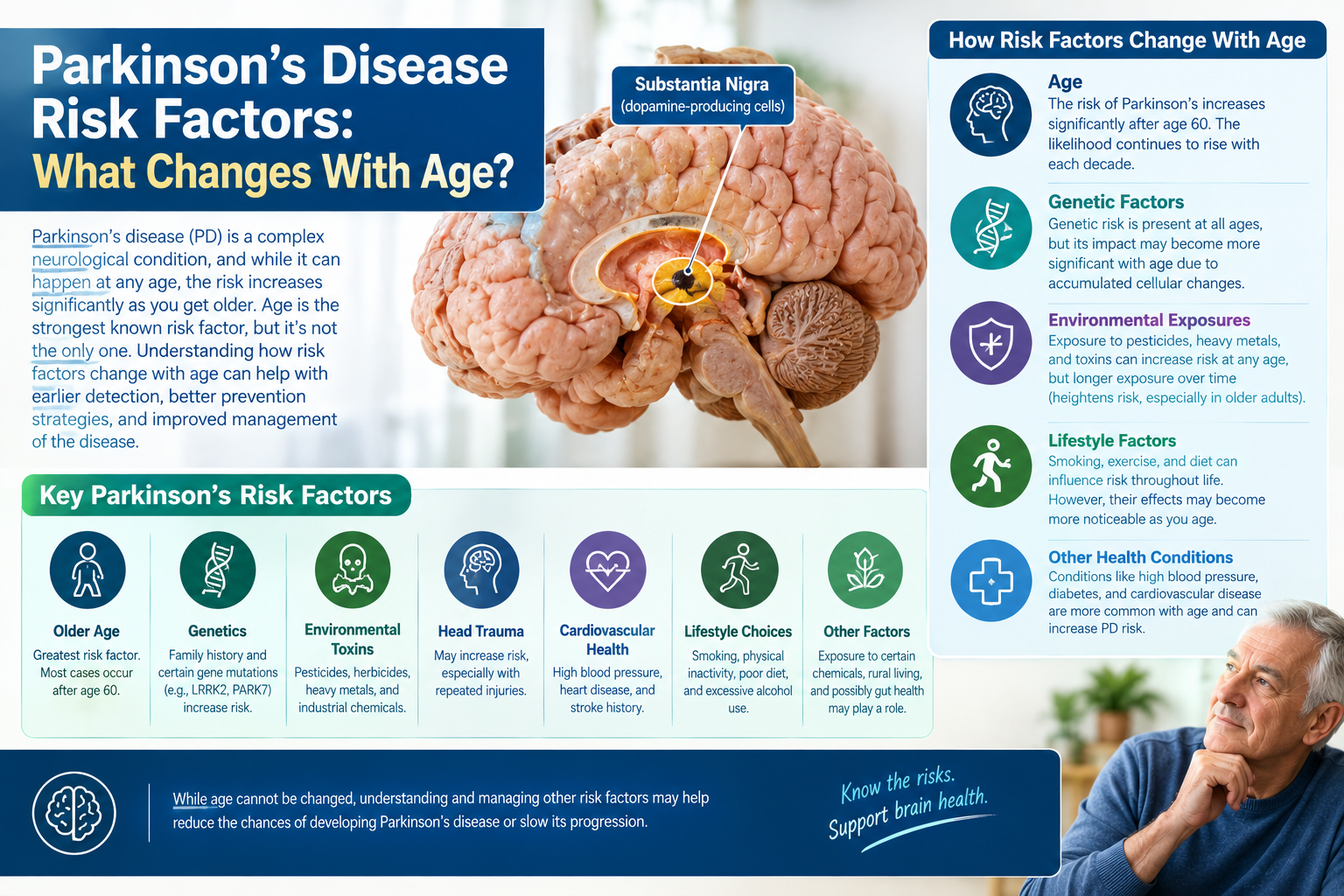
The biggest difference across the lifespan is the increasing importance of biological aging.
Before age 40: genetic susceptibility and unusual family patterns may be particularly important when Parkinson’s occurs.
Age 40–59: genetic factors, family history, and cumulative environmental exposures may become increasingly relevant.
Age 60 and older: aging becomes the strongest established risk factor, alongside genetic susceptibility and possible lifetime environmental influences.
Age 70 and beyond: Parkinson’s becomes more common, but normal aging and other neurological conditions must still be distinguished from Parkinson’s disease.
This age-based framework can help explain risk without suggesting that age alone determines who develops the condition.
Frequently Asked Questions
Is Parkinson’s disease only a disease of older people?
No. Parkinson’s is more common with increasing age, but younger people can also develop it. Young-onset Parkinson’s may have different genetic and clinical considerations.
What is the biggest risk factor for Parkinson’s disease?
Age is the strongest established risk factor. However, Parkinson’s usually involves multiple interacting factors rather than age alone.
Does having a parent with Parkinson’s mean I will develop it?
No. Family history can increase risk, but it does not guarantee that someone will develop Parkinson’s.
Can lifestyle changes prevent Parkinson’s?
There is no proven lifestyle strategy that guarantees prevention. Regular exercise, healthy nutrition, good sleep, and management of general health can support healthy aging and overall brain health.
Does a head injury cause Parkinson’s?
A history of significant or repeated head injury has been studied as a possible risk factor, but having a head injury does not mean Parkinson’s will necessarily develop.
Can Parkinson’s symptoms start before age 60?
Yes. Parkinson’s can occur in younger adults, although it is less common than in older age groups.
Conclusion
Understanding Parkinson’s disease risk factors by age shows that risk is influenced by a combination of aging, genetics, environmental exposures, and biological changes.
Age is the strongest established risk factor, particularly after 60, but Parkinson’s is not an inevitable consequence of getting older. Younger-onset cases may place greater emphasis on genetic susceptibility and family history, while cumulative environmental and biological factors become increasingly relevant over time.
Although there is no guaranteed way to prevent Parkinson’s disease, maintaining an active lifestyle, protecting brain health, managing general health conditions, and avoiding unnecessary environmental exposures can support healthier aging.
If you develop persistent tremor, stiffness, slowed movement, balance problems, or other concerning symptoms, speak with a healthcare professional. Early evaluation can help determine the cause and identify appropriate treatment or monitoring.