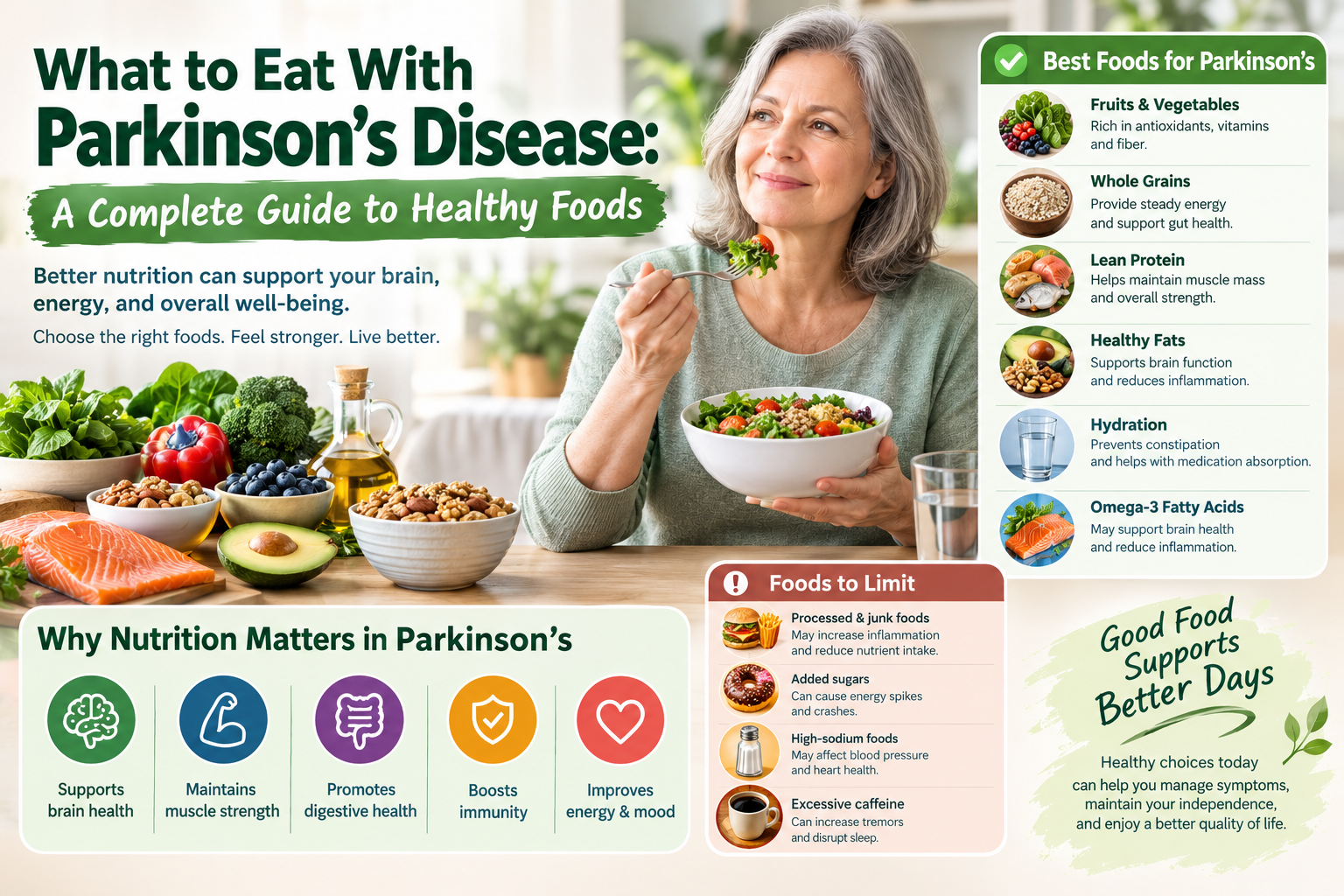
Knowing what to eat with Parkinson’s disease can make everyday life easier and support overall health. There is no specific diet that cures Parkinson’s disease or stops its progression, but a balanced eating pattern can help maintain strength, energy, digestive health, bone health, and quality of life.
Food can also affect how some Parkinson’s medications work. In particular, protein may interfere with the absorption or effectiveness of levodopa in some people. This does not mean that people with Parkinson’s should avoid protein. Instead, the timing and distribution of protein may sometimes need to be discussed with a healthcare professional.
This complete guide explains the best foods for Parkinson’s disease, foods to limit, strategies for constipation and swallowing difficulties, and practical ways to build a healthy Parkinson’s diet.
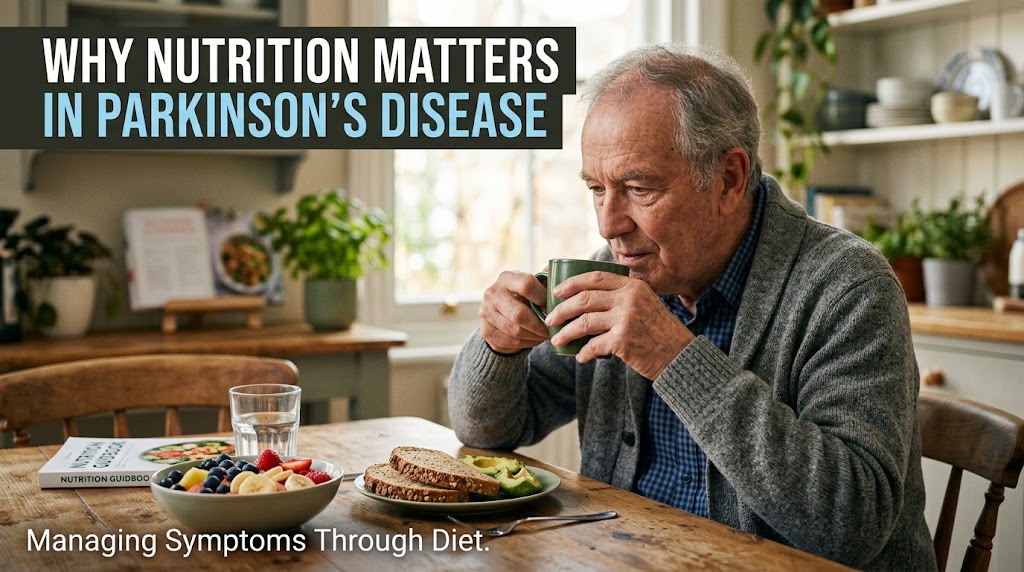
Why Nutrition Matters in Parkinson’s Disease
Click Here To Watch Video to Treat Parkinson’s Disease Naturally!..
Parkinson’s disease can affect nutrition in several ways.
Some people experience reduced appetite, difficulty preparing meals, constipation, swallowing problems, nausea, changes in smell or taste, fatigue, or unintended weight loss. Others may gain weight because of reduced activity or medication-related changes.
A nutritious diet can help provide the calories, protein, vitamins, minerals, fiber, and fluids the body needs.
Good nutrition may support:
- Healthy body weight
- Muscle strength
- Bone health
- Regular bowel movements
- Energy levels
- Hydration
- Cardiovascular health
- Overall physical function
Nutrition should be individualized because Parkinson’s symptoms and medication schedules vary from person to person.
Best Foods to Eat With Parkinson’s Disease

Click Here To Watch Video to Treat Parkinson’s Disease Naturally!..
There is no single “Parkinson’s food.” Instead, focus on a varied, nutrient-rich diet.
1. Vegetables
Vegetables provide fiber, vitamins, minerals, and plant compounds that support overall health.
Try including a variety of:
- Leafy greens
- Broccoli
- Cauliflower
- Carrots
- Bell peppers
- Tomatoes
- Green beans
- Squash
- Sweet potatoes
- Cabbage
Different vegetables provide different nutrients, so variety is more useful than relying on one “superfood.”
For convenience, keep washed or frozen vegetables available for quick meals.
2. Fruits
Fruit can provide fiber, vitamins, minerals, and natural carbohydrates.
Good options include:
- Apples
- Pears
- Berries
- Oranges
- Bananas
- Peaches
- Melons
- Kiwi
Whole fruit is generally preferable to fruit juice because whole fruit contains more fiber and tends to be more filling.
If constipation is a problem, fiber-rich fruits such as pears, berries, apples, and kiwi can be useful additions to a balanced diet.
3. Whole Grains
Whole grains can help increase fiber intake and support digestive health.
Examples include:
- Oatmeal
- Brown rice
- Whole-grain bread
- Whole-wheat pasta
- Barley
- Quinoa
- Bulgur
Increasing fiber gradually is usually more comfortable than suddenly eating very large amounts.
Remember to drink enough fluid when increasing fiber unless your healthcare professional has advised you to restrict fluids.
4. Healthy Protein Sources
Protein is essential for maintaining muscles, especially because Parkinson’s disease can contribute to reduced physical activity and loss of strength.
Healthy protein sources include:
- Fish
- Eggs
- Chicken
- Beans
- Lentils
- Chickpeas
- Yogurt
- Milk
- Tofu
- Nuts and seeds
However, protein timing can be important for some people taking levodopa.
Protein and Levodopa
Levodopa is an important Parkinson’s medication. Because levodopa and dietary amino acids use related transport systems in the digestive tract and across the blood-brain barrier, a high-protein meal may interfere with medication absorption or effectiveness in some people.
This does not mean protein should be eliminated.
Instead, your doctor or dietitian may recommend adjusting the timing or distribution of protein throughout the day if you experience medication-related fluctuations.
Never make major dietary changes or reduce protein intake without professional guidance.
5. Omega-3-Rich Foods
Fatty fish such as salmon, sardines, trout, and mackerel provide omega-3 fatty acids.
Omega-3 fats are important for general cardiovascular and brain health.
Plant sources include:
- Walnuts
- Chia seeds
- Flaxseeds
- Hemp seeds
Eating fish as part of a balanced diet can be a practical way to obtain omega-3 fats.
6. Beans and Legumes
Beans, lentils, and chickpeas are excellent sources of fiber and plant-based protein.
They can be particularly useful for people dealing with constipation.
Examples include:
- Lentil soup
- Chickpea salad
- Bean curry
- Hummus
- Black beans
- Kidney beans
Introduce high-fiber foods gradually if your current diet is low in fiber.
7. Nuts and Seeds
Nuts and seeds provide healthy fats, protein, fiber, and several micronutrients.
Options include:
- Almonds
- Walnuts
- Pumpkin seeds
- Sunflower seeds
- Chia seeds
- Flaxseeds
Because nuts are calorie-dense, reasonable portions can help prevent excessive calorie intake while still providing valuable nutrients.
8. Calcium- and Vitamin-D-Rich Foods
Bone health deserves special attention in Parkinson’s disease because mobility limitations and falls can increase the risk of fractures.
Calcium-rich foods include:
- Milk
- Yogurt
- Cheese
- Calcium-fortified plant beverages
- Tofu made with calcium
- Some leafy green vegetables
Vitamin D is important for bone health and muscle function.
Depending on individual circumstances, a healthcare professional may recommend checking vitamin D levels or discussing supplementation.
Hydration: An Important Part of a Parkinson’s Diet

Click Here To Watch Video to Treat Parkinson’s Disease Naturally!..
Drinking enough fluid is especially important when constipation or low blood pressure is an issue.
Water is usually the best everyday choice.
Other options can include:
- Milk
- Unsweetened beverages
- Soups
- Herbal teas
- Water-rich fruits and vegetables
Some people with Parkinson’s experience orthostatic hypotension, meaning their blood pressure drops when they stand up. Fluid intake can sometimes help, but people with certain heart or kidney conditions may have fluid restrictions.
Always follow your healthcare professional’s recommendations.

Click Here To Watch Video to Treat Parkinson’s Disease Naturally!..
Constipation is common in Parkinson’s disease and can sometimes occur before movement symptoms.
Dietary strategies may include increasing:
- Fiber-rich fruits
- Vegetables
- Whole grains
- Beans and lentils
- Nuts and seeds
- Fluids
Regular physical activity can also support bowel function.
A sudden increase in fiber without adequate fluid may make constipation or bloating worse, so dietary changes should be gradual.
If constipation is persistent, severe, or accompanied by significant abdominal pain, vomiting, blood in the stool, or an inability to pass stool or gas, seek medical advice.
What to Eat When Swallowing Is Difficult

Click Here To Watch Video to Treat Parkinson’s Disease Naturally!..
Some people with Parkinson’s develop dysphagia, or difficulty swallowing.
If swallowing becomes difficult, food texture and consistency may need to be modified.
Depending on the individual’s swallowing assessment, safer foods may include appropriately prepared:
- Soft vegetables
- Mashed foods
- Smooth soups
- Soft eggs
- Yogurt
- Moist protein dishes
However, there is no universal “dysphagia diet.” A speech-language pathologist or swallowing specialist should assess swallowing problems and recommend the safest food and liquid consistencies.
Signs that may indicate swallowing difficulties include coughing while eating, choking, a wet or gurgly voice after swallowing, unexplained weight loss, or repeated respiratory infections.
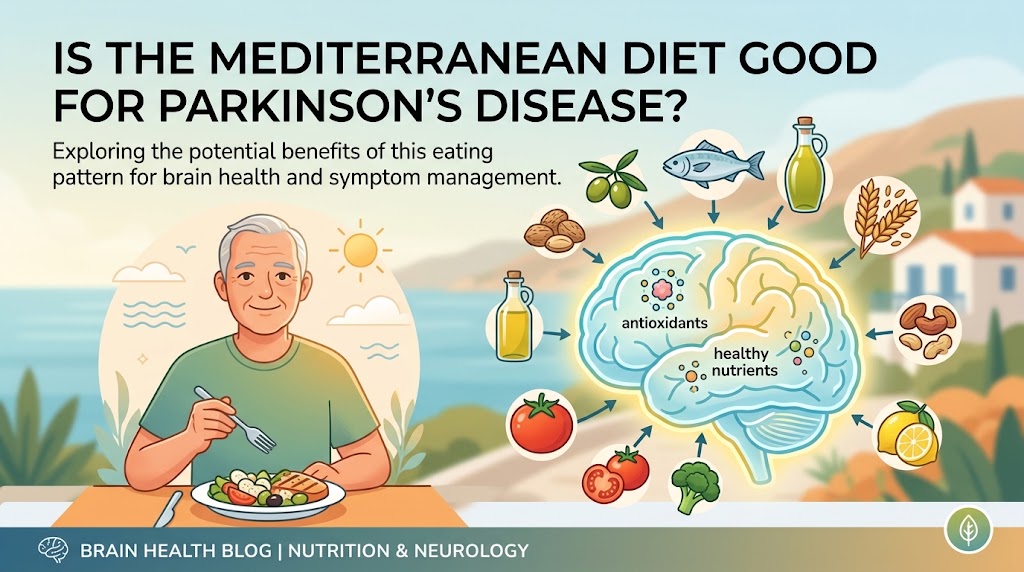
Is the Mediterranean Diet Good for Parkinson’s Disease?
Click Here To Watch Video to Treat Parkinson’s Disease Naturally!..
A Mediterranean-style eating pattern is often a useful model for healthy eating.
It emphasizes:
- Vegetables
- Fruits
- Whole grains
- Beans
- Nuts
- Seeds
- Fish
- Olive oil
- Moderate amounts of dairy and poultry
It generally limits highly processed foods, excessive added sugars, and large amounts of saturated fat.
Research has investigated Mediterranean-style and other healthy dietary patterns in Parkinson’s disease. While diet may support general health and potentially influence some symptoms or disease-related processes, it should not be described as a proven cure or treatment that stops Parkinson’s progression.
Foods and Drinks to Limit
A healthy Parkinson’s diet does not require completely eliminating specific foods. However, some choices are best consumed less frequently.
Highly Processed Foods
Limit foods that are very high in added sugars, sodium, or unhealthy fats, such as:
- Processed snacks
- Sugary cereals
- Highly processed meats
- Fast foods
- Sweetened beverages
- Packaged desserts
Excessive Alcohol
Alcohol can worsen balance, sleep, dehydration, and judgment in some people. It may also interact with medications.
Discuss alcohol use with your healthcare professional, particularly if you take multiple medications or have balance problems.
Excessive Caffeine
Coffee and tea are not automatically unhealthy for people with Parkinson’s. However, excessive caffeine can contribute to anxiety, sleep problems, palpitations, or dehydration concerns in some individuals.
Pay attention to how caffeine affects you.
Foods and Parkinson’s Medication Timing
Food can interact with some medications.
For people taking levodopa, the timing of protein-rich meals can sometimes influence medication absorption.
Some patients may benefit from taking levodopa away from meals, while others may need a different strategy because taking it on an empty stomach can cause nausea.
There is no universal schedule that works for everyone.
Your prescribing clinician or pharmacist can help determine the best medication and meal timing based on your symptoms and treatment plan.
Do not change medication timing or dosage without professional guidance.
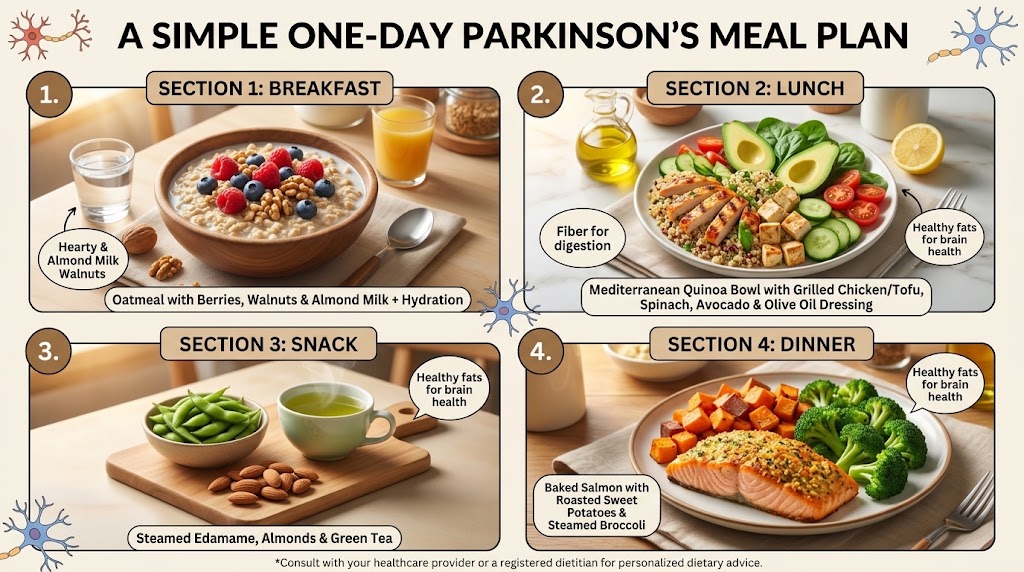
A Simple One-Day Parkinson’s Meal Plan
Click Here To Watch Video to Treat Parkinson’s Disease Naturally!..
A balanced day might look like this:
Breakfast:
Oatmeal topped with berries, ground flaxseed, and a suitable dairy or fortified alternative.
Lunch:
A vegetable and chickpea salad with whole-grain bread and olive oil-based dressing.
Snack:
Fruit with a small portion of unsalted nuts.
Dinner:
Grilled fish or another suitable protein source with roasted vegetables and brown rice or another whole grain.
Fluids:
Water throughout the day, adjusted according to individual medical recommendations.
This is only an example. People taking levodopa may need individualized meal and protein timing.
Should People With Parkinson’s Take Supplements?
Not necessarily.
A nutritious diet should generally be the foundation of nutrition. Supplements may be appropriate when a person has a documented deficiency or a healthcare professional recommends one.
Common nutrients that may be evaluated include vitamin D, vitamin B12, calcium, iron, and others depending on the individual’s diet and health.
“Natural” does not automatically mean safe. Some supplements can interact with Parkinson’s medications or other prescription drugs.
Always tell your healthcare professional about vitamins, herbs, and supplements you take.
Tips for Making Eating Easier With Parkinson’s

Click Here To Watch Video to Treat Parkinson’s Disease Naturally!..
Motor symptoms can make preparing and eating meals difficult.
Helpful strategies may include:
- Prepare meals in advance.
- Use lightweight utensils when needed.
- Choose easy-to-open containers.
- Keep healthy snacks accessible.
- Use adaptive utensils if tremor makes eating difficult.
- Sit upright while eating.
- Take adequate time to chew and swallow.
- Ask for occupational therapy if daily eating tasks become difficult.
- Ask for a swallowing assessment if choking or coughing occurs.
If appetite is poor or weight is falling unintentionally, discuss the problem with a healthcare professional or registered dietitian.
Frequently Asked Questions
What is the best food for Parkinson’s disease?
There is no single best food. A varied diet containing vegetables, fruits, whole grains, healthy fats, adequate protein, and fiber-rich foods is a good foundation.
Should people with Parkinson’s avoid protein?
No. Protein is important for muscle health and overall nutrition. However, protein can interfere with levodopa absorption in some people, so meal and medication timing may need individual adjustment.
Are bananas good for Parkinson’s?
Bananas can be part of a healthy Parkinson’s diet. They provide carbohydrates, fiber, and nutrients such as potassium.
Is coffee safe for people with Parkinson’s?
Coffee can be consumed by many people, but individual tolerance varies. Excessive caffeine may worsen sleep problems, anxiety, or other symptoms.
What foods help Parkinson’s constipation?
Fiber-rich fruits, vegetables, whole grains, beans, nuts, and seeds can help support regular bowel movements. Adequate fluid intake and physical activity are also important.
Can diet cure Parkinson’s disease?
No. There is currently no diet proven to cure Parkinson’s disease or reliably stop its progression. A healthy diet can nevertheless support overall health and help manage some nutrition-related problems.
Conclusion
Knowing what to eat with Parkinson’s disease can help support strength, digestion, hydration, bone health, and overall well-being. A varied diet rich in vegetables, fruits, whole grains, legumes, healthy fats, and appropriate protein is generally a strong foundation.
People taking levodopa should pay particular attention to how meals—especially protein-rich foods—affect medication timing and symptom control. However, protein should not be eliminated without professional guidance.
For constipation, increasing fiber, fluids, and physical activity may help. For swallowing difficulties, professional assessment is essential because food and liquid textures may need to be modified.
Most importantly, nutrition plans should be personalized. A neurologist, physician, pharmacist, registered dietitian, or speech-language pathologist can help adapt eating strategies to medications, symptoms, weight, swallowing ability, and other health needs.
A healthy diet cannot replace Parkinson’s treatment, but it can be an important part of comprehensive care and healthy living with Parkinson’s disease.