
Parkinson’s tremor is one of the symptoms most commonly associated with Parkinson’s disease. It can affect the hands, fingers, jaw, chin, legs, or other parts of the body and may make everyday activities such as writing, eating, dressing, or using a phone more difficult.
For many people, Parkinson’s tremor is most noticeable when the affected body part is relaxed and may decrease during purposeful movement. However, tremor patterns vary from person to person. Some people have mild tremor, while others experience tremor that significantly interferes with daily activities.
Fortunately, several treatment options can help reduce Parkinson’s tremor. These may include Parkinson’s medications, exercise and physical therapy, occupational therapy, lifestyle strategies, and advanced treatments such as deep brain stimulation or focused ultrasound for appropriately selected patients.
This guide explains why Parkinson’s tremor happens, what can make it worse, and the treatments and strategies that may help reduce it.
What Is Parkinson’s Tremor?
Click Here To Watch Video to Treat Parkinson’s Disease Naturally!..
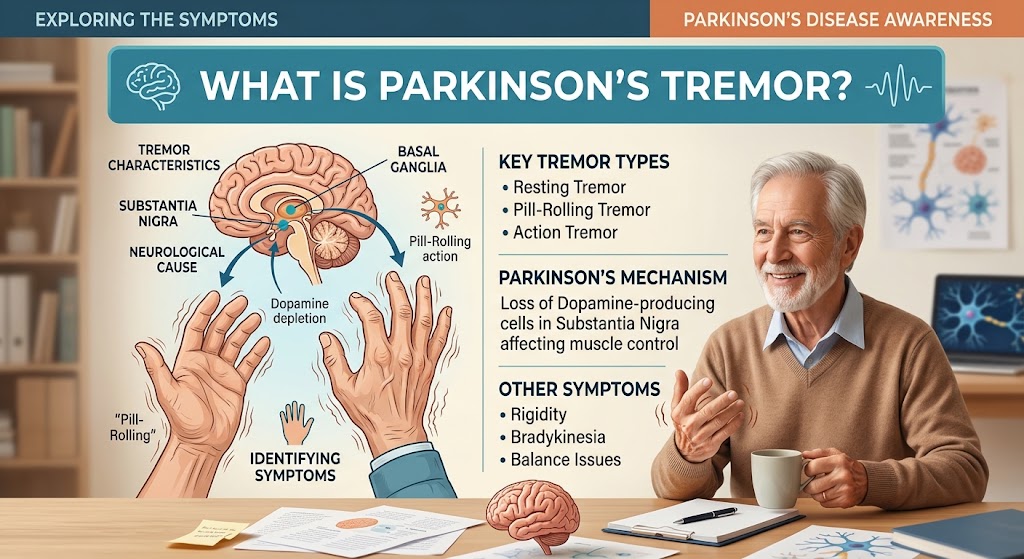
A Parkinson’s tremor is an involuntary, rhythmic shaking movement associated with Parkinson’s disease.
The classic Parkinson’s tremor is often called a resting tremor because it tends to be more noticeable when the affected body part is relaxed.
For example, a person may notice their hand shaking while sitting quietly. The tremor may become less noticeable when they intentionally use the hand.
Parkinson’s tremor commonly begins on one side of the body and may later affect both sides, although this pattern is not identical in everyone.
Tremor can affect:
- Hands and fingers
- Arms
- Legs
- Jaw
- Chin
- Lips or tongue
Not every person with Parkinson’s develops significant tremor. Some people have prominent tremor, while others primarily experience stiffness, slowness, walking problems, or other symptoms.
Why Does Parkinson’s Tremor Happen?

Click Here To Watch Video to Treat Parkinson’s Disease Naturally!..
Parkinson’s disease involves changes in brain circuits that regulate movement.
One important change is the gradual loss of dopamine-producing nerve cells in a region of the brain called the substantia nigra.
Dopamine is a chemical messenger that helps regulate movement. As dopamine-producing neurons are lost, communication between different movement-related brain structures becomes abnormal.
These changes can contribute to tremor, rigidity, bradykinesia, and other motor symptoms.
The exact mechanism responsible for Parkinson’s tremor is complex and involves abnormal activity within interconnected brain networks.
What Can Make Parkinson’s Tremor Worse?
Click Here To Watch Video to Treat Parkinson’s Disease Naturally!..
Tremor can fluctuate during the day.
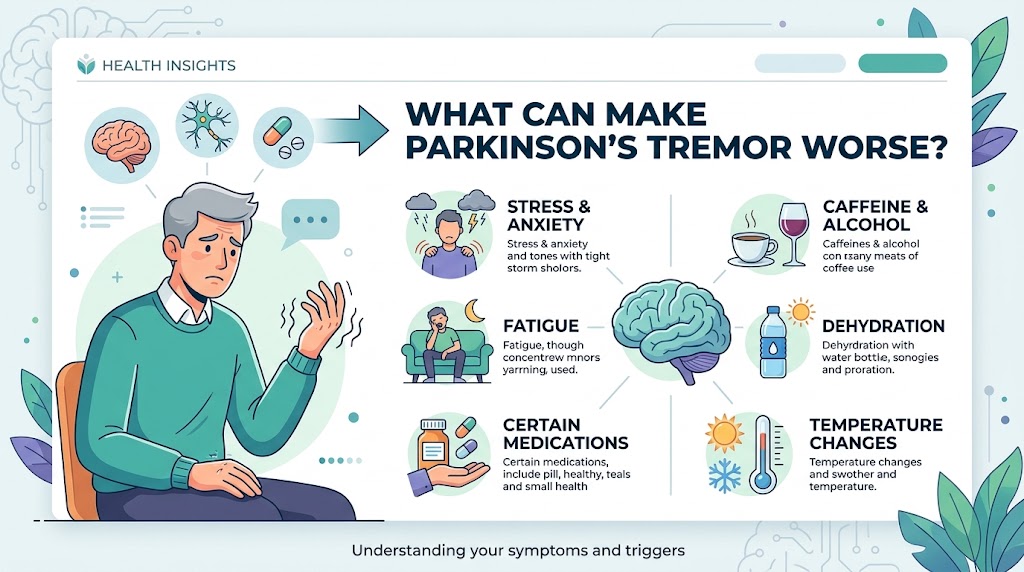
Several factors may make shaking temporarily more noticeable, including:
- Stress
- Anxiety
- Fatigue
- Poor sleep
- Medication wearing off
- Physical or emotional exhaustion
- Caffeine in some individuals
- Certain medications or medical conditions
This does not necessarily mean that the underlying Parkinson’s disease is suddenly getting worse.
Keeping track of when tremor occurs can help identify possible triggers and patterns.
1. Parkinson’s Medications
Medication is often the first-line approach for managing troublesome Parkinson’s motor symptoms.
Levodopa is one of the most effective medications for Parkinson’s disease and can significantly improve tremor in many patients.
Levodopa is converted into dopamine in the brain, helping compensate for the reduction in dopamine signaling caused by Parkinson’s disease.
Other Parkinson’s medications may also be used depending on symptoms and individual circumstances.
The response to medication varies considerably. Some people experience substantial tremor improvement, while others have tremor that responds less completely.
If tremor repeatedly returns before the next medication dose, it may be related to a medication “off” period.
A neurologist may be able to adjust medication timing, dosage, or other medications to improve symptom control.
Never change or stop Parkinson’s medication without medical guidance.
2. Track Tremor and Medication Timing
A tremor diary can be extremely useful.
Record:
- When tremor begins
- Which part of the body is affected
- Medication name and dose
- Time each medication is taken
- When tremor improves
- When tremor returns
- Stressful events
- Sleep quality
- Meals and caffeine intake
- Other symptoms occurring at the same time
Over several days or weeks, patterns may become easier to identify.
For example, if tremor consistently becomes worse shortly before the next medication dose, your doctor may recognize a wearing-off pattern.
3. Exercise Regularly
Exercise is an important component of Parkinson’s disease management.
Although exercise does not necessarily eliminate tremor directly, maintaining physical fitness can improve overall movement, strength, balance, endurance, and quality of life.
Activities may include:
- Walking
- Cycling
- Swimming
- Dancing
- Strength training
- Stretching
- Balance exercises
- Tai chi
- Yoga
The best exercise program depends on your abilities, symptoms, fitness level, and safety needs.
People with significant balance problems should work with a physical therapist or healthcare professional to develop a safe exercise routine.
4. Physical Therapy
Physical therapy can help people adapt to movement problems associated with Parkinson’s disease.
A physical therapist can work on:
- Strength
- Balance
- Posture
- Walking
- Coordination
- Flexibility
- Functional movements
Physical therapy does not directly stop the neurological cause of tremor, but it can help you maintain independence and manage the effects of Parkinson’s symptoms.
A therapist can also recommend strategies for performing everyday tasks more safely when tremor affects movement.
5. Occupational Therapy
Occupational therapy can be particularly helpful when tremor interferes with everyday activities.
An occupational therapist can teach strategies for:
- Eating
- Drinking
- Writing
- Dressing
- Using electronic devices
- Cooking
- Working
- Personal care
Adaptive equipment may also make certain activities easier.
For example, weighted or specially designed utensils may help some people eat more comfortably. Larger writing tools or alternative technology may make writing easier.
The most useful equipment varies from person to person.
6. Reduce Stress and Anxiety
Stress can make tremor more noticeable.
When a person becomes anxious, the nervous system becomes more activated, which can temporarily increase shaking.
Relaxation techniques may help some people manage stress-related increases in tremor.
Potential strategies include:
- Deep breathing
- Meditation
- Gentle stretching
- Relaxing music
- Mindfulness
- Yoga
- Spending time outdoors
- Regular physical activity
If anxiety is persistent or significantly affecting daily life, discuss it with your healthcare provider.
7. Prioritize Good Sleep
Poor sleep can worsen fatigue and make Parkinson’s symptoms feel more difficult to manage.
Establishing a consistent sleep routine may help improve overall energy and function.
Helpful habits may include:
- Going to bed at a consistent time
- Keeping the bedroom comfortable and quiet
- Limiting stimulating activities before bed
- Exercising earlier in the day when possible
- Discussing persistent sleep problems with your doctor
Sleep disorders are common in Parkinson’s disease, so significant or ongoing sleep difficulties should be evaluated.
8. Be Careful With Caffeine and Stimulants
Caffeine can increase shakiness in some people, although its effects vary.
Coffee, tea, energy drinks, and other caffeinated products may be worth monitoring if you notice that tremor becomes worse after consuming them.
You do not necessarily need to eliminate caffeine unless your healthcare provider recommends it or you notice a clear connection.
Instead, observe whether caffeine appears to affect your symptoms.
9. Manage Medication “Off” Periods
If tremor becomes worse when Parkinson’s medication wears off, the problem may be related to motor fluctuations rather than a constant increase in tremor severity.
An “off” period occurs when the medication is no longer providing adequate symptom control.
During an off period, a person may experience:
- Tremor
- Stiffness
- Slowness
- Difficulty walking
- Reduced dexterity
A neurologist may adjust medication schedules or consider additional treatments to reduce off time.
10. Consider Advanced Treatments

Click Here To Watch Video to Treat Parkinson’s Disease Naturally!..
When tremor remains disabling despite medication, advanced treatments may be considered for appropriately selected patients.
Deep Brain Stimulation
Deep brain stimulation (DBS) involves implanting electrodes into specific areas of the brain involved in movement control.
The electrodes deliver controlled electrical stimulation that can help regulate abnormal activity within movement circuits.
DBS can provide significant tremor improvement in selected patients and may also improve other motor symptoms.
Because DBS involves brain surgery and implanted hardware, careful evaluation is required.
Factors such as overall health, cognitive function, medication response, symptoms, and treatment goals are considered before surgery.
Focused Ultrasound
MRI-guided focused ultrasound is another treatment option for selected patients.
Instead of implanting electrodes, focused ultrasound uses concentrated ultrasound energy to create a precisely targeted lesion in a brain region involved in movement.
Certain focused-ultrasound procedures can be used to treat tremor or other selected Parkinson’s motor complications, depending on the patient’s circumstances and the approved indication.
Unlike DBS, focused ultrasound creates an irreversible lesion, so patient selection is particularly important.
11. Medication-Resistant Tremor
Some Parkinson’s tremors respond well to medication, while others are more resistant.
If tremor remains severe despite optimized medication, a movement-disorders specialist may evaluate whether another treatment is appropriate.
Treatment decisions may involve comparing:
- Medication adjustments
- DBS
- Focused ultrasound
- Rehabilitation
- Occupational therapy
- Adaptive equipment
The best approach depends on the patient’s symptoms and overall health.
How to Make Everyday Activities Easier

Click Here To Watch Video to Treat Parkinson’s Disease Naturally!..
When tremor affects daily life, small environmental changes can make tasks easier.
Consider:
- Using cups with secure handles
- Using utensils designed for easier gripping
- Keeping frequently used objects within easy reach
- Using voice-to-text technology
- Using electronic payment or digital tools when handwriting is difficult
- Choosing clothing with easy-to-use fasteners
- Sitting securely while performing tasks that require precision
An occupational therapist can recommend equipment specifically suited to your needs.
Can Diet Reduce Parkinson’s Tremor?
There is no specific diet proven to eliminate Parkinson’s tremor.
However, maintaining a balanced diet is important for overall health.
A healthy eating pattern should provide adequate:
- Protein
- Fiber
- Fruits and vegetables
- Whole grains
- Healthy fats
- Fluids
Some people taking levodopa notice that protein-rich meals can affect medication absorption or timing. If you notice changes in medication effectiveness around meals, discuss this with your healthcare professional rather than making major dietary changes independently.
When Should You See a Doctor About Tremor?
Click Here To Watch Video to Treat Parkinson’s Disease Naturally!..
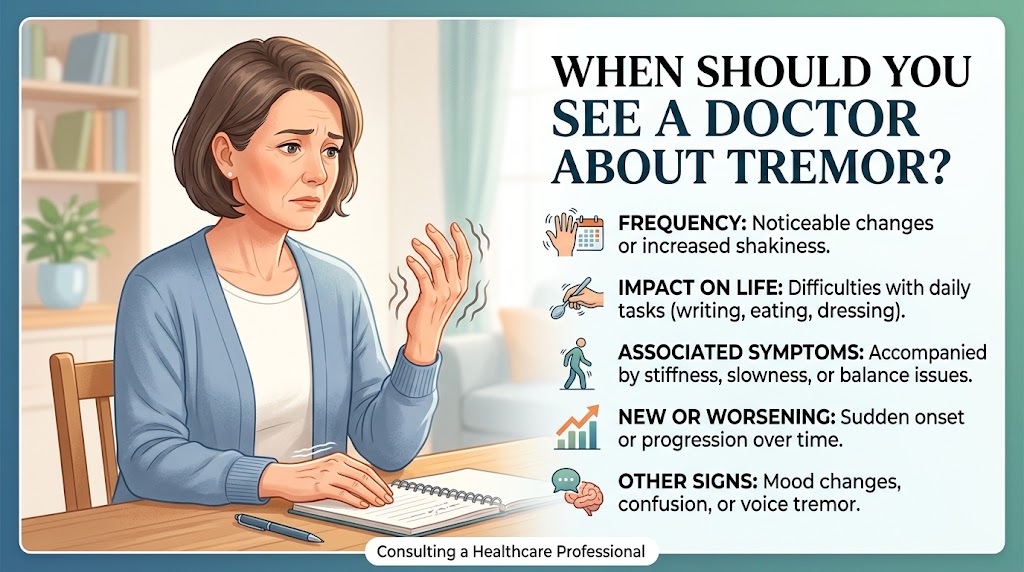
Contact your healthcare provider if tremor:
- Suddenly becomes significantly worse
- Starts affecting daily activities
- Occurs at unusual times
- Appears after starting a new medication
- Regularly returns before Parkinson’s medication doses
- Interferes with eating or drinking
- Makes walking or other activities unsafe
A sudden new tremor should not automatically be attributed to Parkinson’s disease. Other neurological or medical conditions can cause shaking and may require evaluation.
Frequently Asked Questions
Can Parkinson’s tremor be completely stopped?
Not always. Some people experience substantial improvement with medication or advanced treatments, while others continue to have some tremor. Treatment goals are individualized.
Does levodopa reduce Parkinson’s tremor?
Levodopa can significantly reduce tremor in many people with Parkinson’s disease, although the response varies between individuals.
Can exercise stop Parkinson’s tremor?
Exercise is important for overall Parkinson’s management but is not a guaranteed treatment for tremor. It can support strength, mobility, balance, and physical function.
Can stress make Parkinson’s tremor worse?
Yes. Stress and anxiety can temporarily increase tremor in some people. Relaxation techniques and appropriate treatment of anxiety may help.
Can DBS help Parkinson’s tremor?
Yes. DBS can provide substantial tremor improvement in appropriately selected patients, particularly when tremor is not adequately controlled with medication.
Is focused ultrasound an option for Parkinson’s tremor?
Focused ultrasound may be appropriate for selected patients and specific indications. Eligibility depends on factors such as symptoms, treatment target, overall health, and local regulatory approval.
Final Thoughts
Parkinson’s tremor can often be managed with a combination of medical treatment, rehabilitation, lifestyle strategies, and—when appropriate—advanced therapies.
Medication such as levodopa can significantly reduce tremor for many patients. If tremor is related to medication wearing off, adjusting the treatment schedule may improve symptom control.
Exercise, physical therapy, occupational therapy, stress management, and good sleep can also support overall movement and daily function.
For people whose tremor remains disabling despite optimized medication, treatments such as deep brain stimulation or focused ultrasound may provide additional options.
Because Parkinson’s symptoms and medication responses vary widely, there is no single treatment that works best for everyone. If tremor is interfering with your daily life, a movement-disorders specialist can evaluate the cause and help develop an individualized treatment plan.
Most importantly, do not change Parkinson’s medications on your own. Work with your healthcare team to find the safest and most effective approach for reducing tremor while maintaining mobility and quality of life.