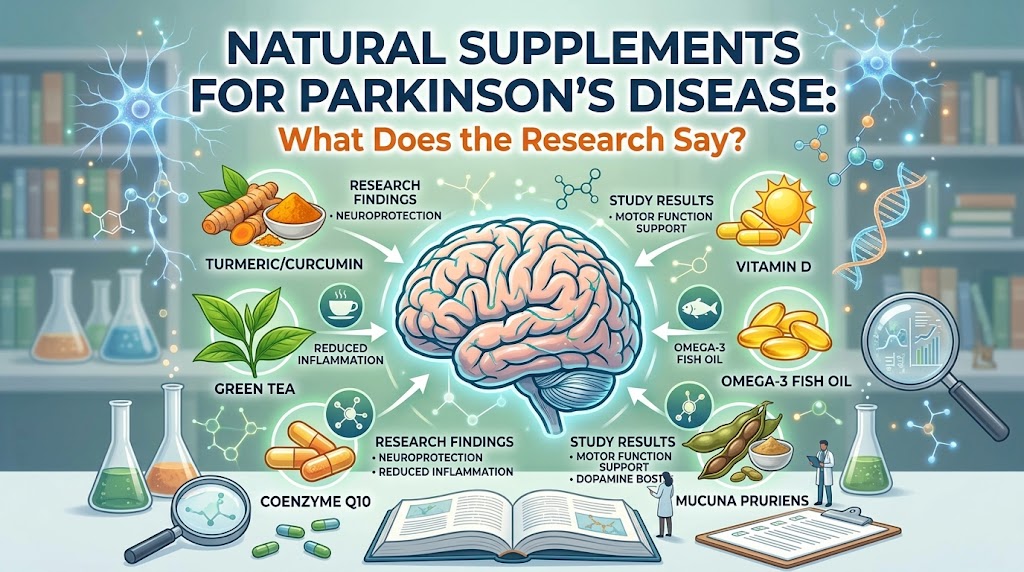
Many people with Parkinson’s disease look for natural supplements that might improve symptoms, support brain health, or slow disease progression. Vitamins, minerals, antioxidants, herbal products, probiotics, and other supplements are widely promoted online as potential Parkinson’s treatments.
But what does the research actually show?
The answer is more complicated than many supplement advertisements suggest. Some nutrients may be useful when a person has a nutritional deficiency, while others are being studied for possible effects on inflammation, oxidative stress, gut health, or brain function. However, there is currently no natural supplement proven to cure Parkinson’s disease or reliably stop its progression.
Research reviews have generally found that evidence for dietary supplements remains limited or inconsistent. A 2024 systematic review found that dietary supplements did not significantly improve overall Parkinson’s motor scores or walking performance, although some dietary patterns showed potential benefits.
This guide looks at some of the most commonly discussed natural supplements for Parkinson’s disease and explains what current research can—and cannot—tell us.
Can Natural Supplements Treat Parkinson’s Disease?
Click Here To Watch Video to Treat Parkinson’s Disease Naturally!..
Natural supplements should not be considered replacements for established Parkinson’s treatments.
Medications such as levodopa remain central to managing Parkinson’s motor symptoms. Physical therapy, exercise, speech therapy, occupational therapy, and other treatments can also play important roles.
The Parkinson’s Foundation notes that most herbs and supplements have not been rigorously studied for safety and effectiveness in Parkinson’s disease. Supplements can also interact with prescription medications.
Therefore, the most appropriate way to think about supplements is as potentially complementary options, rather than cures.
1. Vitamin D
Click Here To Watch Video to Treat Parkinson’s Disease Naturally!..
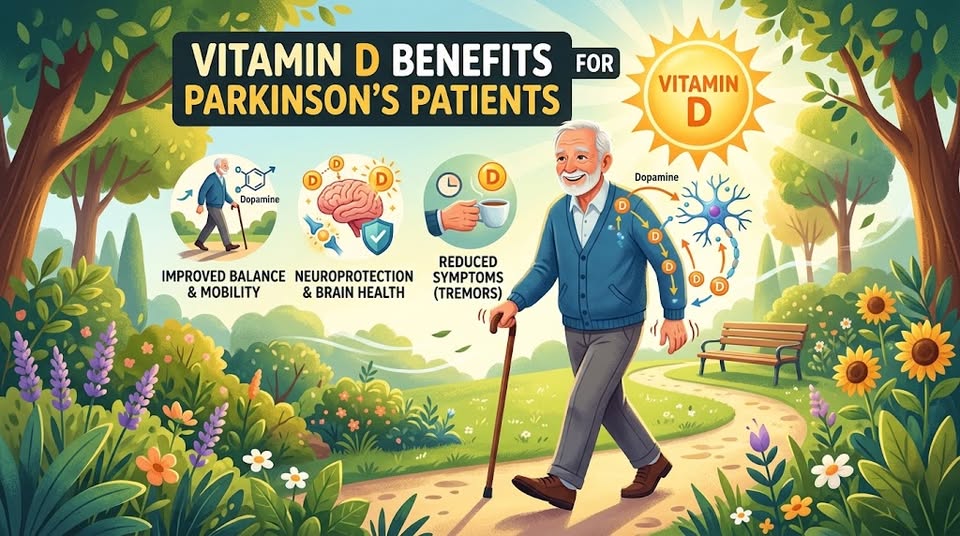
Vitamin D is one of the nutrients frequently discussed in Parkinson’s research.
Vitamin D plays important roles in bone health, muscle function, and the immune system. Maintaining adequate vitamin D levels is particularly important for older adults because low levels can contribute to bone weakness and potentially increase concerns related to falls and fractures.
Some observational research has found associations between vitamin D status and Parkinson’s disease, but this does not prove that taking vitamin D supplements can prevent Parkinson’s or slow its progression.
For someone with a documented vitamin D deficiency, supplementation may be appropriate under medical guidance.
A blood test can determine whether vitamin D levels are low.
2. Vitamin E
Vitamin E is an antioxidant that helps protect cells from oxidative damage.
Because oxidative stress has been implicated in Parkinson’s disease biology, researchers have investigated whether antioxidant supplements such as vitamin E might have protective effects.
However, clinical evidence has not established vitamin E as a treatment that slows Parkinson’s progression.
The Parkinson’s Foundation notes that vitamin E has been studied in Parkinson’s, but there is not enough conclusive evidence to recommend supplements as a treatment for disease progression.
Taking high doses without medical supervision is also not advisable because supplements can have risks as well as potential benefits.
3. Vitamin C
Vitamin C is another antioxidant that has attracted interest.
It is naturally found in foods such as:
- Oranges
- Guava
- Strawberries
- Bell peppers
- Tomatoes
- Broccoli
- Kiwi
Vitamin C is essential for normal health, but there is not strong clinical evidence that taking high-dose vitamin C supplements treats Parkinson’s symptoms or slows the disease.
For most people, obtaining vitamin C through a varied diet is preferable unless a healthcare professional recommends supplementation.
4. Coenzyme Q10
Coenzyme Q10 (CoQ10) is involved in cellular energy production and has antioxidant properties.
Because mitochondrial dysfunction and oxidative stress are areas of interest in Parkinson’s research, CoQ10 has been investigated as a possible disease-modifying supplement.
Early research generated interest, but larger clinical studies have not established CoQ10 as an effective treatment for slowing Parkinson’s disease.
The Parkinson’s Foundation lists CoQ10 among supplements studied for possible neuroprotective effects but emphasizes that results remain inconclusive.
Therefore, CoQ10 should not be viewed as a proven way to prevent Parkinson’s progression.
5. Creatine
Creatine is naturally produced by the body and helps supply energy to muscles and other tissues.
Researchers investigated whether creatine might protect nerve cells or slow Parkinson’s progression because energy metabolism and mitochondrial function are relevant to Parkinson’s disease.
However, a large clinical trial of creatine in early Parkinson’s disease was stopped early because interim analysis did not show a meaningful difference between creatine and placebo.
This is an important example of why promising biological theories do not always translate into effective treatments.
At present, creatine should not be considered a proven disease-modifying treatment for Parkinson’s disease.
6. Glutathione
Glutathione is an antioxidant naturally produced by the body.
Researchers have studied glutathione because oxidative stress may contribute to cellular damage in Parkinson’s disease.
Small studies have explored different ways of delivering glutathione, but important questions remain regarding effectiveness, optimal dosage, delivery method, and long-term safety.
The Parkinson’s Foundation notes that although glutathione has shown safety signals in smaller studies, its effectiveness and ideal method of administration remain uncertain.
More rigorous clinical research is needed before glutathione can be recommended as a standard Parkinson’s treatment.
7. Omega-3 Fatty Acids
Omega-3 fatty acids are commonly found in:
- Fatty fish
- Fish oil
- Flaxseed
- Chia seeds
- Walnuts
They have anti-inflammatory properties and are important for normal brain and cardiovascular health.
Researchers have investigated whether omega-3 fatty acids could influence neurological health and non-motor symptoms.
However, current evidence does not establish omega-3 supplements as a treatment that slows Parkinson’s progression or substantially improves motor symptoms.
For general health, obtaining omega-3 fatty acids through a balanced diet that includes appropriate sources of healthy fats can be beneficial.
8. Probiotics and Gut Health
The relationship between the gut and Parkinson’s disease has become an increasingly active area of research.
Constipation is a common non-motor symptom of Parkinson’s disease, and changes in the gut microbiome have attracted significant scientific interest.
Probiotics, prebiotics, and synbiotics are being studied as potential ways to influence gut health.
A 2024 meta-analysis found that probiotics may help improve constipation-related symptoms in people with Parkinson’s disease, but the researchers emphasized that more well-designed studies are needed.
A newer systematic review published in 2026 similarly found potential improvements in constipation and possible motor benefits, but the certainty of evidence for motor improvement was very low.
This means probiotics may have a role for some people with Parkinson’s-related constipation, but they should not currently be considered a proven treatment for the underlying disease.
9. Mucuna Pruriens
Mucuna pruriens is a plant that naturally contains levodopa.
Because levodopa is the primary ingredient in one of the most important Parkinson’s medications, Mucuna pruriens has attracted considerable attention.
Some clinical studies have suggested that preparations containing Mucuna may improve motor symptoms.
A 2026 systematic review of plant-derived therapies reported promising findings for Mucuna pruriens, including motor improvement and increased “on” time, but the authors also emphasized limitations in the available evidence and the need for larger, well-designed randomized trials.
Importantly, because Mucuna contains levodopa, it is not simply a harmless herbal supplement.
Its levodopa content can vary between products, making dosing less predictable. It may also interact with prescribed Parkinson’s medications and contribute to side effects such as dyskinesia or nausea.
People taking Parkinson’s medication should never add Mucuna pruriens without discussing it with their neurologist.
10. Turmeric and Curcumin
Curcumin is a compound found in turmeric and has antioxidant and anti-inflammatory properties.
Laboratory research has generated interest in curcumin’s potential effects on inflammation and cellular stress.
However, laboratory findings do not automatically demonstrate that a supplement improves Parkinson’s disease in humans.
Current clinical evidence is insufficient to consider curcumin a proven Parkinson’s treatment.
If someone wants to include turmeric in food, it can generally be part of a healthy diet, but concentrated supplements should be discussed with a healthcare professional.
11. Herbal Supplements
Many other herbs have been investigated for Parkinson’s disease, including various traditional medicines and plant-derived compounds.
The challenge is that evidence quality varies substantially.
A recent systematic review of plant-derived therapies identified several potentially promising substances, but it concluded that larger, better-designed randomized trials are needed to establish effectiveness and safety.
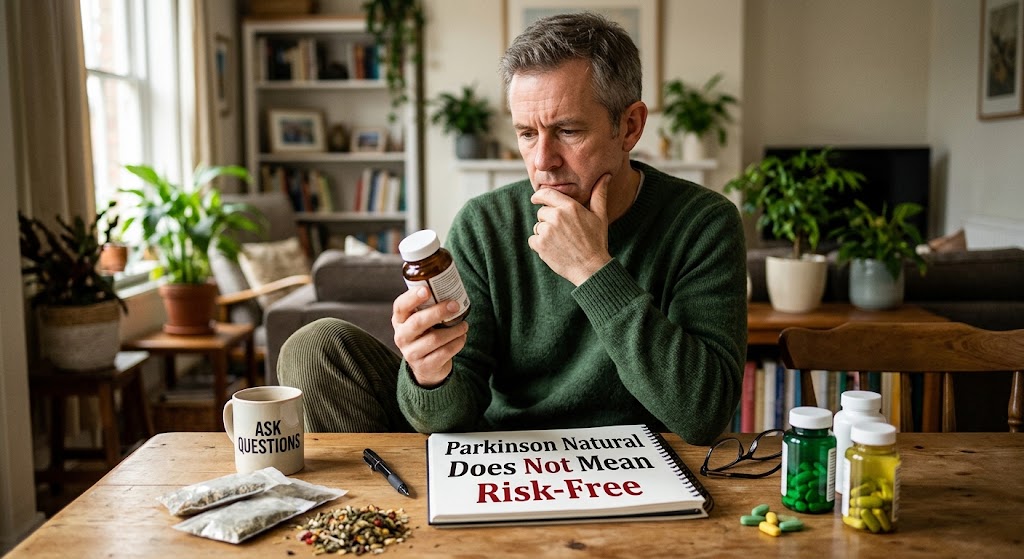
Natural does not automatically mean safe.
Herbal products can:
- Interact with prescription medications
- Affect blood pressure
- Affect blood clotting
- Cause liver or kidney problems
- Produce gastrointestinal side effects
- Vary in strength between products
Anyone with Parkinson’s should discuss herbal supplements with a healthcare professional before using them.
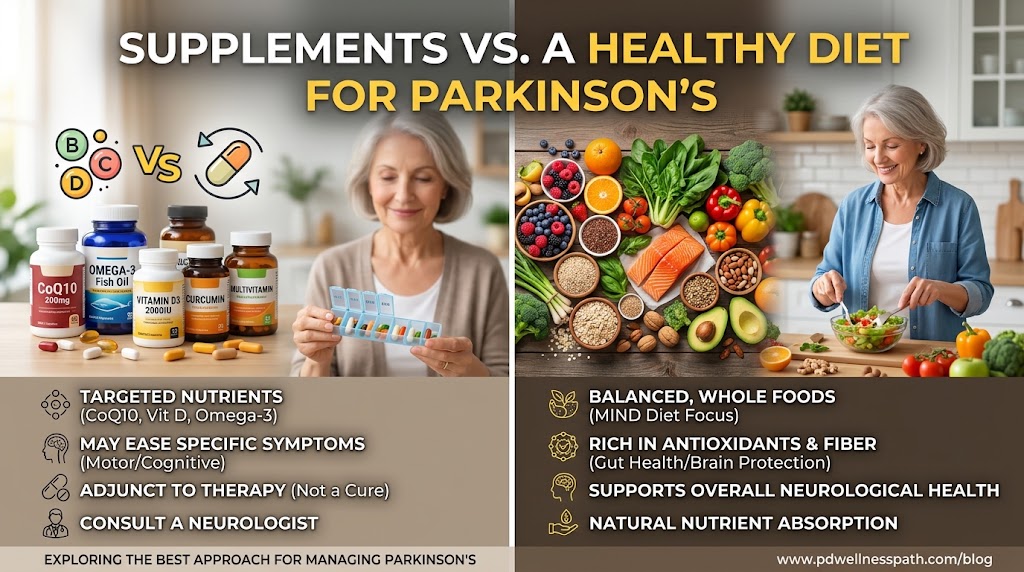
Supplements vs. a Healthy Diet
Click Here To Watch Video to Treat Parkinson’s Disease Naturally!..
It is important to distinguish between nutritional supplements and a healthy dietary pattern.
Research increasingly suggests that overall diet quality may matter for people with Parkinson’s disease.
A 2024 systematic review reported associations between healthier dietary patterns and better outcomes, while emphasizing that the evidence is still developing and long-term randomized trials are needed.
Another systematic review and meta-analysis found that dietary interventions generally had only modest effects on measured Parkinson’s outcomes and did not significantly improve overall motor scores.
Rather than relying on a single supplement, many people may benefit from focusing on:
- Fruits and vegetables
- Whole grains
- Legumes
- Nuts and seeds
- Healthy fats
- Appropriate protein
- Adequate hydration
- High-fiber foods
A dietitian familiar with Parkinson’s disease can help tailor nutrition to individual needs.
Can Supplements Slow Parkinson’s Disease Progression?

Click Here To Watch Video to Treat Parkinson’s Disease Naturally!..
This is one of the biggest questions surrounding natural supplements.
Unfortunately, there is currently no supplement proven to reliably stop or slow Parkinson’s disease progression.
Researchers continue to study antioxidants, mitochondrial-support compounds, anti-inflammatory substances, gut-directed therapies, and plant-derived treatments.
The problem is that promising laboratory findings often do not produce meaningful benefits in large human clinical trials.
For this reason, supplements marketed as “neuroprotective” or “disease-modifying” should be approached cautiously.
Safety: Natural Does Not Mean Risk-Free
Click Here To Watch Video to Treat Parkinson’s Disease Naturally!..
One of the biggest misconceptions about supplements is that they are automatically safer than prescription medications.
They are not.
Supplements can have pharmacological effects and may interact with Parkinson’s medications.
Potential concerns include:
- Changes in blood pressure
- Increased bleeding risk
- Drug interactions
- Liver or kidney effects
- Gastrointestinal problems
- Excessive vitamin intake
- Variable product quality
- Contamination or inaccurate labeling
The Parkinson’s Foundation also points out that supplements are not regulated in the same way as prescription medications, meaning there may be concerns about consistency, strength, and purity.
Questions to Ask Before Taking a Supplement
Before starting a supplement, ask your healthcare professional:
- Do I actually need this supplement?
- Is there evidence that it helps my specific symptoms?
- Could it interact with my Parkinson’s medications?
- What dose is appropriate?
- How long should I take it?
- Could it affect my blood pressure, liver, kidneys, or other conditions?
- Is there a reliable product available?
- Should I have blood tests before or during supplementation?
These questions can help prevent unnecessary or potentially harmful supplementation.
What Does the Research Overall Say?
The current scientific picture is best described as promising but inconclusive.
Researchers have identified several supplements and dietary strategies worth studying, including antioxidants, creatine, CoQ10, vitamin D, probiotics, and plant-derived compounds.
However, evidence from clinical trials is not strong enough to recommend most supplements as treatments that slow Parkinson’s disease or replace standard therapy.
A 2024 review concluded that evidence for dietary supplements remains preliminary and that intervention studies are still relatively scarce.
At the same time, newer research—particularly around gut health and plant-derived therapies—continues to identify areas worth investigating.
Final Thoughts
Natural supplements for Parkinson’s disease are an interesting area of research, but most have not yet been proven to treat or slow the disease.
Some supplements may be useful when a person has a genuine nutritional deficiency. Others may help specific non-motor symptoms, such as constipation, but the evidence varies.
Probiotics, vitamin D, omega-3 fatty acids, CoQ10, creatine, vitamin E, glutathione, curcumin, and plant-derived compounds are among the substances researchers continue to study.
For now, the safest approach is to view supplements as potential additions to a comprehensive Parkinson’s care plan—not replacements for prescribed medication, exercise, rehabilitation, or specialist care.
If you are considering a supplement, discuss it with your neurologist or another qualified healthcare professional first. This is particularly important when a supplement contains active compounds such as levodopa, as with Mucuna pruriens.
The goal should be evidence-based, individualized care that supports symptom control, nutrition, mobility, and quality of life while avoiding unnecessary risks.