Parkinson’s disease is a progressive neurological condition that can affect movement, mood, sleep, thinking, digestion, and many other aspects of daily life. While symptoms such as tremor and stiffness are widely recognized, Parkinson’s also causes non-motor symptoms that may sometimes appear before or alongside movement problems.
Because Parkinson’s symptoms vary significantly from person to person, keeping a detailed symptom checklist can help patients and caregivers recognize changes and communicate more effectively with their healthcare team.
This guide provides a comprehensive Parkinson’s symptoms checklist, covering common motor and non-motor symptoms, early warning signs, and symptoms that may require medical attention.
What Are Parkinson’s Motor Symptoms?

Click Here To Watch Video to Treat Parkinson’s Disease Naturally!..
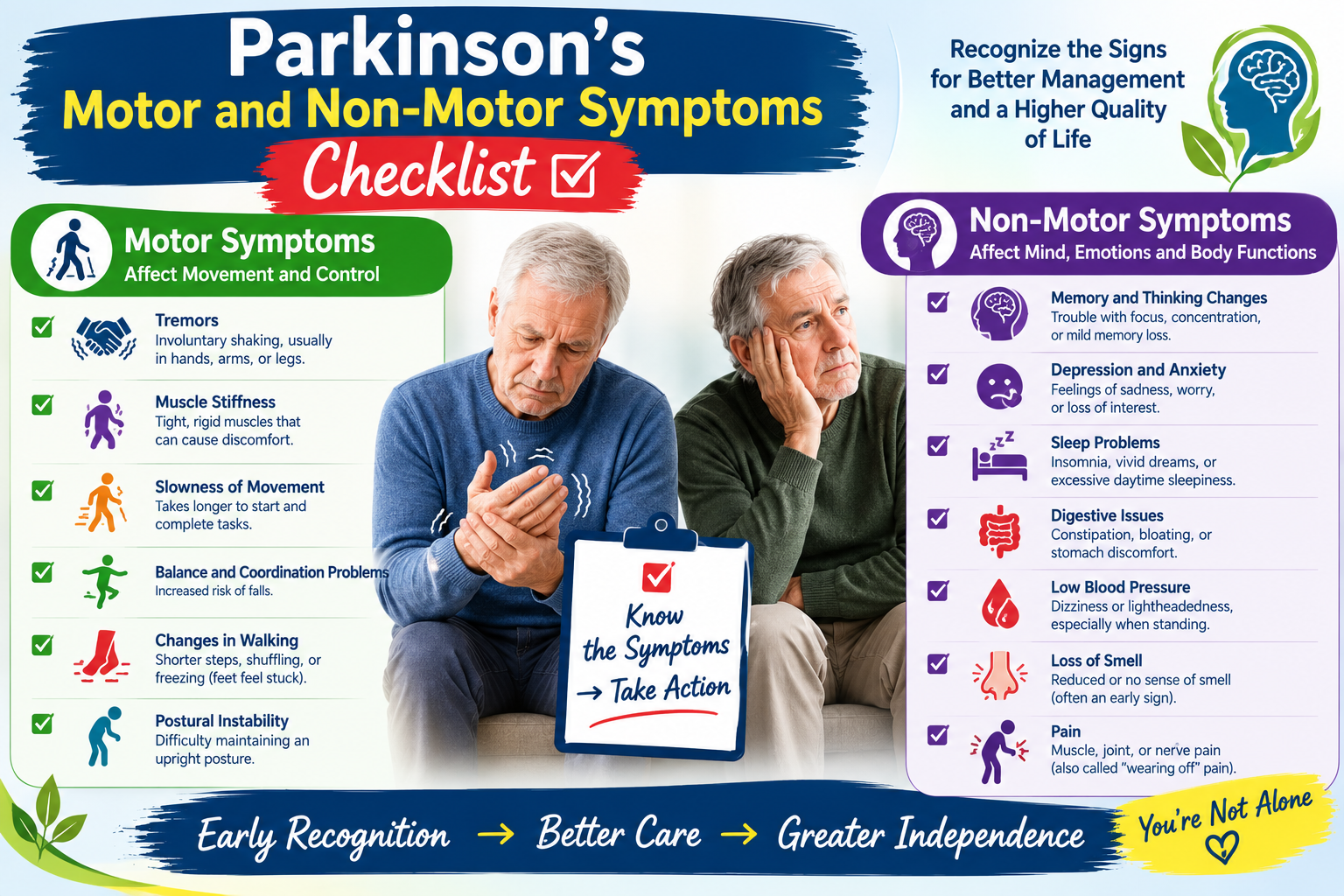
Motor symptoms are problems that directly affect movement and physical coordination. They are among the most recognizable features of Parkinson’s disease.
The four major motor symptoms include:
- Tremor
- Bradykinesia
- Rigidity
- Postural instability
However, Parkinson’s can cause many other movement-related difficulties.
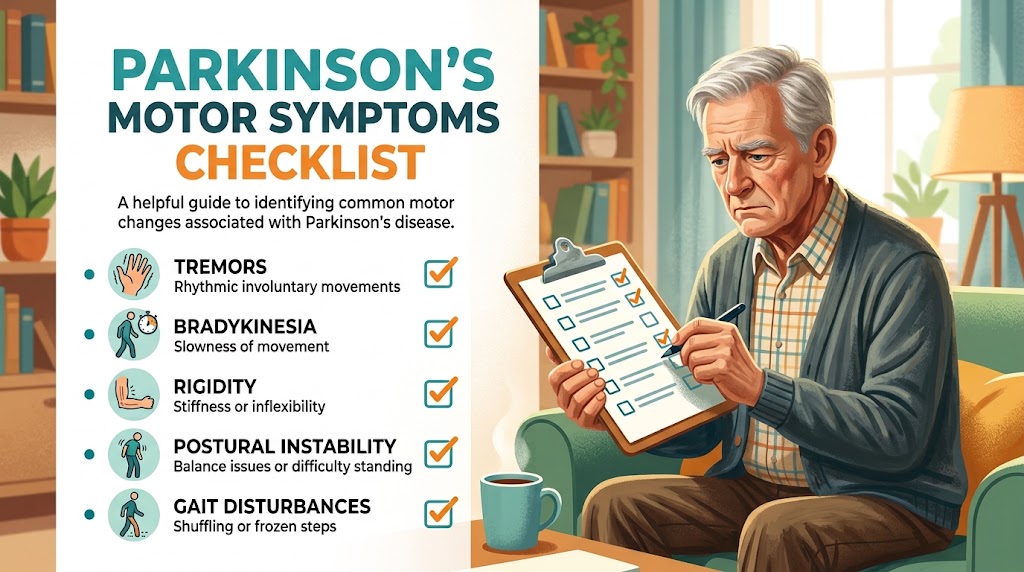
Parkinson’s Motor Symptoms Checklist
Click Here To Watch Video to Treat Parkinson’s Disease Naturally!..
Use the following checklist to identify symptoms you or someone you care for may be experiencing.
☐ Resting Tremor
A Parkinson’s tremor is often most noticeable when a limb is relaxed.
It commonly begins on one side of the body and may affect:
- Hand
- Fingers
- Arm
- Leg
- Jaw
- Chin
The classic tremor may decrease during purposeful movement, although tremor patterns can vary.
☐ Bradykinesia
Bradykinesia means slowness of movement.
It is one of the core motor symptoms of Parkinson’s disease.
Signs may include:
- Moving more slowly
- Taking longer to get dressed
- Difficulty starting movements
- Reduced facial expressions
- Smaller handwriting
- Slower walking
- Difficulty performing repetitive movements
Everyday activities may gradually take longer to complete.
☐ Rigidity
Rigidity refers to muscle stiffness or increased resistance to movement.
It may cause:
- Stiff shoulders
- Tight muscles
- Neck stiffness
- Reduced arm swing
- Difficulty turning
- Aching or uncomfortable muscles
Rigidity can occur on one or both sides of the body.
☐ Postural Instability
Balance problems can occur as Parkinson’s progresses.
A person may:
- Feel unsteady while standing
- Have difficulty turning
- Take several steps to regain balance
- Fall more frequently
- Feel unstable when walking backward
Postural instability can significantly increase fall risk.
☐ Changes in Walking
Parkinson’s can alter normal walking patterns.
Possible signs include:
- Shorter steps
- Shuffling
- Slower walking
- Reduced arm swing
- Difficulty initiating walking
- Difficulty turning
- Walking with a stooped posture
☐ Freezing of Gait
Freezing occurs when a person temporarily feels unable to move their feet forward.
It may happen when:
- Starting to walk
- Turning
- Approaching a doorway
- Walking through crowded spaces
- Changing direction
Freezing can increase the risk of falls and may require specialized physical therapy strategies.
☐ Smaller Handwriting
A gradual reduction in handwriting size is called micrographia.
Someone may notice that their handwriting becomes:
- Smaller
- More cramped
- Less consistent
- Difficult to read
Micrographia can occur because Parkinson’s affects movement amplitude and fine motor control.
☐ Reduced Facial Expression
Parkinson’s can reduce spontaneous facial movement.
A person may appear less expressive even though their emotions have not changed.
This can sometimes lead to misunderstandings during conversations.
☐ Speech Changes
Motor changes can affect the muscles involved in speaking.
Possible symptoms include:
- Softer voice
- Monotone speech
- Slurred speech
- Speaking too quickly
- Mumbling
- Difficulty projecting the voice
Speech-language therapy can help address many Parkinson’s-related communication problems.
☐ Difficulty With Fine Motor Skills
Fine motor changes may make tasks more difficult, including:
- Buttoning clothes
- Tying shoelaces
- Using utensils
- Writing
- Using a phone
- Handling coins
- Opening containers
Occupational therapy can provide strategies and adaptive equipment when needed.
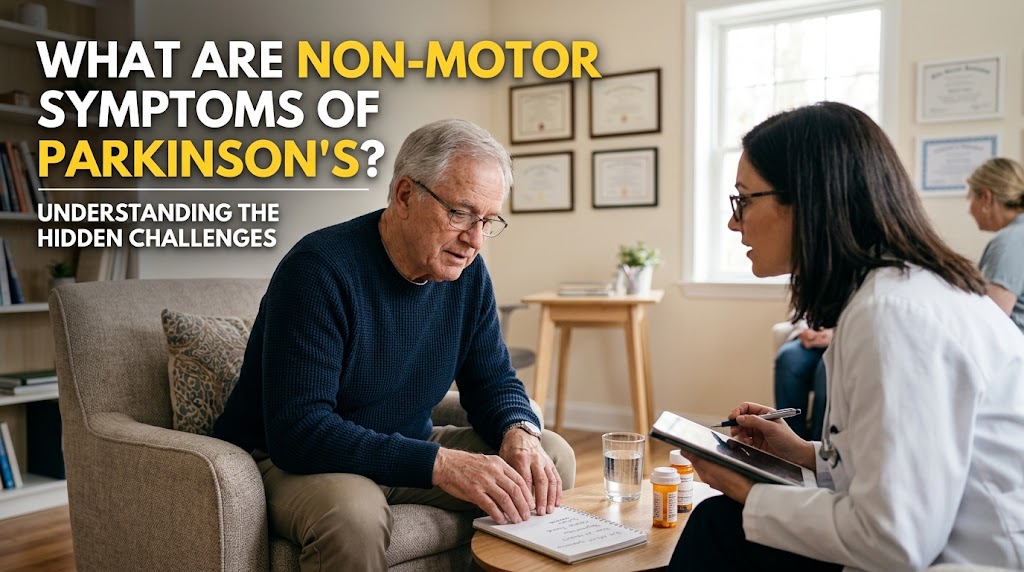
What Are Non-Motor Symptoms of Parkinson’s?
Click Here To Watch Video to Treat Parkinson’s Disease Naturally!..
Non-motor symptoms do not directly involve movement, but they can have a major effect on health and quality of life.
They may involve:
- Sleep
- Mood
- Thinking
- Digestion
- Bladder function
- Blood pressure
- Smell
- Sexual function
- Energy levels
Some non-motor symptoms may develop before noticeable movement symptoms.
Parkinson’s Non-Motor Symptoms Checklist
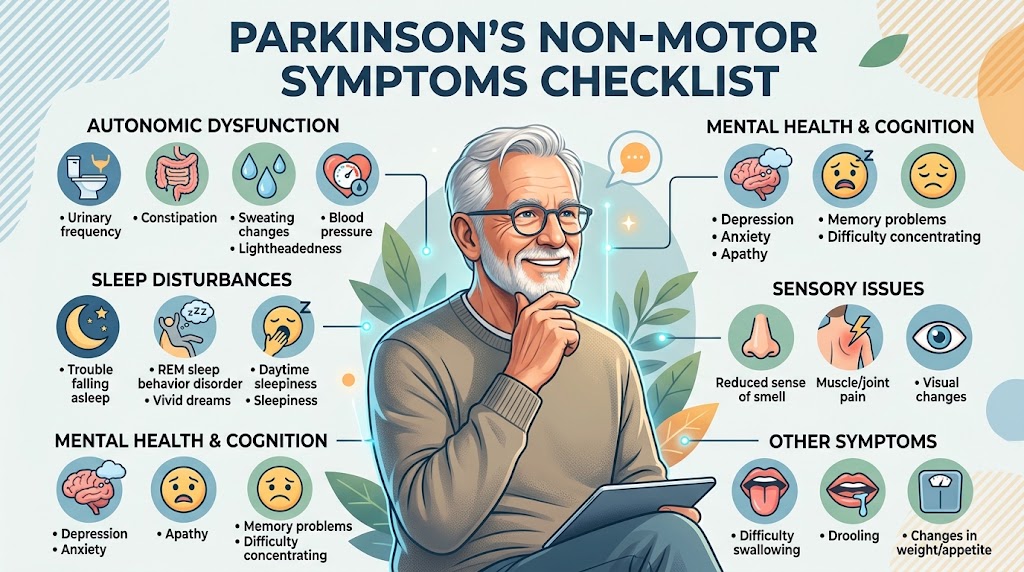
Click Here To Watch Video to Treat Parkinson’s Disease Naturally!..
☐ Loss of Sense of Smell
A reduced ability to smell, known as hyposmia, can occur in Parkinson’s disease.
Some people may notice:
- Reduced ability to smell food
- Difficulty identifying odors
- Changes in taste perception
Loss of smell is not specific to Parkinson’s and can have many other causes.
☐ Constipation
Constipation is a common non-motor symptom.
Signs may include:
- Infrequent bowel movements
- Hard stools
- Straining
- Feeling that the bowel has not completely emptied
Adequate fluids, fiber, physical activity, and appropriate medical treatment can help manage constipation.
☐ Sleep Problems
Parkinson’s can cause several types of sleep disturbances.
These may include:
- Difficulty falling asleep
- Frequent nighttime waking
- Excessive daytime sleepiness
- Restless legs
- Vivid dreams
- Acting out dreams
- Difficulty turning in bed
Persistent sleep problems should be discussed with a healthcare professional.
☐ REM Sleep Behavior Disorder
Some people experience REM sleep behavior disorder (RBD), in which they physically act out vivid dreams.
A person may:
- Talk during sleep
- Shout
- Kick
- Punch
- Move their arms
- Fall out of bed
RBD should be medically evaluated because it can have several causes and may be associated with certain neurological conditions.
☐ Depression
Depression can occur in people with Parkinson’s disease.
Symptoms may include:
- Persistent sadness
- Loss of interest
- Low motivation
- Feelings of hopelessness
- Changes in sleep
- Changes in appetite
- Difficulty concentrating
Depression is treatable, so it should be discussed with a healthcare professional.
☐ Anxiety
Anxiety may occur independently or fluctuate alongside Parkinson’s motor symptoms.
Possible signs include:
- Excessive worry
- Restlessness
- Fear
- Rapid heartbeat
- Difficulty relaxing
- Panic-like episodes
Appropriate medical and psychological support can help manage anxiety.
☐ Cognitive Changes
Some people with Parkinson’s experience changes in thinking.
These can include:
- Forgetfulness
- Difficulty concentrating
- Slower thinking
- Trouble multitasking
- Difficulty planning
- Problems finding words
Not everyone with Parkinson’s develops significant cognitive impairment.
☐ Fatigue
Parkinson’s-related fatigue can be more than ordinary tiredness.
A person may feel:
- Physically exhausted
- Mentally tired
- Low in energy
- Unable to maintain normal activities
Fatigue can occur even after adequate sleep.
☐ Low Blood Pressure When Standing
Orthostatic hypotension occurs when blood pressure drops after standing.
Symptoms may include:
- Dizziness
- Lightheadedness
- Blurred vision
- Weakness
- Feeling faint
- Fainting
This symptom should be discussed with a healthcare professional because it can increase fall risk.
☐ Urinary Problems
Parkinson’s can affect bladder function.
Symptoms may include:
- Urinary urgency
- Frequent urination
- Getting up repeatedly at night
- Difficulty controlling urination
Other medical conditions can cause similar symptoms, so proper evaluation is important.
☐ Sexual Dysfunction
Parkinson’s and some medications can affect sexual health.
Possible problems include:
- Reduced sexual desire
- Erectile difficulties
- Difficulty reaching orgasm
- Changes in arousal
These concerns are common but are often underreported. Patients should feel comfortable discussing them with their healthcare team.
☐ Drooling
Drooling may occur because Parkinson’s can reduce the frequency or efficiency of swallowing rather than simply causing excessive saliva production.
A speech-language pathologist can evaluate swallowing and recommend appropriate strategies.
☐ Swallowing Difficulties
Dysphagia can affect chewing and swallowing.
Warning signs include:
- Coughing while eating
- Choking
- Food getting stuck
- Difficulty swallowing pills
- Wet or gurgly voice after eating
- Taking a long time to finish meals
- Unexplained weight loss
Swallowing problems should be evaluated because they can increase the risk of aspiration.
☐ Changes in Blood Pressure Regulation
Parkinson’s can affect the autonomic nervous system.
This may contribute to:
- Blood pressure fluctuations
- Dizziness
- Temperature regulation problems
- Sweating changes
These symptoms should be reported to a healthcare professional.
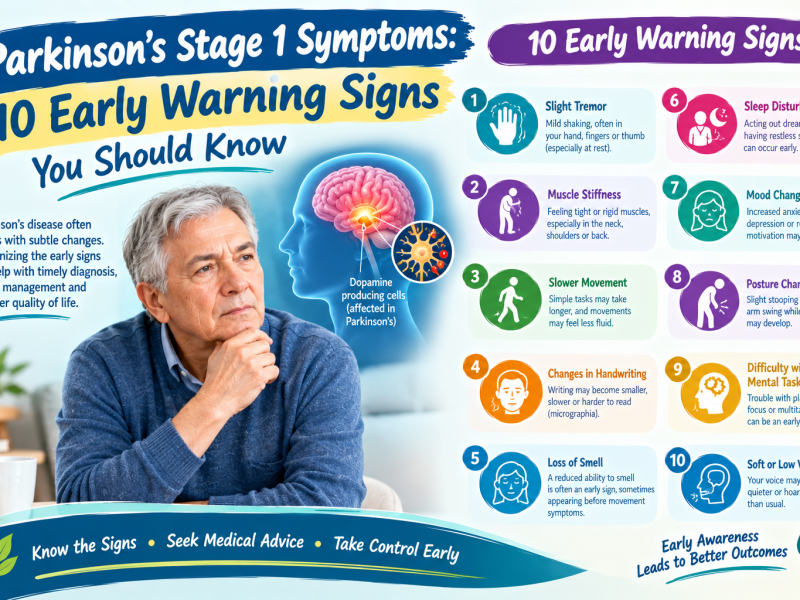
Early Parkinson’s Symptoms Checklist
Some symptoms may appear before classic movement problems.
Possible early symptoms include:
- ☐ Reduced sense of smell
- ☐ Constipation
- ☐ Acting out dreams
- ☐ Depression or anxiety
- ☐ Fatigue
- ☐ Subtle handwriting changes
- ☐ Reduced arm swing
- ☐ Mild stiffness
- ☐ Changes in facial expression
- ☐ Softer voice
These symptoms are not diagnostic of Parkinson’s disease by themselves. Many other conditions can cause them.
A neurological evaluation is necessary when Parkinson’s is suspected.
Parkinson’s Symptoms That May Fluctuate

Click Here To Watch Video to Treat Parkinson’s Disease Naturally!..
Symptoms can change throughout the day.
People taking levodopa or other Parkinson’s medications may experience on and off periods.
During an “on” period, medication is working and movement may improve.
During an “off” period, Parkinson’s symptoms may return or worsen.
Fluctuating symptoms can include:
- Tremor
- Stiffness
- Slowness
- Walking difficulty
- Freezing
- Anxiety
- Fatigue
Some people also develop dyskinesia, which involves involuntary movements and can occur during medication “on” periods.
Tracking symptoms alongside medication timing can help doctors identify patterns.
Why Keep a Parkinson’s Symptom Checklist?
A symptom checklist can help you:
- Recognize new symptoms
- Track changes over time
- Identify medication patterns
- Prepare for medical appointments
- Communicate clearly with caregivers
- Identify problems that need treatment
- Monitor treatment effectiveness
Consider keeping the checklist in a notebook, smartphone, or digital document.
Record the date, symptom, severity, timing, possible triggers, and impact on daily activities.
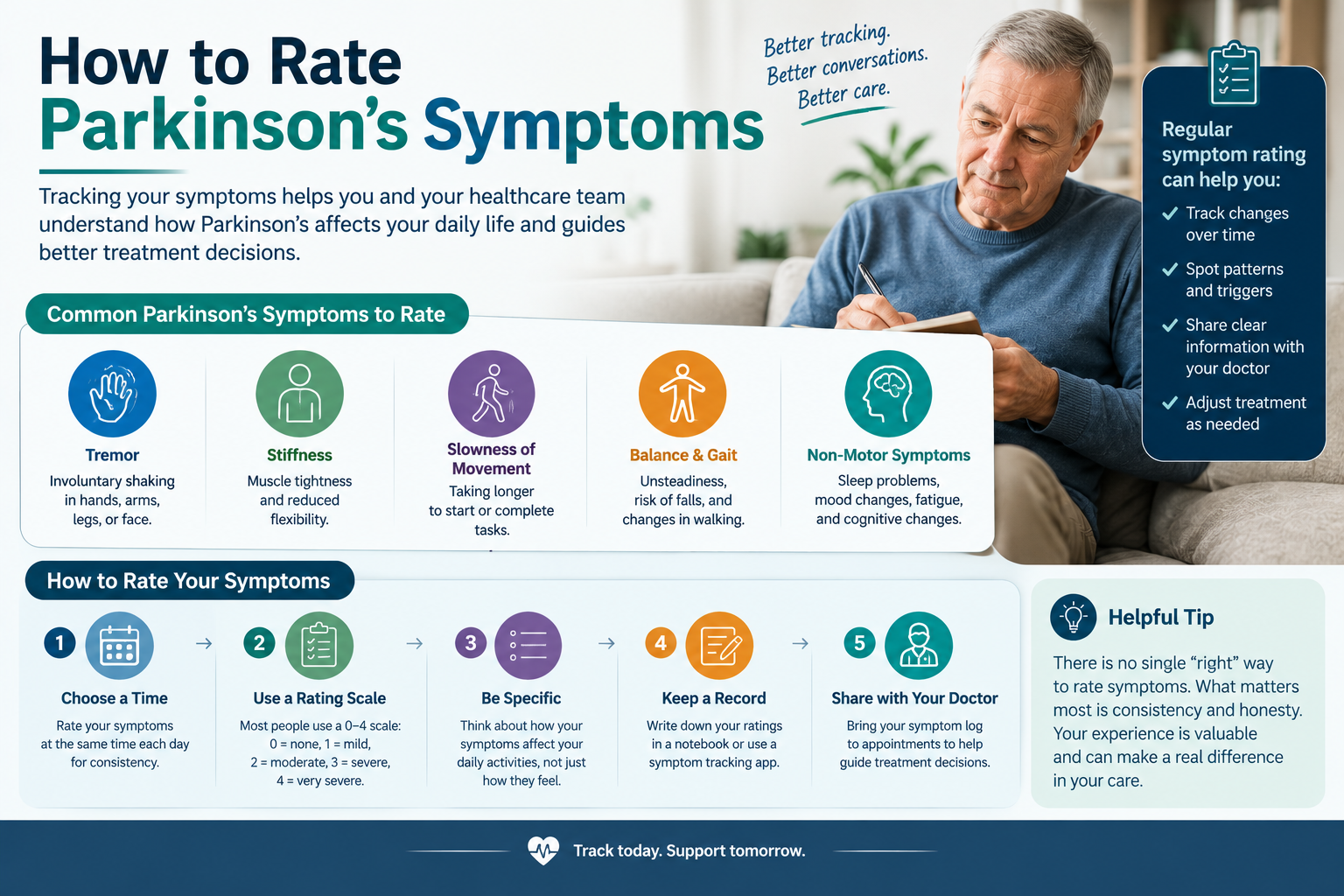
How to Rate Parkinson’s Symptoms
Click Here To Watch Video to Treat Parkinson’s Disease Naturally!..
A simple rating system can make your checklist more useful.
For example:
0 — No symptom
1 — Mild
2 — Moderate
3 — Severe
4 — Very severe or disabling
You can also record how often a symptom occurs.
For example:
Tremor — 2/4 severity — occurs mostly before medication dose.
This provides your healthcare team with more useful information than simply saying that tremor is “worse.”
When Should You Contact Your Doctor?
Contact your healthcare provider if you notice:
- New or worsening tremor
- Frequent falls
- New freezing episodes
- Significant swallowing problems
- Severe dizziness or fainting
- Major changes in thinking
- Persistent depression or anxiety
- Significant sleep problems
- New bladder difficulties
- Medication side effects
- Increasing “off” periods
- New or worsening involuntary movements
Some symptoms require prompt medical attention, particularly fainting, severe swallowing difficulty, sudden confusion, significant injury from a fall, or other sudden neurological changes.
Frequently Asked Questions
What are the four main motor symptoms of Parkinson’s?
The classic motor symptoms are tremor, bradykinesia, rigidity, and postural instability. Walking difficulties, freezing, reduced facial expression, speech changes, and fine motor problems can also occur.
What are the most common non-motor symptoms of Parkinson’s?
Common non-motor symptoms include constipation, sleep problems, depression, anxiety, fatigue, loss of smell, urinary problems, cognitive changes, blood pressure changes, and swallowing difficulties.
Can Parkinson’s symptoms appear before tremor?
Yes. Parkinson’s does not always begin with tremor. Some people first notice non-motor symptoms or movement changes such as stiffness, slowness, reduced arm swing, or smaller handwriting.
Can a symptom checklist diagnose Parkinson’s disease?
No. A checklist can help identify symptoms and track changes, but it cannot diagnose Parkinson’s disease. Diagnosis requires evaluation by an appropriately qualified healthcare professional.
Do Parkinson’s symptoms get worse over time?
Parkinson’s is generally progressive, but the speed and pattern of progression vary considerably. Some symptoms may remain mild for years, while others may become more significant.
Final Thoughts
A Parkinson’s motor and non-motor symptoms checklist can be a valuable tool for patients, caregivers, and healthcare professionals. Parkinson’s affects much more than movement, and recognizing non-motor symptoms is an important part of comprehensive care.
Motor symptoms can include tremor, bradykinesia, rigidity, balance problems, freezing, walking changes, speech difficulties, and reduced fine motor control. Non-motor symptoms may include constipation, sleep problems, mood changes, fatigue, cognitive difficulties, loss of smell, urinary symptoms, blood pressure changes, and swallowing problems.
Not every symptom occurs in every person, and many symptoms can have causes unrelated to Parkinson’s disease.
If you notice new or worsening symptoms, record when they occur and how they affect daily life. Share this information with your neurologist or Parkinson’s healthcare team.
A detailed symptom record can help your healthcare team understand your condition, identify treatment opportunities, monitor progression, and develop a more personalized care plan.