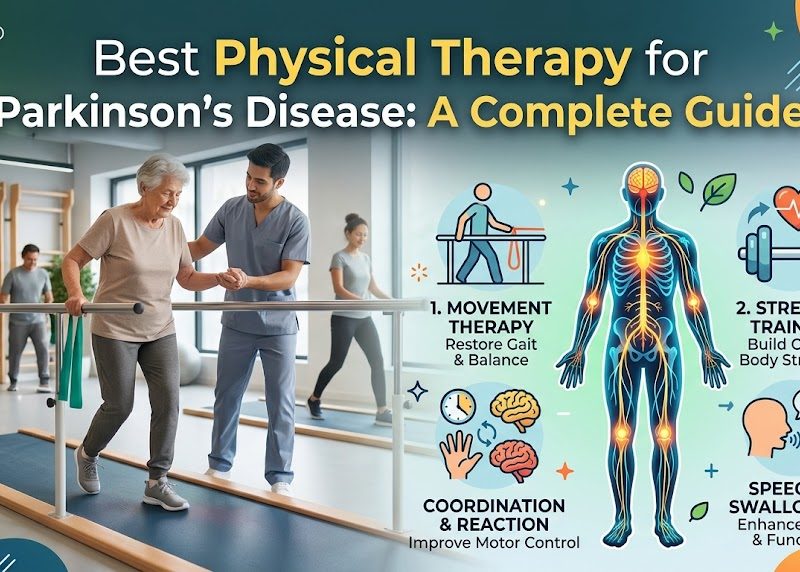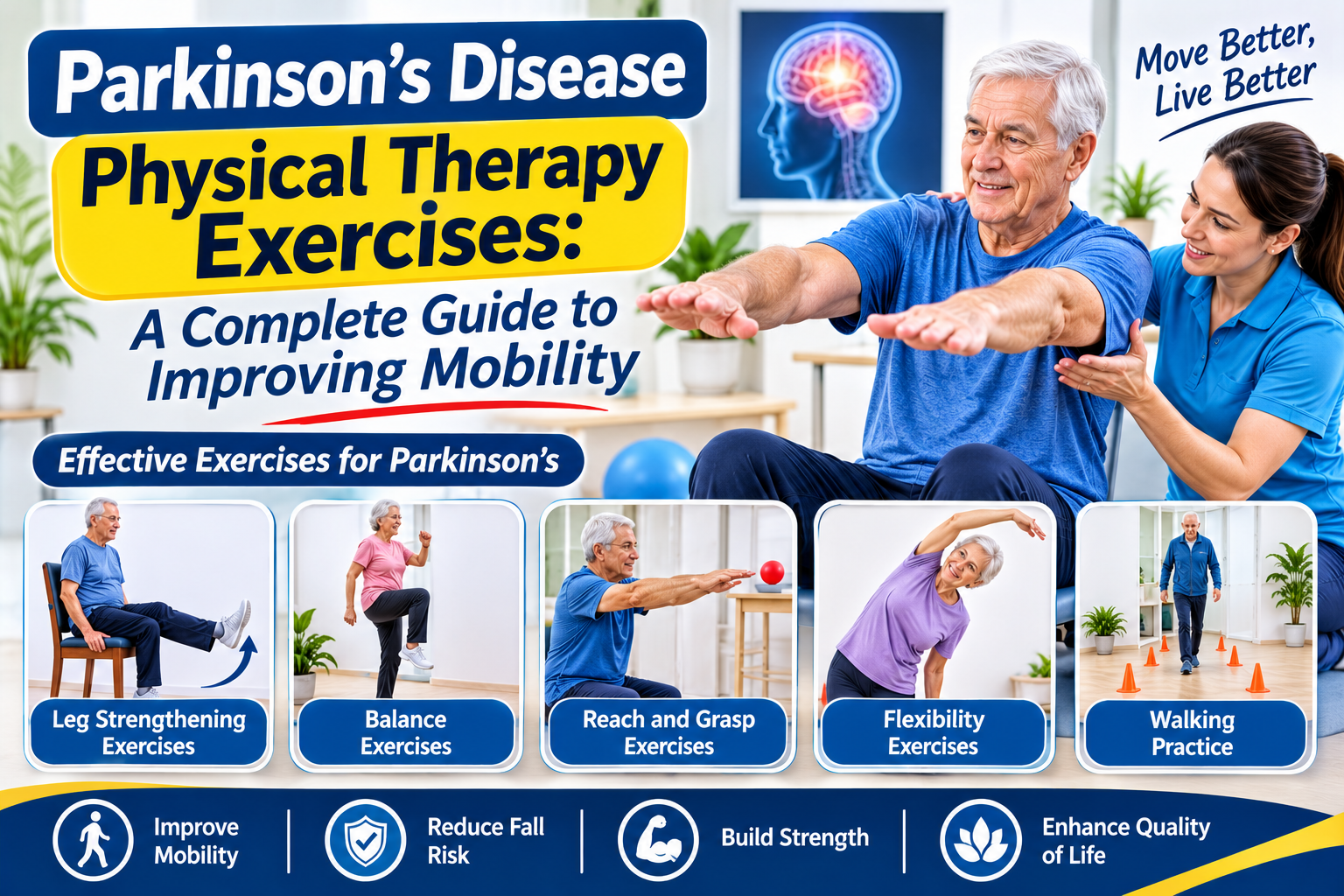
Parkinson’s disease is a progressive neurological condition that affects movement, balance, coordination, and muscle control. People living with Parkinson’s may experience tremors, stiffness, slow movements, walking difficulties, and problems maintaining balance. Over time, these symptoms can make everyday activities more challenging.
Parkinson’s disease physical therapy exercises can help address many of these difficulties. A structured exercise program may improve mobility, strengthen muscles, support balance, increase flexibility, and help people maintain independence.
Although physical therapy cannot cure Parkinson’s disease, it is an important part of managing symptoms and supporting long-term quality of life. This guide explains the benefits of physical therapy, recommended exercises, safety precautions, and ways to build a consistent exercise routine.
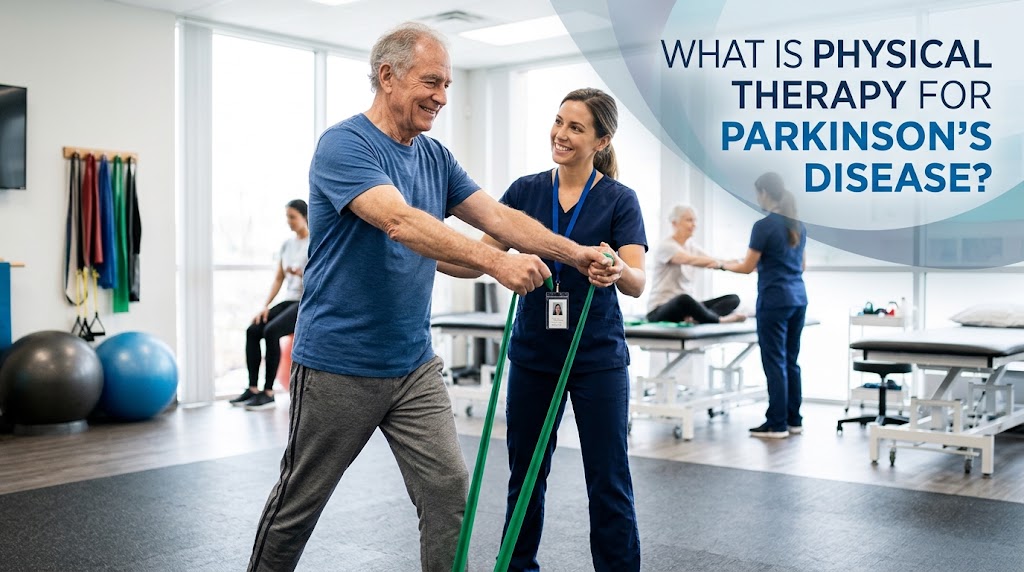
What Is Physical Therapy for Parkinson’s Disease?
Click Here To Watch Video to Treat Parkinson’s Disease Naturally!..
Physical therapy is a rehabilitation approach that helps people improve movement, strength, balance, posture, and physical function.
For people with Parkinson’s disease, physical therapy focuses on addressing movement problems caused by changes in the brain’s dopamine system.
A physical therapist may create an individualized program based on symptoms, disease stage, fitness level, mobility, and fall risk.
Common goals include:
- Improving walking and movement coordination
- Increasing muscle strength
- Reducing stiffness
- Improving posture
- Developing better balance
- Managing freezing of gait
- Maintaining flexibility
- Improving confidence during everyday activities
A physical therapist experienced in neurological conditions can also teach practical strategies for getting out of bed, standing from a chair, turning, and navigating obstacles.
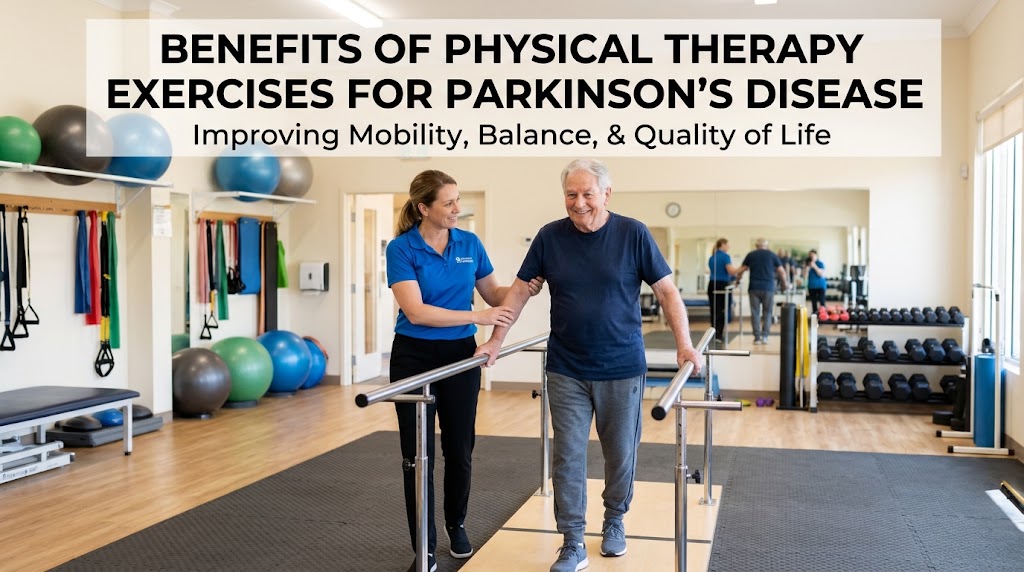
Benefits of Physical Therapy Exercises for Parkinson’s Disease
Click Here To Watch Video to Treat Parkinson’s Disease Naturally!..
Regular physical activity can support several aspects of health and daily functioning.
1. Improved Mobility
Parkinson’s disease can cause bradykinesia, or slowness of movement. Walking, standing, turning, and changing positions may become more difficult.
Physical therapy exercises help practice larger, more controlled movements. Gait training and movement exercises can improve walking speed, stride length, and mobility.
2. Better Balance and Coordination
Balance problems can increase the risk of falls.
Balance training helps people practice controlled weight shifting, stepping in different directions, and maintaining a stable position.
Exercises can also improve coordination and confidence during movement.
3. Increased Muscle Strength
Muscle weakness can make daily activities more difficult.
Strength training helps improve the muscles used for standing, walking, climbing stairs, and maintaining posture.
4. Reduced Muscle Stiffness
Stretching and flexibility exercises may help improve joint movement and reduce the feeling of tightness.
They can be particularly useful for people experiencing stiffness in the shoulders, back, hips, and legs.
5. Improved Posture
Some people with Parkinson’s develop a stooped posture or forward-flexed position.
Posture exercises can help strengthen supporting muscles and encourage more upright positioning.
6. Better Quality of Life
Regular exercise may also support sleep, mood, endurance, and confidence.
The Parkinson’s Foundation identifies mobility, balance, flexibility, coordination, and quality of life among the areas that may benefit from exercise.
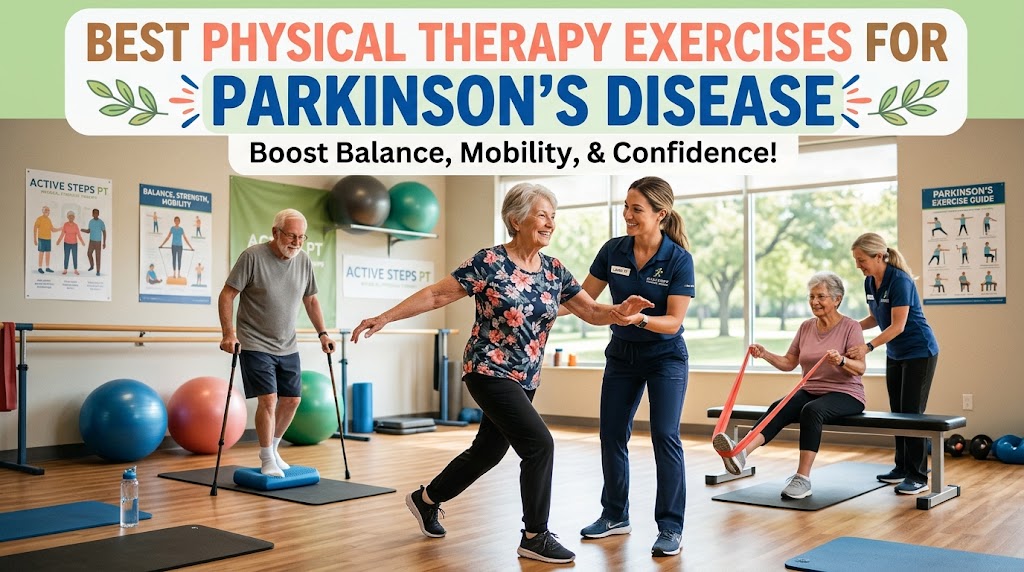
Best Physical Therapy Exercises for Parkinson’s Disease
Click Here To Watch Video to Treat Parkinson’s Disease Naturally!..
An effective exercise program generally combines aerobic activity, strength training, stretching, and balance exercises.
The following exercises are examples that may be incorporated into a rehabilitation program. Their suitability depends on individual symptoms and physical abilities.
1. Walking Exercises
Walking is a simple aerobic activity that can help maintain cardiovascular fitness and mobility.
How to practice:
- Begin on a flat, clear walking surface.
- Stand upright and look ahead.
- Take comfortable steps, focusing on lifting your feet.
- Try to maintain a steady rhythm.
- Allow your arms to swing naturally if comfortable.
- Start with a short distance and gradually increase it.
A therapist may introduce visual or auditory cues to encourage longer steps and a more consistent walking rhythm.
People with freezing of gait or significant balance problems should practice with supervision or an appropriate walking aid.
2. Chair Sit-to-Stand Exercise
Standing up from a chair is an important everyday movement that can become difficult with Parkinson’s disease.
How to practice:
- Sit in a stable chair with your feet flat on the floor.
- Move toward the front of the seat.
- Lean your upper body slightly forward.
- Push through your feet and stand up.
- Pause briefly once standing.
- Slowly sit down again.
Repeat only as comfortably tolerated.
Use armrests or assistance if needed. A therapist can help determine the safest technique.
3. Seated Marching
Seated marching is a useful option for people who have difficulty standing for long periods.
How to practice:
- Sit upright in a stable chair.
- Keep your feet flat on the floor.
- Lift one knee gently.
- Lower it slowly.
- Repeat with the opposite leg.
- Continue at a comfortable pace.
Avoid leaning backward or rushing the movement.
4. Shoulder and Arm Stretching
Stiffness in the shoulders and arms may affect dressing, reaching, and other daily activities.
How to practice:
- Sit or stand comfortably.
- Gently roll your shoulders backward.
- Relax and repeat in a controlled manner.
- Slowly raise your arms forward or overhead if comfortable.
- Return to the starting position.
Do not force your shoulders beyond a comfortable range.
5. Balance and Weight-Shifting Exercises
Weight-shifting exercises help people practice moving their body while maintaining stability.
How to practice:
- Stand near a sturdy countertop or support surface.
- Keep your feet comfortably apart.
- Slowly shift your weight toward one side.
- Return to the center.
- Repeat toward the other side.
Do not attempt unsupported balance exercises if you have a significant fall risk. A physical therapist should supervise more challenging balance activities.
6. Heel Raises
How to practice:
- Stand behind a sturdy chair or hold a countertop.
- Keep your feet approximately hip-width apart.
- Slowly raise your heels.
- Balance briefly while holding support.
- Lower your heels gently.
Repeat according to your therapist’s instructions.
7. Large-Amplitude Movement Exercises
People with Parkinson’s may gradually develop smaller movements, sometimes called hypokinesia.
Large-amplitude exercises encourage exaggerated but controlled movements.
Examples include:
- Taking larger steps while walking
- Reaching both arms outward
- Raising the knees higher during marching
- Practicing large, controlled arm movements
- Performing wide, comfortable movements while sitting
Specialized programs such as LSVT BIG use large-amplitude movement training to improve functional movement in people with Parkinson’s disease.
8. Turning and Stepping Exercises
<text weight=”medium”>Purpose: Improve directional changes and walking control.</text>
Turning can be particularly difficult for people who experience freezing of gait.
A therapist may teach strategies such as:
- Taking several small steps rather than twisting on one foot
- Turning in a wider arc
- Looking toward the intended direction
- Using visual floor markers
- Pausing and resetting before moving again
These techniques should be practiced in a safe environment with supervision when necessary.
Aerobic Exercise for Parkinson’s Disease

Click Here To Watch Video to Treat Parkinson’s Disease Naturally!..
Aerobic exercise helps improve heart health, endurance, and overall physical fitness.
Examples include:
- Walking
- Stationary cycling
- Swimming, when safe
- Dancing
- Treadmill walking under supervision
- Adapted aerobic classes
The Parkinson’s Foundation and American College of Sports Medicine recommend working toward at least 150 minutes of moderate-to-vigorous exercise each week, where appropriate. Their exercise framework includes aerobic activity, strength training, stretching, and balance, agility, and multitasking exercises.
People who are new to exercise should begin at a manageable level and gradually increase activity with professional guidance.
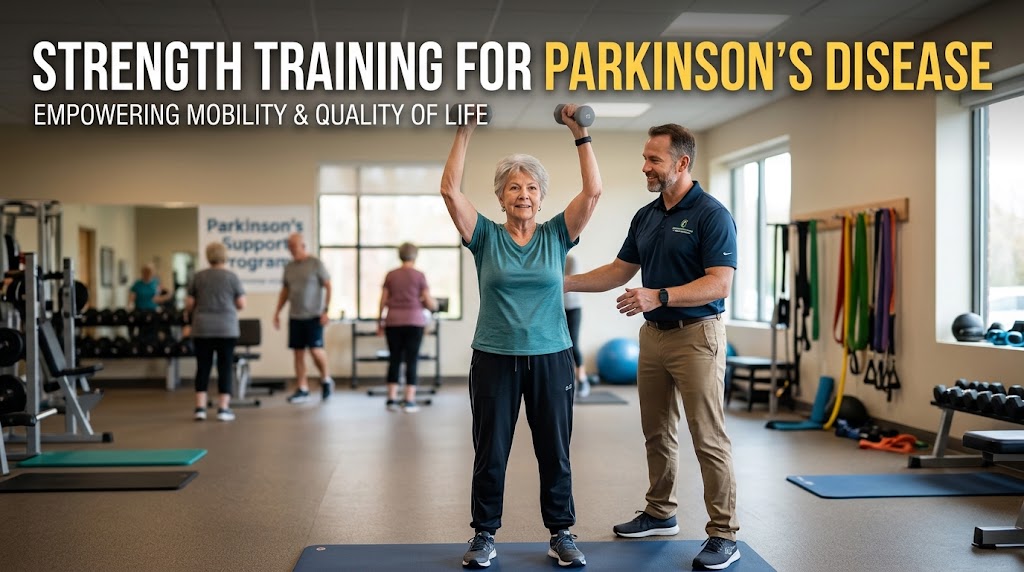
Strength Training for Parkinson’s Disease
Click Here To Watch Video to Treat Parkinson’s Disease Naturally!..
Strength training helps maintain the muscles needed for walking, standing, posture, and everyday activities.
A physical therapist may recommend:
- Seated leg extensions
- Sit-to-stand exercises
- Resistance-band exercises
- Supported squats
- Light hand weights
- Core-strengthening activities
The Parkinson’s Foundation exercise recommendations include strength training on two to three non-consecutive days per week, adjusted to individual ability.
People should use appropriate resistance and focus on controlled movements rather than lifting heavy weights without supervision.
Stretching Exercises for Flexibility
Stretching can help maintain joint range of motion and address stiffness.
Useful areas to target may include:
- Neck
- Shoulders
- Chest
- Back
- Hips
- Hamstrings
- Calves
Stretch slowly without bouncing or forcing a joint. A comfortable stretch should not cause sharp pain.
Daily flexibility work may be helpful, particularly for people with stiffness or reduced movement.
Physical Therapy for Freezing of Gait
Freezing of gait occurs when a person temporarily feels unable to move their feet forward, even though they intend to walk.
It can happen when starting to walk, turning, approaching a doorway, or moving through crowded spaces.
Physical therapists may teach cueing strategies to help overcome freezing.
Examples include:
Visual cues: Step over a line or imagine stepping over an object on the floor.
Auditory cues: Use a steady rhythm, counting, or music when appropriate.
Weight shifting: Gently shift your weight from one leg to the other before taking the next step.
Turning strategies: Use a wider turning pattern rather than making a sudden pivot.
Cueing and gait training are supported interventions in physical therapy guidelines for Parkinson’s disease.
How Often Should People With Parkinson’s Exercise?
Exercise frequency should be individualized, but general Parkinson’s exercise recommendations provide a useful framework.
| Exercise type | General recommendation |
|---|---|
| Aerobic activity | At least 3 days per week |
| Strength training | 2–3 non-consecutive days per week |
| Stretching | 2–3 days per week; daily if appropriate |
| Balance training | 2–3 days per week |
These are general targets, not requirements for every patient. Exercise intensity, duration, and progression should be adapted to health, mobility, medication response, and safety.
Safety Tips Before Starting Physical Therapy
Safety is essential when exercising with Parkinson’s disease.
Follow these precautions:
- Speak with your healthcare professional before beginning a new exercise program.
- Consider an assessment by a physical therapist experienced in Parkinson’s disease.
- Exercise during medication “on” periods when movement is generally better controlled, if possible.
- Wear supportive footwear.
- Choose a clear, well-lit exercise area.
- Use stable support for standing exercises when needed.
- Avoid difficult balance exercises without supervision.
- Stay hydrated.
- Stop exercising if you experience chest pain, faintness, unusual shortness of breath, or significant dizziness.
People with osteoporosis, heart conditions, low blood pressure, or a history of falls may need additional exercise modifications.
When Should You See a Physical Therapist?
Consider a physical therapy assessment if you experience:
- Difficulty walking
- Frequent loss of balance
- Increased muscle stiffness
- Freezing of gait
- Reduced walking speed
- Difficulty getting out of a chair
- Changes in posture
- Reduced confidence during daily activities
You do not need to wait until symptoms become severe. Early assessment can help identify movement problems and establish an exercise plan that can be adapted as Parkinson’s progresses.
Frequently Asked Questions
Can physical therapy improve Parkinson’s symptoms?
Physical therapy can help improve mobility, balance, strength, walking ability, and functional movement. It does not cure Parkinson’s disease or stop its progression.
What is the best exercise for Parkinson’s disease?
There is no single best exercise for everyone. A combination of aerobic activity, strength training, flexibility work, balance exercises, and gait training is generally recommended.
Can walking help people with Parkinson’s?
Yes. Walking can support cardiovascular fitness, endurance, and mobility. People with significant balance difficulties or freezing should use appropriate supervision or mobility support.
Is exercise safe during advanced Parkinson’s disease?
Exercise may still be beneficial during advanced stages, but activities often require modification and supervision. A physical therapist can recommend safe movements based on individual abilities.
How long should someone with Parkinson’s exercise each day?
Exercise duration depends on fitness, symptoms, and medical conditions. General guidelines encourage working toward 150 minutes of moderate-to-vigorous activity weekly when appropriate, but beginners may need shorter sessions.
Conclusion
Parkinson’s disease physical therapy exercises are an important part of managing movement difficulties and maintaining independence. Walking, stretching, strength training, balance exercises, and large-amplitude movements can help address common problems such as stiffness, slow movement, poor posture, and difficulty walking.
The most effective program is one that matches the person’s symptoms, physical abilities, and safety needs. Working with a physical therapist experienced in Parkinson’s disease can help identify suitable exercises and introduce new activities gradually.
Although exercise cannot cure Parkinson’s disease, consistent physical activity can support mobility, strength, balance, and overall well-being. Starting with manageable exercises and maintaining a regular routine can help people stay active and continue participating in everyday life.