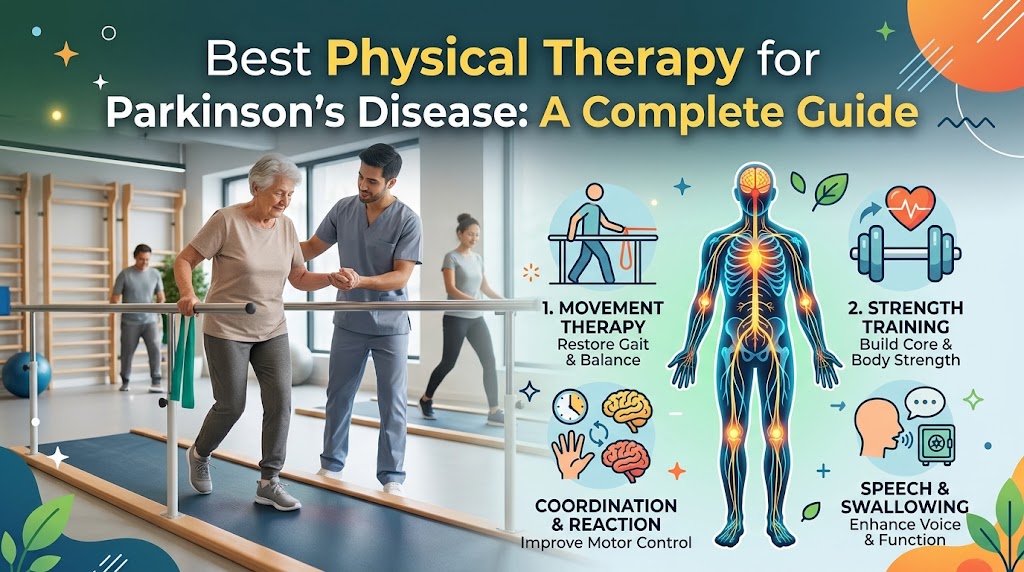
Physical therapy is an important part of managing Parkinson’s disease. Although it cannot cure Parkinson’s or stop the underlying progression of the condition, a well-designed physical therapy program can help people maintain mobility, improve strength and balance, reduce fall risk, and stay independent for longer.
Parkinson’s disease can affect the way a person walks, turns, stands, reaches, and performs everyday movements. Symptoms such as bradykinesia (slowness of movement), rigidity, tremor, postural instability, and freezing of gait can gradually make physical activities more challenging.
The good news is that exercise and specialized physical therapy can target many of these difficulties.
This complete guide explains the best types of physical therapy for Parkinson’s disease, what exercises may be included, how often to exercise, and how a Parkinson’s-focused physical therapist can create an individualized program.
What Is Physical Therapy for Parkinson’s Disease?
Click Here To Watch Video to Treat Parkinson’s Disease Naturally!..
Physical therapy for Parkinson’s disease focuses on improving movement, function, safety, and independence.
A physical therapist evaluates how Parkinson’s symptoms affect activities such as:
- Walking
- Standing
- Turning
- Getting out of a chair
- Climbing stairs
- Maintaining balance
- Reaching
- Changing positions
- Performing daily activities
The therapist then develops an exercise and movement program based on the person’s symptoms, abilities, goals, and safety needs.
Parkinson’s physical therapy is different from general exercise because it specifically addresses movement problems associated with the disease.
Why Is Physical Therapy Important for Parkinson’s?

Click Here To Watch Video to Treat Parkinson’s Disease Naturally!..
Parkinson’s symptoms can gradually lead to reduced physical activity. When someone moves less because movement feels difficult, they may lose strength, flexibility, cardiovascular fitness, and confidence.
This can create a cycle:
Parkinson’s symptoms → less movement → reduced fitness and strength → greater difficulty moving → increased fall risk
Physical therapy aims to interrupt this cycle.
Regular exercise and targeted therapy can help people maintain physical function and improve their ability to participate in everyday activities.
Early involvement can also help patients learn movement strategies before mobility problems become more severe.
The Best Physical Therapy Exercises for Parkinson’s Disease

Click Here To Watch Video to Treat Parkinson’s Disease Naturally!..
There is no single “best” exercise for everyone with Parkinson’s disease. The most effective program usually combines several types of exercise.
1. Aerobic Exercise
Aerobic exercise raises the heart rate and improves cardiovascular fitness.
Examples include:
- Walking
- Stationary cycling
- Treadmill walking
- Swimming
- Water-based exercise
- Elliptical training
Aerobic activity can help maintain endurance and make everyday activities less tiring.
A physical therapist can recommend an appropriate intensity based on the patient’s fitness level, balance, medications, and other health factors.
For people with significant balance problems, seated or supported aerobic exercise may be safer than unsupported activities.
2. Strength Training
Parkinson’s disease does not simply cause weakness, but reduced activity can contribute to loss of muscle strength.
Strength training can target the major muscle groups needed for everyday movement.
Common exercises include:
- Sit-to-stand exercises
- Squats with support
- Step-ups
- Leg presses
- Resistance-band exercises
- Calf raises
- Core strengthening
- Upper-body resistance exercises
Strong leg and core muscles can make activities such as standing, climbing stairs, and walking easier.
A therapist can adjust resistance and repetitions according to the individual’s abilities.
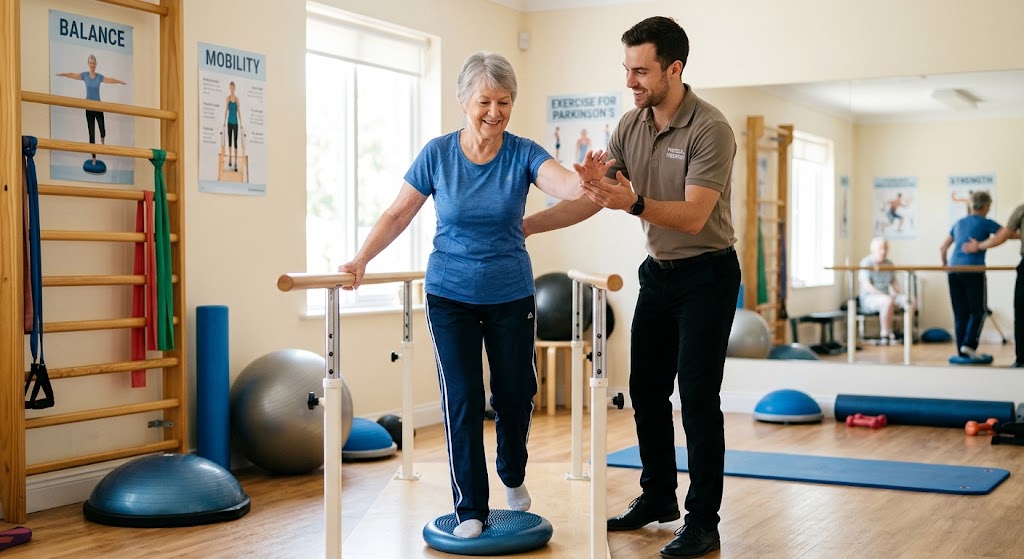
3. Balance Training
Balance problems can become increasingly important as Parkinson’s progresses.
Balance therapy may include exercises that challenge the ability to maintain stability while standing, reaching, stepping, and changing direction.
Examples may include:
- Weight-shifting exercises
- Heel-to-toe standing
- Side stepping
- Controlled reaching
- Stepping in different directions
- Turning exercises
- Obstacle navigation
Balance exercises should be performed in a safe environment, particularly for people who have previously fallen.
A therapist may use a stable surface, countertop, parallel bars, or another form of support when necessary.
4. Gait Training
Walking changes are common in Parkinson’s disease.
A person may develop:
- Shorter steps
- Slower walking
- Reduced arm swing
- Difficulty turning
- Shuffling
- Hesitation
- Freezing of gait
Gait training teaches strategies for improving walking patterns and reducing mobility difficulties.
A therapist may work on:
- Step length
- Walking speed
- Arm movement
- Foot clearance
- Turning
- Starting and stopping
- Walking around obstacles
The therapist may also recommend mobility aids when appropriate.
5. Amplitude-Based Movement Training
Some Parkinson’s rehabilitation programs emphasize making movements deliberately larger.
People with Parkinson’s may gradually develop smaller movements, sometimes called hypokinesia.
Amplitude-based exercises encourage exaggerated or larger movements during activities such as:
- Standing
- Walking
- Reaching
- Turning
- Sitting
- Getting out of a chair
The objective is to help patients practice larger, more deliberate movements that can carry over into everyday activities.
Specialized Parkinson’s rehabilitation programs may incorporate structured amplitude-focused approaches.
6. Stretching and Flexibility Exercises
Rigidity and reduced movement can contribute to stiffness.
Stretching can help maintain flexibility and make movement more comfortable.
Common areas targeted include:
- Neck
- Shoulders
- Chest
- Back
- Hips
- Hamstrings
- Calves
Gentle stretching should be performed regularly and without forcing a joint beyond a comfortable range.
A physical therapist can identify areas of restricted movement and recommend appropriate stretches.
7. Posture Training
Parkinson’s disease can affect posture.
Some people develop a forward-flexed posture, rounded shoulders, or difficulty maintaining an upright position.
Posture-focused therapy may include:
- Chest-opening exercises
- Upper-back strengthening
- Core exercises
- Shoulder mobility work
- Upright standing practice
- Postural awareness exercises
Improving posture can make movement more efficient and may help with balance and walking.
8. Cueing for Freezing of Gait
Freezing of gait occurs when a person temporarily feels as though their feet are stuck to the floor.
It can happen when:
- Starting to walk
- Turning
- Approaching a doorway
- Moving through crowded spaces
- Changing direction
- Performing another task while walking
Physical therapists can teach cueing strategies that may help overcome freezing.
Examples include:
- Counting aloud
- Rhythmic sounds
- Visual stepping targets
- Imagining stepping over an object
- Shifting weight before stepping
Different cues work for different people.
The therapist can help identify which strategies are most effective and safest.
9. Turning and Transfer Training
Everyday movements such as turning in bed, standing up, sitting down, or getting out of a car can become difficult with Parkinson’s.
Physical therapy can break these movements into manageable steps.
For example, a therapist may teach strategies for:
- Rolling in bed
- Moving from lying to sitting
- Standing from a chair
- Turning safely
- Getting into and out of a vehicle
Practicing these movements can improve confidence and independence.
10. Dual-Task Training
Some people with Parkinson’s have difficulty performing two activities simultaneously.
For example, walking while talking or carrying an object can increase the risk of losing balance.
Physical therapists may introduce dual-task exercises gradually.
Examples include walking while:
- Counting
- Talking
- Carrying a lightweight object
- Changing direction
- Responding to simple instructions
These exercises should be carefully supervised when balance is impaired.
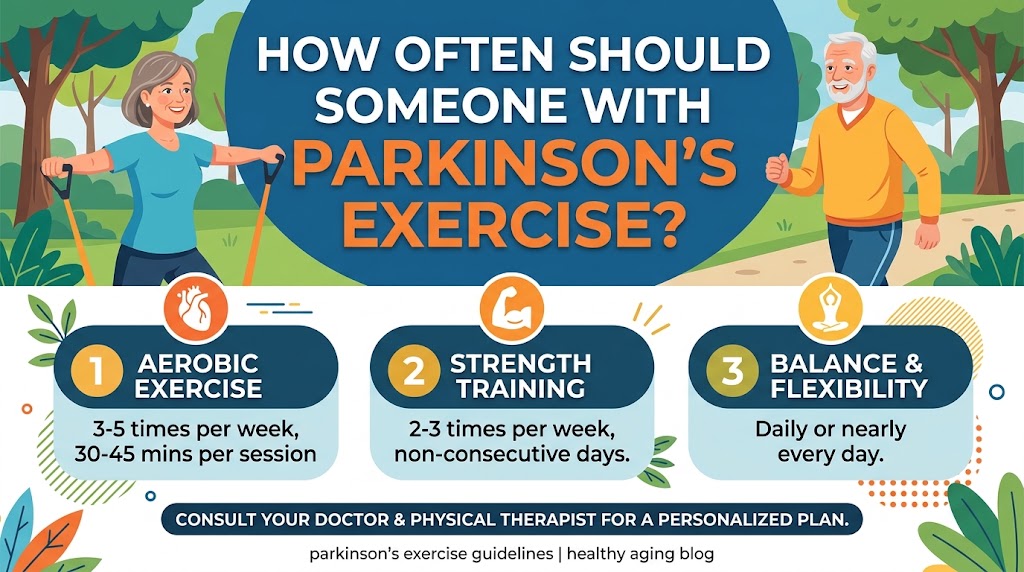
How Often Should Someone With Parkinson’s Exercise?
Click Here To Watch Video to Treat Parkinson’s Disease Naturally!..
Exercise frequency should be individualized.
Many people benefit from incorporating physical activity into their routine on most days of the week, combining aerobic exercise, strength training, balance work, flexibility exercises, and Parkinson’s-specific movement practice.
The appropriate duration and intensity depend on:
- Disease stage
- Fitness level
- Age
- Balance
- Medication timing
- Cardiovascular health
- Joint or muscle problems
- Fall history
Consistency is generally more important than doing extremely difficult workouts occasionally.
Exercise During “On” and “Off” Periods
Medication timing can affect physical performance.
Some people move much more easily during their medication “on” periods and may find exercise difficult during “off” periods.
A therapist can help identify the safest and most productive times for exercise.
Patients should also communicate with their healthcare team if medication fluctuations interfere significantly with exercise.
Physical Therapy for Advanced Parkinson’s Disease
Click Here To Watch Video to Treat Parkinson’s Disease Naturally!..
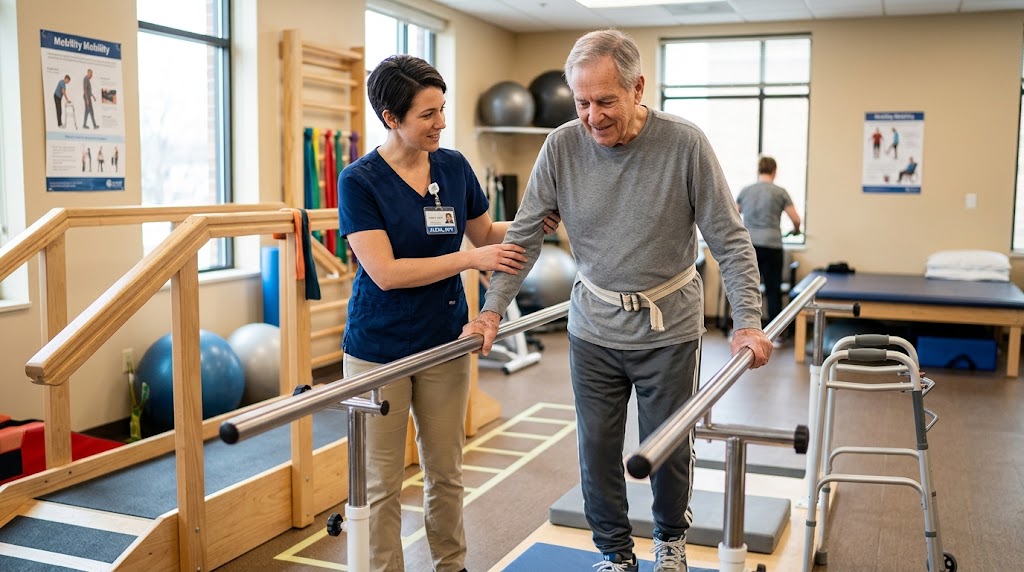
People with advanced Parkinson’s may require more specialized rehabilitation.
Therapy may focus on:
- Fall prevention
- Safe transfers
- Walking strategies
- Mobility aids
- Home safety
- Caregiver education
- Maintaining independence
- Preventing deconditioning
If balance is severely impaired, therapists may prioritize safety and functional mobility over more challenging exercises.
Can Physical Therapy Reduce Falls?
Falls are a major concern for some people with Parkinson’s disease.
Physical therapy cannot eliminate fall risk, but it can address several factors that contribute to falls.
A therapist may assess:
- Balance
- Leg strength
- Walking pattern
- Turning ability
- Freezing
- Posture
- Home hazards
- Use of mobility aids
The therapist can then recommend strategies to reduce risk.
Home modifications may include improving lighting, removing loose rugs, adding grab bars, and keeping frequently used items within easy reach.
Can Physical Therapy Help With Tremor?
Physical therapy does not usually eliminate Parkinson’s tremor.
However, therapy can help a person maintain strength, mobility, coordination, and function despite tremor.
Occupational therapy may also be helpful for adapting tasks that become difficult because of tremor.
If tremor becomes significantly disabling despite medication, a neurologist may discuss additional treatment options.
Physical Therapy and Parkinson’s Medication
Physical therapy works alongside medical treatment.
Patients should continue taking Parkinson’s medications according to their prescribed schedule unless their healthcare provider recommends a change.
A therapist may coordinate with the patient’s neurologist to understand when medications are most effective and how fluctuations affect mobility.
This can help make exercise sessions safer and more productive.
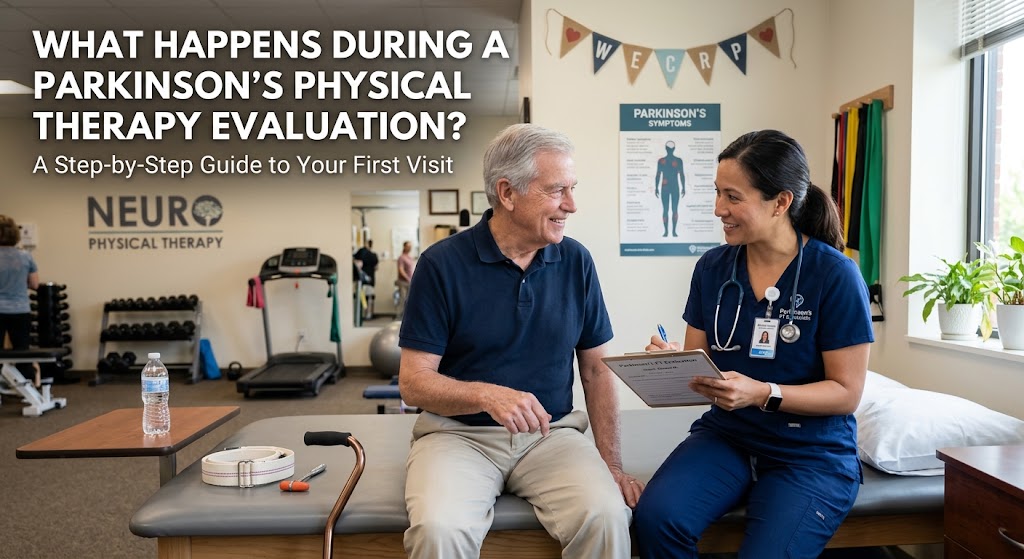
What Happens During a Parkinson’s Physical Therapy Evaluation?
Click Here To Watch Video to Treat Parkinson’s Disease Naturally!..
A Parkinson’s-focused physical therapist may assess:
- Walking speed
- Step length
- Balance
- Muscle strength
- Flexibility
- Posture
- Transfers
- Coordination
- Endurance
- Fall risk
- Freezing episodes
The therapist may also ask about the patient’s daily routine and specific goals.
For example, one person’s goal may be to walk independently around the neighborhood, while another may want to safely get out of bed or climb stairs.
The treatment plan should reflect those individual priorities.
When Should Physical Therapy Begin?
There is no need to wait until Parkinson’s symptoms become severe before discussing physical therapy.
Early evaluation can help patients learn effective movement strategies and establish an exercise routine.
Therapy may also become especially valuable when someone develops:
- New walking difficulties
- Balance problems
- Falls
- Freezing
- Reduced activity
- Difficulty with transfers
- Increased stiffness
- Loss of strength or endurance
Regular reassessment allows the exercise program to evolve as Parkinson’s symptoms change.
Tips for Exercising Safely With Parkinson’s
Safety should always come first.
Helpful strategies include:
- Exercise in a safe, uncluttered environment.
- Use support when balance is limited.
- Wear appropriate footwear.
- Stay hydrated.
- Warm up before more intense exercise.
- Avoid exercising when unusually dizzy or unwell.
- Follow the medication schedule provided by your doctor.
- Have assistance available if there is a significant fall risk.
- Stop and seek medical advice if unusual or severe symptoms occur.
People with cardiovascular disease, significant osteoporosis, severe balance problems, or other medical conditions may need additional precautions.
Physical Therapy vs. General Exercise
General exercise and physical therapy are complementary, but they are not identical.
General exercise helps improve overall fitness, strength, flexibility, and cardiovascular health.
Physical therapy provides an individualized assessment and treatment plan focused on specific movement and functional problems.
A person with Parkinson’s may benefit from both.
For example, they might perform regular walking or cycling for aerobic fitness while working with a physical therapist on freezing, balance, and turning strategies.
Other Rehabilitation Therapies
Physical therapy is only one component of Parkinson’s rehabilitation.
Some patients may also benefit from:
Occupational Therapy
Occupational therapists can help with dressing, eating, writing, bathing, cooking, and other daily activities.
Speech Therapy
Speech-language pathologists can address speech, communication, swallowing, and certain cognitive-communication difficulties.
Nutrition Support
A registered dietitian can help address nutrition, hydration, constipation, medication-food interactions, and other dietary concerns.
A multidisciplinary approach can provide more comprehensive support.
Frequently Asked Questions
What is the best exercise for Parkinson’s disease?
There is no single best exercise for everyone. A combination of aerobic exercise, strength training, balance work, flexibility exercises, and Parkinson’s-specific movement training is often useful.
Can physical therapy slow Parkinson’s disease?
Physical therapy does not cure Parkinson’s or stop its underlying progression. However, regular exercise and rehabilitation can help maintain physical function, mobility, and independence.
Can walking help Parkinson’s disease?
Yes. Walking can provide aerobic exercise and help practice gait. People with significant freezing or balance problems should receive appropriate guidance to exercise safely.
Is physical therapy useful for advanced Parkinson’s?
Yes. In advanced Parkinson’s, therapy may focus on fall prevention, transfers, walking safety, mobility aids, caregiver education, and maintaining independence.
How long should Parkinson’s physical therapy last?
The duration varies. Some people need a short course to learn strategies and exercises, while others benefit from periodic reassessment and ongoing therapy as symptoms change.
Final Thoughts
The best physical therapy for Parkinson’s disease is an individualized program that addresses the person’s specific movement problems and daily goals.
Aerobic exercise, strength training, balance exercises, gait training, flexibility work, posture training, amplitude-focused movements, and cueing strategies can all play important roles.
Physical therapy may help people maintain mobility, improve functional movement, reduce fall risk, and remain independent for longer. It is especially valuable when symptoms such as freezing, balance problems, stiffness, or difficulty with transfers begin interfering with daily activities.
For the best results, work with a physical therapist who has experience treating Parkinson’s disease. Your therapist can design a safe program that fits your abilities and coordinate with your neurologist and other healthcare professionals.
Most importantly, exercise should be viewed as an ongoing part of Parkinson’s management rather than a one-time treatment. A consistent, appropriately designed movement program can help support mobility and quality of life throughout the course of the disease.