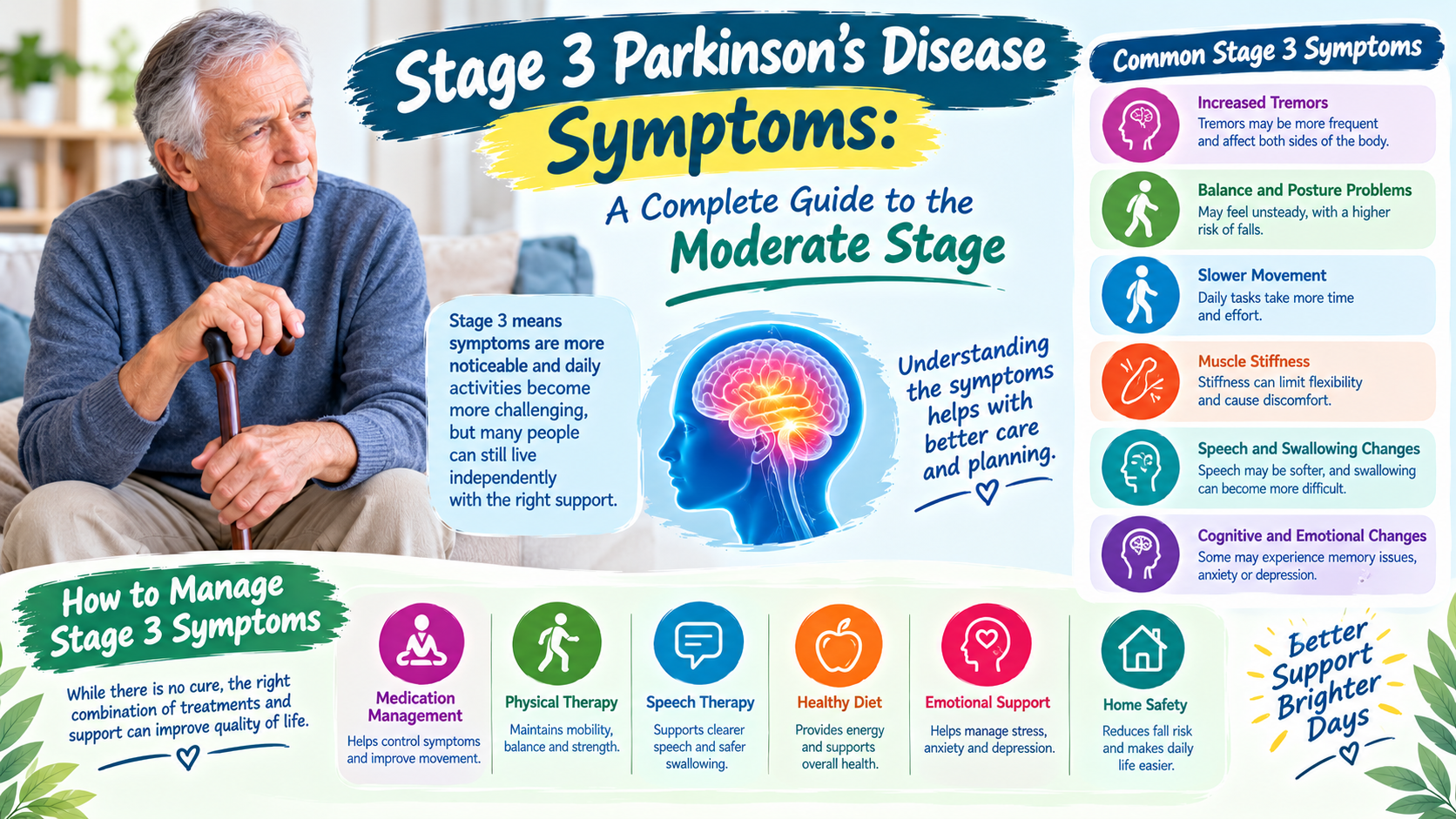
Although stage 3 can present new challenges, many people can still live independently with appropriate treatment, exercise, rehabilitation, and support. Understanding the symptoms and available management strategies can help patients and caregivers prepare for changes and maintain quality of life.
What Is Stage 3 Parkinson’s Disease?
Click Here To Watch Video to Treat Parkinson’s Disease Naturally!..
Stage 3 Parkinson’s disease is the middle stage of the commonly used Hoehn and Yahr staging system. This system describes Parkinson’s progression primarily according to movement symptoms and physical independence.
During stage 3, symptoms typically affect both sides of the body, and problems with balance become more noticeable. People may walk more slowly, experience stiffness, and find everyday movements more difficult.
The defining feature of stage 3 is postural instability, which means difficulty maintaining balance or correcting body position. This can increase the likelihood of falls.
Despite these difficulties, many people at this stage remain physically independent and can continue performing many daily activities, although tasks may take longer or require adaptations.
It is important to remember that Parkinson’s disease progresses differently for everyone. A stage describes a general pattern of symptoms rather than predicting exactly what a person will experience.
Common Stage 3 Parkinson’s Disease Symptoms
Click Here To Watch Video to Treat Parkinson’s Disease Naturally!..
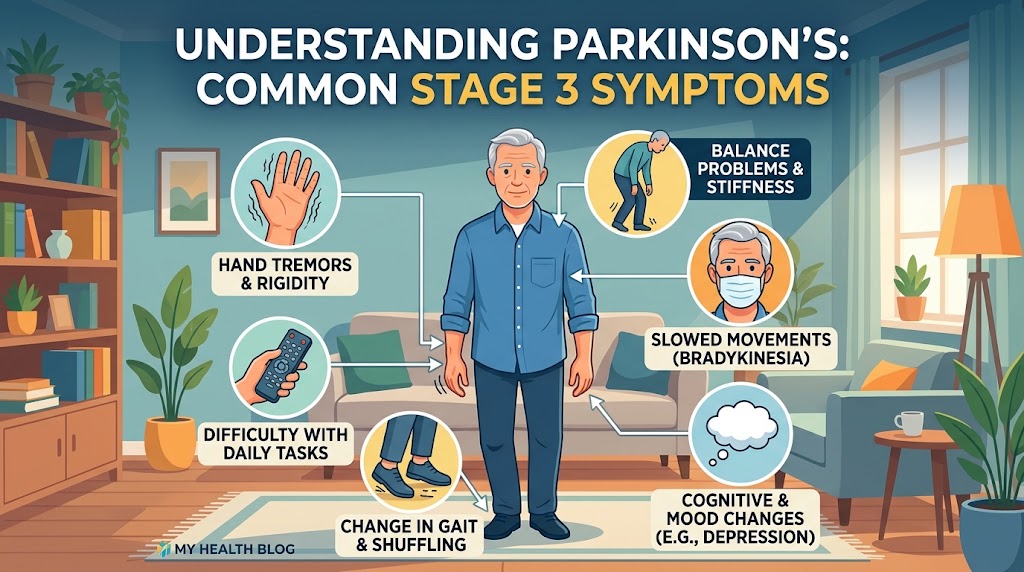
Symptoms vary between individuals, but several movement-related changes are common during this stage.
1. Balance Problems
Balance difficulties are among the most characteristic symptoms of stage 3 Parkinson’s disease.
People may feel unsteady when standing, turning, changing direction, or walking on uneven surfaces. Recovering balance after a sudden movement may also become more difficult.
These changes occur because Parkinson’s affects the brain systems involved in coordinating movement and maintaining posture.
Balance problems can increase the risk of falling, so early attention to safety and physical therapy is important.
2. Increased Risk of Falls
As balance and movement control change, falls may become more frequent.
A person may stumble while turning, lose balance when getting up from a chair, or have difficulty stopping safely while walking.
Falls can lead to injuries, including fractures and head injuries. Fear of falling may also cause some people to reduce physical activity, potentially weakening muscles and further affecting mobility.
A fall-prevention plan can help reduce these risks.
3. Slower Movements
Slowness of movement, known medically as bradykinesia, is a key symptom of Parkinson’s disease.
During stage 3, everyday activities may require more time and effort. For example, a person might take longer to dress, prepare meals, brush their teeth, or get out of bed.
Movements may also become smaller and less automatic. Tasks that once felt easy may require greater concentration.
4. Muscle Stiffness
Muscle rigidity can make movement uncomfortable or difficult.
A person may experience stiffness in the arms, legs, neck, shoulders, or back. Turning in bed, standing up, or changing position may become more challenging.
Stiffness can also contribute to reduced arm swing while walking and changes in posture.
Medication, stretching, and appropriately supervised exercise may help manage these difficulties.
5. Tremor
Tremor is a common symptom of Parkinson’s disease, although not everyone experiences it.
It often begins as shaking in one hand but may affect other body parts over time. Tremor may be most noticeable when a limb is resting.
Tremor can interfere with eating, writing, using utensils, or handling small objects. Its severity varies, and it may improve with medication in some people.
6. Changes in Walking
Walking difficulties may become more apparent during stage 3.
Possible changes include:
- Short, shuffling steps
- Reduced arm swing
- Slower walking speed
- Difficulty turning
- A stooped posture
- Trouble starting or stopping movement
- Occasional freezing of gait
Freezing of gait occurs when a person temporarily feels unable to move their feet forward, even though they intend to walk. It may happen when approaching a doorway, turning, or navigating a crowded space.
These symptoms can increase fall risk and may benefit from specialized physical therapy.
Non-Motor Symptoms of Stage 3 Parkinson’s Disease
Click Here To Watch Video to Treat Parkinson’s Disease Naturally!..
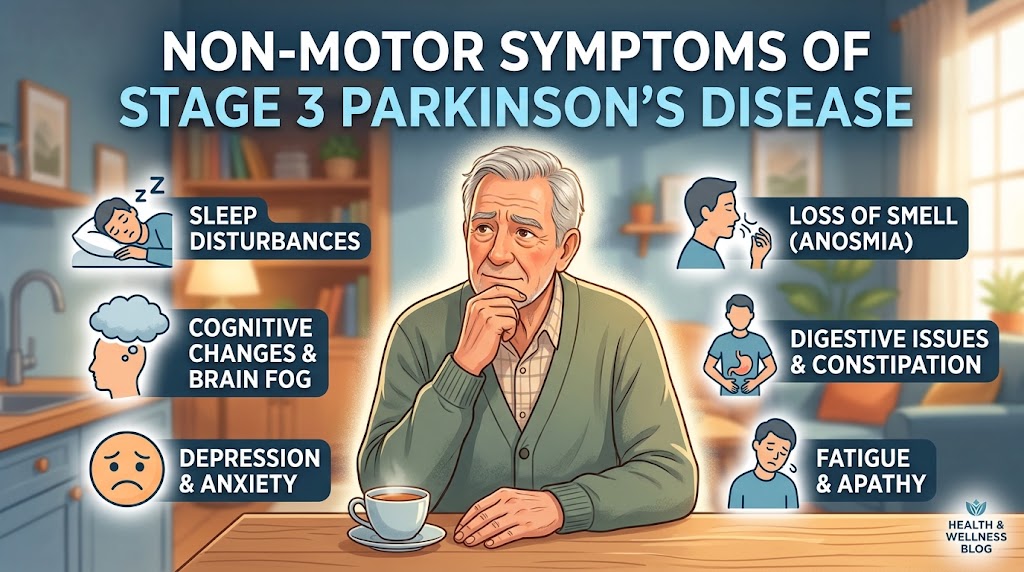
Parkinson’s disease affects more than movement. Non-motor symptoms can also influence daily functioning and quality of life.
Sleep Problems
Some people experience insomnia, frequent waking, daytime sleepiness, or acting out dreams during sleep.
Sleep difficulties can increase fatigue and make it harder to manage movement symptoms during the day.
Mood Changes
Depression, anxiety, irritability, and reduced motivation can occur in people with Parkinson’s disease.
These symptoms are not simply emotional reactions to a diagnosis. Parkinson’s-related brain changes and the challenges of living with a chronic condition may both contribute.
Discuss persistent mood changes with a healthcare professional because treatment and psychological support may help.
Constipation and Digestive Problems
Constipation is a common non-motor symptom of Parkinson’s disease. Changes in the nervous system that controls digestion may slow the movement of food through the digestive tract.
Adequate fluids, suitable dietary fiber, physical activity, and medical treatment when needed can help manage constipation.
Speech and Voice Changes
Speech may become softer, less clear, or more monotonous. Some people speak quickly or have difficulty controlling their volume.
A speech-language therapist can recommend techniques to improve communication and help address related swallowing concerns.
Thinking and Memory Changes
Some people experience difficulties with attention, planning, multitasking, or memory. These changes vary considerably and do not mean that everyone with stage 3 Parkinson’s disease will develop dementia.
Persistent or worsening cognitive symptoms should be evaluated by a healthcare professional.
How Does Stage 3 Affect Daily Life?
Click Here To Watch Video to Treat Parkinson’s Disease Naturally!..
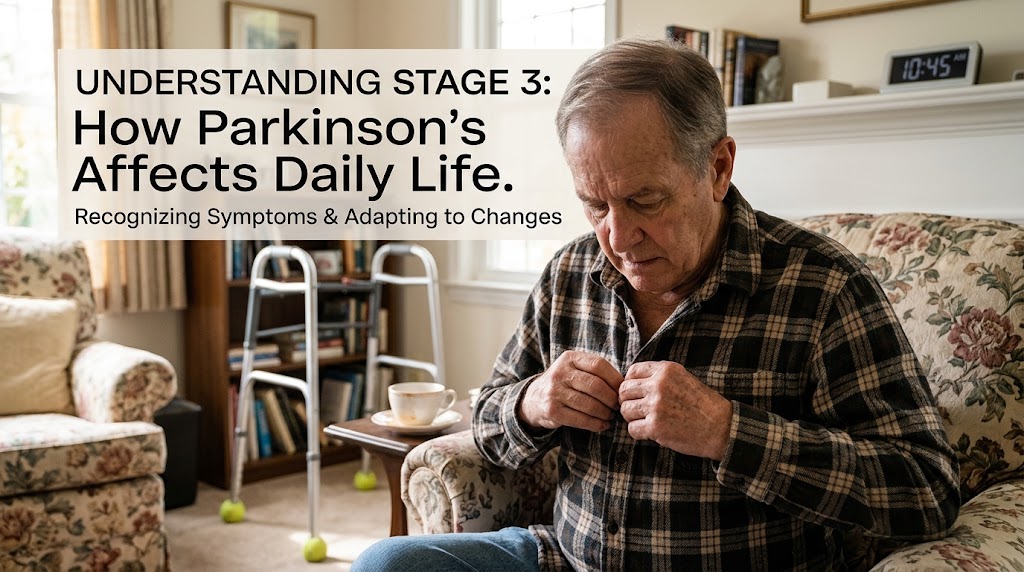
Stage 3 Parkinson’s disease can affect everyday routines in several ways.
Personal care: Dressing, bathing, grooming, and fastening buttons may take longer because of stiffness and slower movement.
Walking and mobility: Moving around the home, climbing stairs, and navigating busy areas may become more challenging.
Household activities: Cooking, cleaning, carrying objects, and shopping may require additional planning or assistance.
Social activities: Fatigue, mobility difficulties, speech changes, or anxiety about falling may make some people less comfortable in social situations.
Work and hobbies: Some activities may need to be adapted to accommodate changes in movement, endurance, or concentration.
However, stage 3 does not automatically mean that a person can no longer live alone. Independence depends on symptom severity, home safety, other health conditions, and available support.
How Is Stage 3 Parkinson’s Disease Diagnosed?
There is no single test that determines whether someone has stage 3 Parkinson’s disease. Diagnosis is based on clinical assessment, and staging describes the extent of movement-related impairment.
A neurologist may evaluate:
- Tremor and muscle rigidity
- Slowness of movement
- Walking patterns
- Balance and posture
- Ability to perform everyday tasks
- Response to Parkinson’s medication
- Changes in symptoms over time
The clinician may use the Hoehn and Yahr scale alongside more detailed assessments, such as the Movement Disorder Society–Unified Parkinson’s Disease Rating Scale (MDS-UPDRS).
These tools help assess symptoms and functional changes. Staging alone does not capture every non-motor symptom or fully describe a person’s individual needs.
Treatment Options for Stage 3 Parkinson’s Disease

Click Here To Watch Video to Treat Parkinson’s Disease Naturally!..
There is currently no cure for Parkinson’s disease, but treatments can help manage symptoms and support daily functioning.
Treatment should be individualized according to symptoms, medication response, other medical conditions, and personal goals.
1. Parkinson’s Medications
Carbidopa-levodopa is a commonly used medication for movement symptoms. It helps increase the availability of levodopa in the brain so it can be converted into dopamine.
Other medications, including dopamine agonists, MAO-B inhibitors, and COMT inhibitors, may be appropriate for selected patients.
As Parkinson’s progresses, some people experience wearing-off periods, when medication benefits decrease before the next dose. Others may develop involuntary movements called dyskinesia.
A neurologist can review medication timing and effectiveness and determine whether adjustments are needed. Patients should not change or stop prescribed medication without medical guidance.
2. Physical Therapy
Physical therapy can help address walking difficulties, stiffness, posture, strength, and balance.
A physical therapist experienced in Parkinson’s disease may recommend:
- Gait training
- Balance exercises
- Strength training
- Flexibility exercises
- Strategies for freezing of gait
- Safe techniques for standing and turning
Therapy can also help people learn how to move more safely during daily activities.
3. Occupational Therapy
Occupational therapists help people maintain independence in everyday activities.
They may recommend adaptive equipment, dressing aids, bathroom modifications, and ways to make cooking or household tasks easier.
An occupational therapist can also assess the home environment and identify hazards that increase the risk of falling.
4. Speech and Swallowing Therapy
Speech-language therapy can help with reduced voice volume, unclear speech, and communication difficulties.
If swallowing becomes difficult, a specialist can assess swallowing safety and recommend appropriate strategies. New or worsening swallowing problems should be discussed promptly with a healthcare professional because they can increase the risk of choking and aspiration.
5. Advanced Treatments
Some people with Parkinson’s disease develop motor symptoms that remain difficult to control despite medication adjustments.
For carefully selected patients, deep brain stimulation (DBS) or certain continuous medication-delivery therapies may be considered.
These treatments are not suitable for everyone, and eligibility depends on factors such as symptom pattern, medication response, cognitive status, and overall health. A movement-disorder specialist can explain the potential benefits and risks.
Lifestyle Strategies for Managing Stage 3 Symptoms

Click Here To Watch Video to Treat Parkinson’s Disease Naturally!..
Daily habits can support treatment and help maintain mobility and well-being.
Stay Physically Active
Regular, appropriately supervised exercise can support strength, flexibility, balance, and cardiovascular health.
Choose activities that match your abilities and fall risk. A physical therapist can help design a safe routine.
Make the Home Safer
Reducing fall hazards is especially important when balance is affected.
Consider removing loose rugs and clutter, improving lighting, installing bathroom grab bars, and adding handrails to stairs. Use a walking aid if recommended by a healthcare professional.
Maintain a Balanced Diet
A varied diet with adequate protein, fiber, vitamins, and minerals supports general health. Drinking enough fluid and eating fiber-rich foods may help with constipation.
If protein intake appears to affect levodopa response, discuss meal timing with your clinician or dietitian rather than reducing protein unnecessarily.
Follow a Consistent Medication Schedule
Taking medication at the prescribed times can help make symptom control more predictable. Alarms, written schedules, or pill organizers may help prevent missed doses.
Parkinson’s disease can affect emotional well-being as well as physical function. Staying connected with family, friends, support groups, or a mental health professional can help reduce isolation and improve coping.
When Should You Contact a Doctor?
Arrange a medical review if you notice worsening balance, repeated falls, increasing stiffness, more frequent freezing, medication wearing off, or difficulty with daily activities.
Seek urgent medical attention after a serious fall, a head injury, a suspected fracture, or sudden new neurological symptoms.
New swallowing problems, unexplained weight loss, hallucinations, or significant changes in thinking or mood also warrant prompt discussion with a healthcare professional.
Regular follow-up helps the care team adjust treatment as symptoms and needs change.
Frequently Asked Questions
Is stage 3 Parkinson’s disease considered moderate?
Yes. Stage 3 is generally classified as the middle or moderate stage in the Hoehn and Yahr system. Balance difficulties become more noticeable, but many people remain physically independent.
Can someone with stage 3 Parkinson’s live alone?
Some people can continue living alone, depending on their mobility, fall risk, cognitive function, and home environment. Others may benefit from regular assistance or additional safety measures.
How long does stage 3 Parkinson’s disease last?
There is no fixed duration. Parkinson’s progresses differently for each person, and the length of time someone remains in stage 3 varies considerably.
Does stage 3 Parkinson’s always cause falls?
No. Balance problems increase the risk of falls, but not everyone experiences falls. Exercise, physical therapy, medication review, and home safety measures can help manage risk.
Can stage 3 Parkinson’s symptoms improve with treatment?
Treatment can often improve movement symptoms and daily functioning. However, responses vary, and Parkinson’s remains a progressive condition. Treatment goals focus on symptom control, safety, and quality of life.
Conclusion
Stage 3 Parkinson’s disease symptoms commonly include balance problems, slower movements, stiffness, tremor, and changes in walking. Non-motor symptoms, such as sleep disturbances, constipation, mood changes, and speech difficulties, may also affect daily life.
Although this stage can bring new challenges, many people continue to live independently with appropriate treatment and support. Medication management, physical therapy, occupational therapy, safe exercise, and fall-prevention strategies can help preserve mobility and everyday function.
If you or someone you care for has stage 3 Parkinson’s disease, work closely with a neurologist or movement-disorder specialist to develop an individualized care plan. Early attention to changing symptoms and practical daily needs can make a meaningful difference in safety, independence, and quality of life.