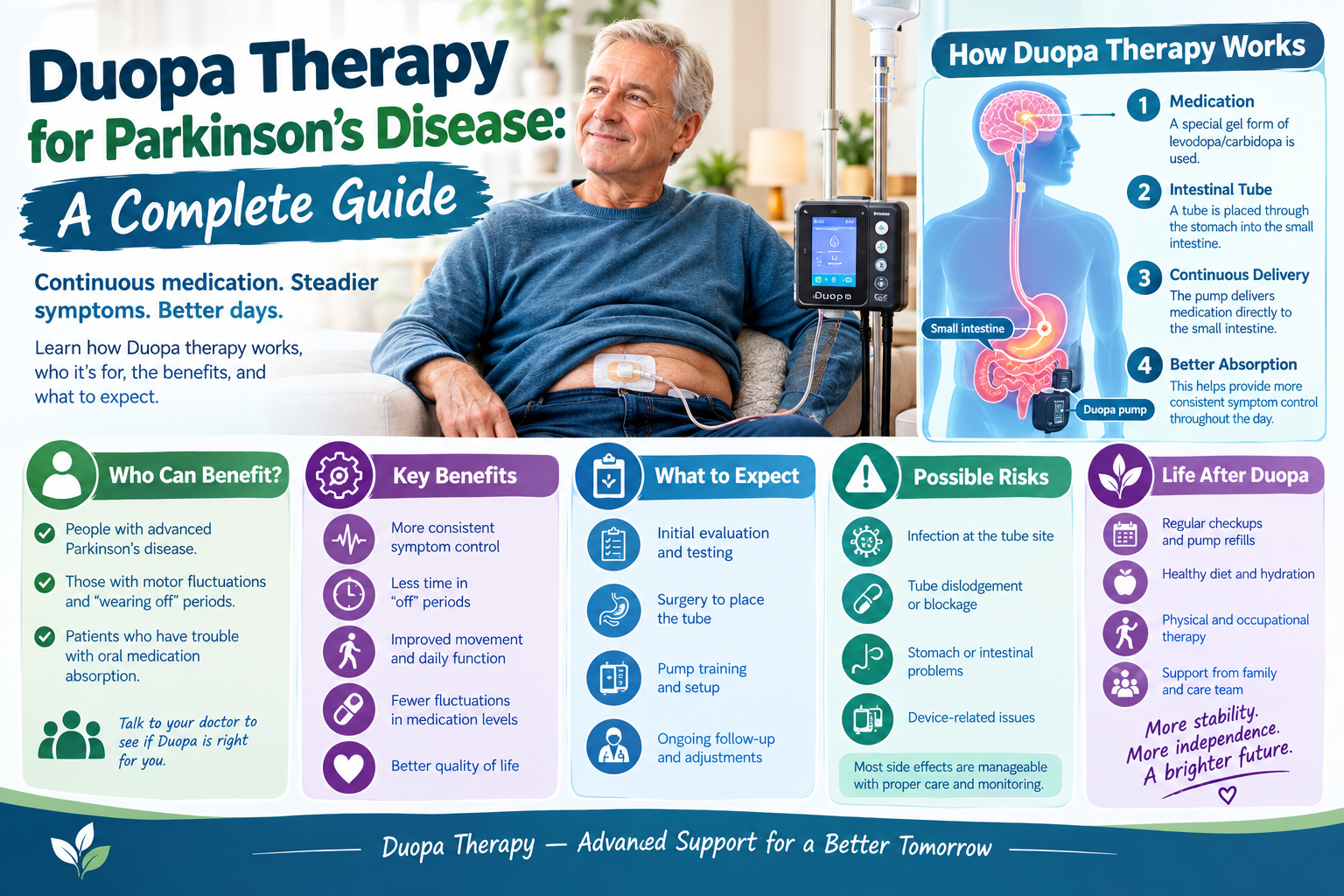
Duopa therapy is an advanced treatment option for people with Parkinson’s disease who experience significant motor fluctuations, wearing-off, and “off” periods despite taking oral medications. Instead of relying entirely on pills taken several times throughout the day, Duopa delivers carbidopa-levodopa intestinal gel continuously into the small intestine through a pump.
The goal is to provide a steadier supply of levodopa and help reduce fluctuations in movement. Duopa does not cure Parkinson’s disease, but for appropriately selected patients, it can improve control of symptoms and daily functioning.
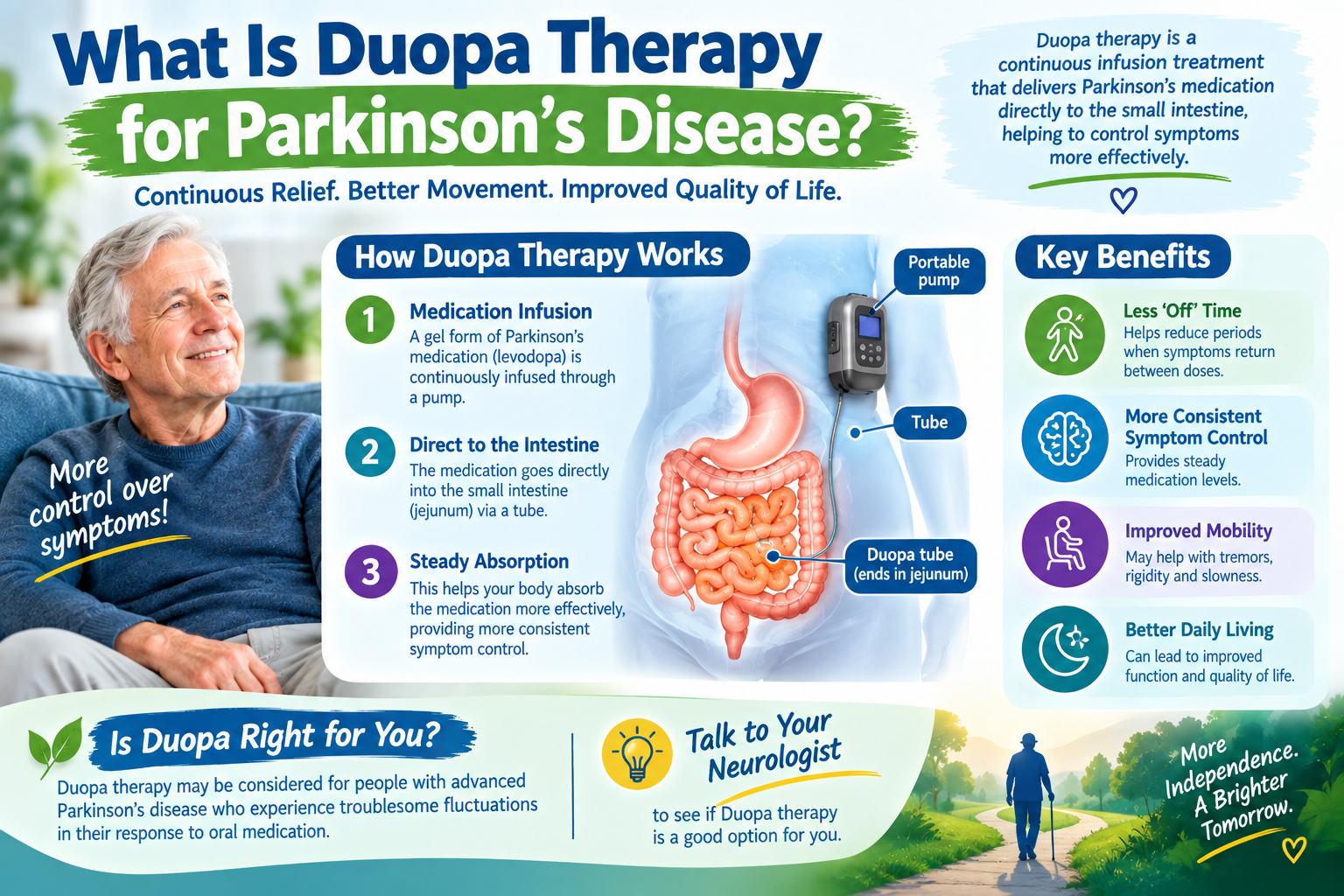
What Is Duopa Therapy for Parkinson’s Disease?
Click Here To Watch Video to Treat Parkinson’s Disease Naturally!..
Duopa is a gel formulation of carbidopa and levodopa used to treat motor fluctuations in people with advanced Parkinson’s disease.
Levodopa is converted into dopamine in the brain, helping improve Parkinson’s movement symptoms. Carbidopa helps prevent levodopa from being converted into dopamine before it reaches the brain, allowing more levodopa to reach the nervous system while reducing some peripheral side effects.
With traditional oral carbidopa-levodopa, medication levels can rise and fall during the day. As the effect of a dose wears off, symptoms such as tremor, stiffness, slowness, and difficulty walking may return.
Duopa is designed to provide a more continuous delivery of levodopa directly into the small intestine. This approach can help reduce some of the fluctuations associated with intermittent oral dosing.
How Does Duopa Work?
Duopa uses three main components:
- PEG-J tube – A tube placed through the abdomen and into the small intestine.
- Medication cassette – Contains the carbidopa-levodopa intestinal gel.
- Portable pump – Delivers the medication at a programmed rate.
The pump is generally used during the daytime for up to 16 hours. Current FDA prescribing information describes a morning dose, continuous infusion, and optional extra doses. At the end of the infusion period, patients generally disconnect the pump and take nighttime oral immediate-release carbidopa-levodopa as prescribed.
The exact dose and pump settings are individualized by the healthcare team.
Why Continuous Delivery Matters
Parkinson’s symptoms can fluctuate when levodopa levels change significantly throughout the day. A person may feel relatively mobile after taking medication and then gradually become stiff, slow, shaky, or unable to move comfortably as the medication wears off.
Continuous intestinal delivery aims to make medication delivery more consistent. This may reduce the amount of daily “off” time for some people with advanced Parkinson’s disease.
What Symptoms Can Duopa Help?
Click Here To Watch Video to Treat Parkinson’s Disease Naturally!..
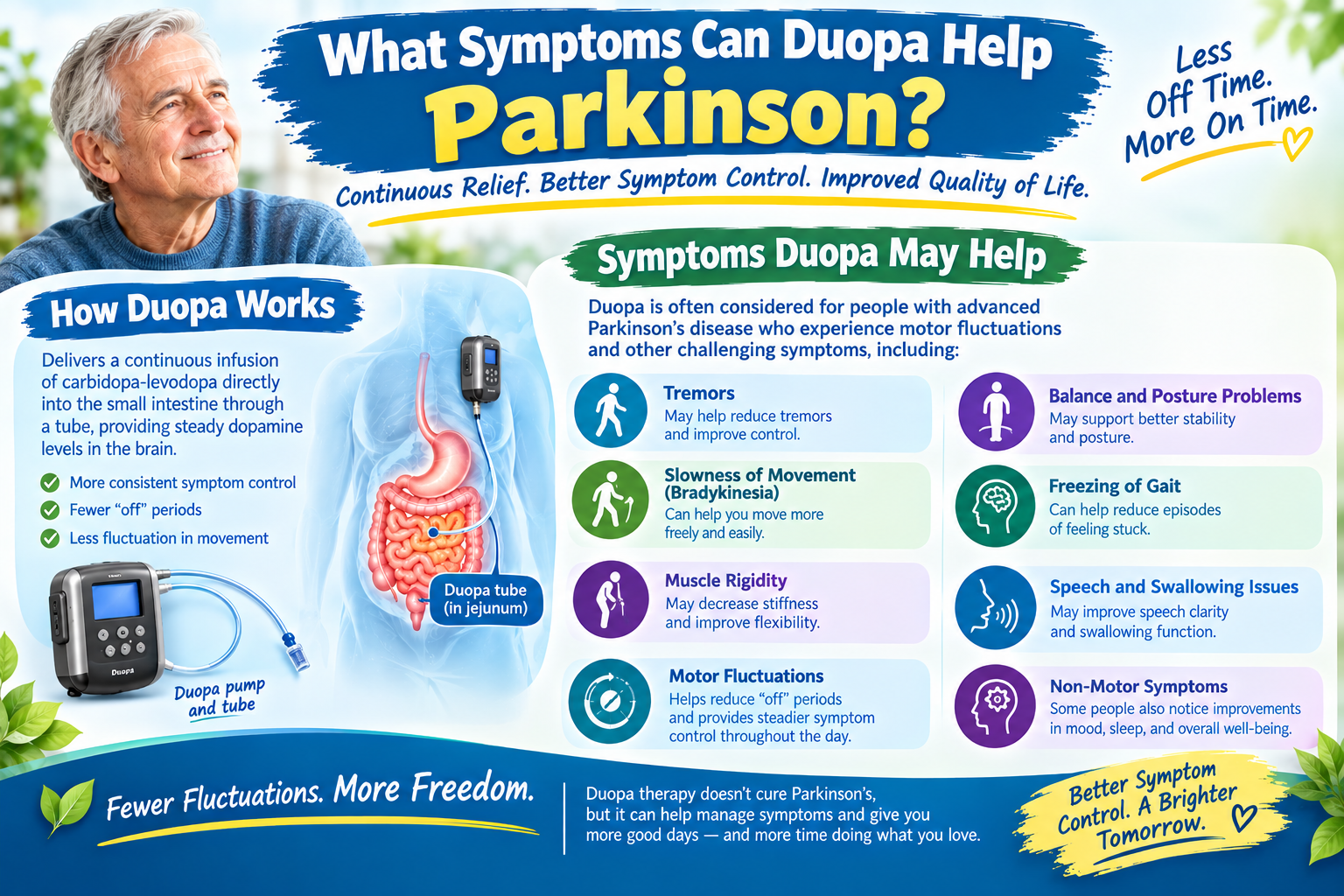
Duopa is primarily used for motor fluctuations in advanced Parkinson’s disease.
Symptoms that may improve when they respond to levodopa include:
- Bradykinesia, or slowness of movement
- Rigidity or muscle stiffness
- Tremor
- Difficulty initiating movement
- Some walking difficulties
- “Off” periods
- Wearing-off symptoms
- Some medication-related motor fluctuations
Duopa may also help some people with dyskinesia by providing a steadier levodopa supply, although dyskinesia can still occur and sometimes requires additional medication adjustments.
It is important to understand that Duopa is not designed to stop the underlying progression of Parkinson’s disease.
Who May Be a Candidate for Duopa?
Duopa is not necessary for everyone with Parkinson’s disease. It is generally considered when oral medication adjustments no longer provide satisfactory control.
A person may be considered for Duopa when they:
- Have established Parkinson’s disease.
- Continue to respond to carbidopa-levodopa.
- Experience significant daily motor fluctuations.
- Have substantial “off” time despite medication adjustments.
- Have tried other medication strategies without adequate control.
- Are able to manage the pump or have a caregiver who can help.
- Can safely undergo the procedure required to place the intestinal tube.
The Parkinson’s Foundation notes that people experiencing approximately three or more hours of daily “off” time despite medication adjustments may be candidates for consideration.
A movement-disorder specialist should evaluate whether Duopa is appropriate based on symptoms, medication response, medical history, lifestyle, and treatment goals.
How Is the Duopa Tube Placed?
Before starting long-term Duopa treatment, a tube must be placed through the abdominal wall and into the small intestine.
This is commonly called a PEG-J tube. PEG refers to the access through the stomach, while the J component extends into the jejunum, a section of the small intestine where levodopa can be delivered.
The procedure requires medical and surgical evaluation. Patients receive instructions about caring for the tube and the skin around the insertion site.
Because Duopa involves an abdominal tube, it differs from treatments such as deep brain stimulation, which involves surgery in the brain.
How Is Duopa Used During the Day?
Duopa treatment is individualized, but the pump generally has several functions.
1. Morning Dose
A morning dose is delivered when the pump is started. This helps bring the person into their desired “on” state.
2. Continuous Dose
After the morning dose, the pump provides medication continuously at a programmed rate.
This is intended to maintain more consistent symptom control during the day.
3. Extra Dose
Some patients can use an additional programmed dose when unexpected “off” symptoms occur.
The FDA prescribing information states that the extra-dose function can be adjusted according to individual needs, and frequent extra dosing can increase the risk of dyskinesia.
What Are the Benefits of Duopa Therapy?

Click Here To Watch Video to Treat Parkinson’s Disease Naturally!..
The main potential benefit of Duopa is more consistent levodopa delivery.
Potential advantages include:
- Reduced daily “off” time
- More predictable movement
- Fewer fluctuations between medication doses
- Better control of levodopa-responsive symptoms
- Continuous daytime medication delivery
- An alternative to some other advanced therapies
- No brain surgery is required
For people whose symptoms fluctuate significantly because oral medication does not provide stable control, continuous intestinal levodopa delivery can be an important treatment strategy.
However, benefits vary between individuals, and Duopa requires commitment to pump and tube care.
What Are the Side Effects of Duopa?
Click Here To Watch Video to Treat Parkinson’s Disease Naturally!..
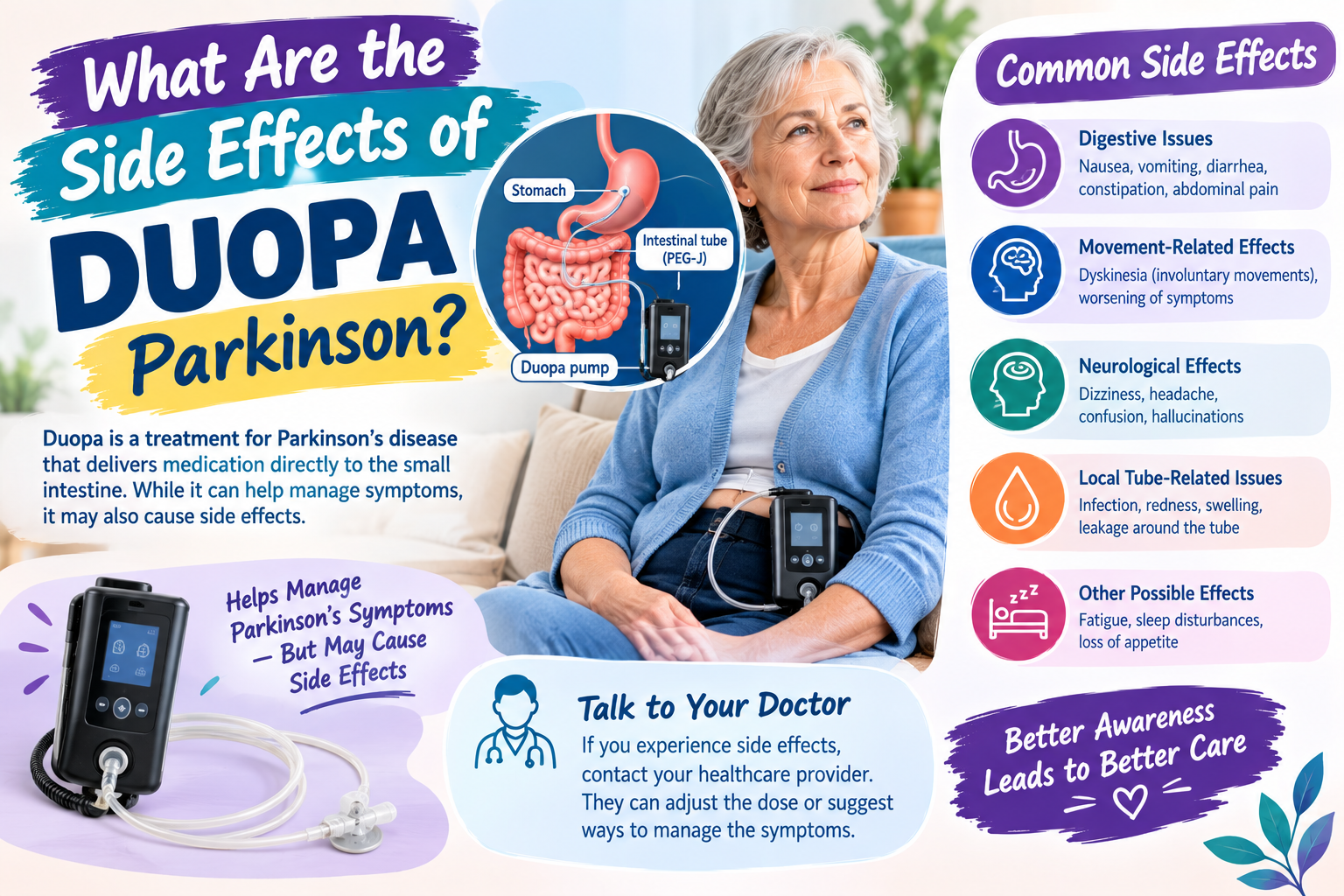
Duopa contains the same active medications as carbidopa-levodopa, so many medication-related side effects are similar.
Possible side effects include:
- Nausea
- Dizziness
- Low blood pressure
- Dyskinesia
- Confusion
- Hallucinations
- Sleepiness
- Constipation
- Other levodopa-related effects
There are also risks associated with the tube and pump system.
These can include:
- Tube displacement
- Tube blockage
- Infection
- Redness or irritation around the insertion site
- Bleeding
- Abdominal complications
- Pump malfunction
The FDA prescribing information also recommends evaluating vitamin B6 levels before starting therapy and periodically during treatment.
Patients should contact their healthcare team if they develop significant abdominal pain, fever, persistent vomiting, severe confusion, hallucinations, worsening movement problems, or problems with the tube or pump.
What Is Daily Life Like With Duopa?
Living with Duopa involves learning how to operate and care for the pump and tube.
Patients typically need to:
- Connect the pump according to instructions.
- Use a new medication cassette as directed.
- Keep medication stored properly.
- Monitor the tube and insertion site.
- Flush the tubing as instructed.
- Carry the pump during treatment.
- Learn what to do if the pump stops working.
- Attend regular follow-up appointments.
The Parkinson’s Foundation reports that Duopa cassettes are used for daily treatment and that the pump can deliver a morning dose, continuous dose, and extra doses according to the individual’s programmed settings.
Although this routine may initially feel complicated, many patients and caregivers learn to manage the equipment with training and practice.
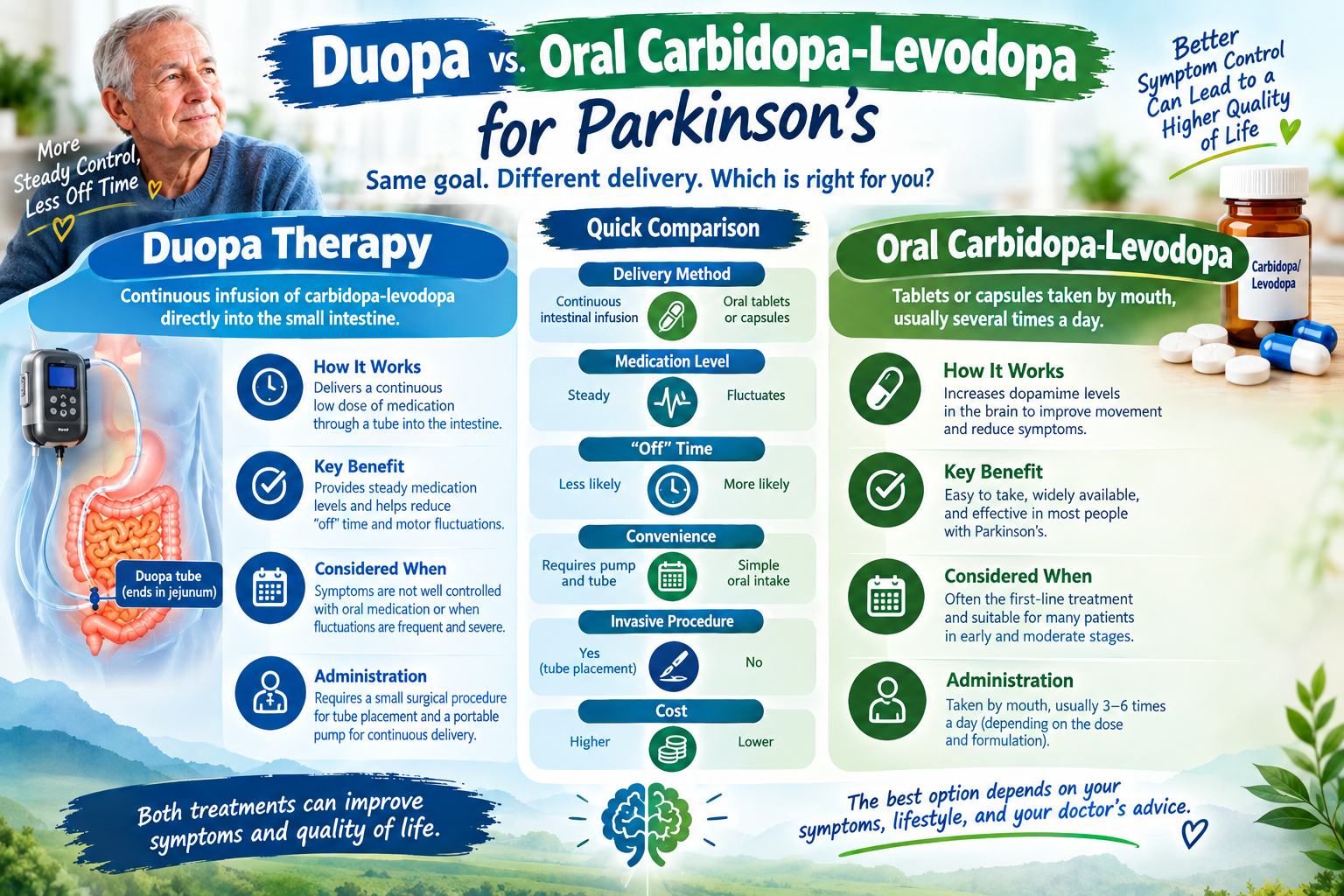
Duopa vs. Oral Carbidopa-Levodopa
Click Here To Watch Video to Treat Parkinson’s Disease Naturally!..
Oral carbidopa-levodopa remains a foundational treatment for Parkinson’s disease.
The major difference is how the medication is delivered.
| Feature | Oral Carbidopa-Levodopa | Duopa |
|---|---|---|
| Delivery | Pills | Intestinal gel through pump |
| Dosing | Multiple doses | Continuous daytime infusion |
| Tube required | No | Yes |
| Pump required | No | Yes |
| Brain surgery | No | No |
| Main purpose | Symptom control | Advanced motor fluctuations |
| “Off” management | May fluctuate | Designed for steadier delivery |
Duopa is not necessarily “better” than oral medication for everyone. It is generally considered when oral treatment does not provide adequate control.
Duopa vs. Deep Brain Stimulation
Duopa and deep brain stimulation (DBS) are both advanced treatment options, but they work in very different ways.
DBS uses implanted electrodes to deliver electrical stimulation to specific brain regions. Duopa instead provides continuous levodopa directly into the small intestine.
Duopa may be considered when a person responds well to levodopa but has difficult motor fluctuations. DBS may be appropriate for some people with levodopa-responsive symptoms and troublesome fluctuations or dyskinesia.
The decision depends on factors such as symptom pattern, age, overall health, cognitive status, medication response, surgical considerations, lifestyle, and personal treatment goals.
A movement-disorder specialist can explain which options are appropriate for an individual patient.
What Happens at Night?
Duopa is commonly administered during the daytime for up to 16 hours. After the infusion ends, patients generally disconnect the pump and take their prescribed nighttime medication.
The current FDA labeling specifies a 16-hour infusion period and nighttime oral immediate-release carbidopa-levodopa.
Some treatment plans may be individualized differently, so patients should follow the schedule established by their Parkinson’s specialist.
Does Duopa Cure Parkinson’s Disease?
No. Duopa does not cure Parkinson’s disease.
It is a symptomatic treatment designed to improve control of motor fluctuations and levodopa-responsive symptoms.
Parkinson’s disease is a progressive neurological disorder, so treatment goals generally focus on maintaining mobility, independence, comfort, and quality of life.
Duopa can be an important part of a broader treatment plan that may also include physical therapy, occupational therapy, speech therapy, exercise, nutrition, medication management, and regular neurological care.
Questions to Ask Your Doctor About Duopa
If you are considering Duopa therapy, ask your healthcare provider:
- Am I experiencing enough “off” time to consider pump therapy?
- How well do my symptoms respond to levodopa?
- Have we fully optimized my current oral medications?
- What are the risks of PEG-J tube placement?
- How will I care for the tube?
- How often will I need pump training?
- Will I still need oral Parkinson’s medications?
- How should I manage nighttime symptoms?
- What should I do if the pump stops working?
- Would Duopa, DBS, or another advanced treatment better match my goals?
Writing down your daily “on” and “off” periods can make these discussions more productive.
Frequently Asked Questions
Is Duopa the same as levodopa?
Duopa contains carbidopa and levodopa, but it is delivered as an intestinal gel through a pump rather than as conventional tablets.
How long is Duopa used each day?
The current FDA labeling specifies a 16-hour infusion period for standard Duopa treatment.
Does Duopa reduce “off” time?
Duopa is specifically indicated for motor fluctuations in advanced Parkinson’s disease and is designed to provide continuous levodopa delivery that can reduce “off” time for appropriate patients.
Do you still take Parkinson’s medication at night?
Generally, patients take nighttime oral immediate-release carbidopa-levodopa after disconnecting the pump, according to the current FDA labeling.
Is Duopa a surgical treatment?
Duopa requires a procedure to place the PEG-J tube into the digestive system, but it does not involve brain surgery.
Final Thoughts
Duopa therapy offers an important option for people with advanced Parkinson’s disease and troublesome motor fluctuations that are not adequately controlled with oral medication. By delivering carbidopa-levodopa gel continuously into the small intestine, Duopa aims to provide steadier medication levels and reduce problematic “off” periods.
However, Duopa also requires an abdominal tube, portable pump, daily medication cassettes, and ongoing tube care. It is therefore important to weigh potential benefits against the practical demands and possible complications.
If Parkinson’s symptoms are becoming difficult to control throughout the day, discuss Duopa and other advanced treatment options with a movement-disorder specialist. The right treatment depends on your symptoms, medication response, health, lifestyle, and individual goals.