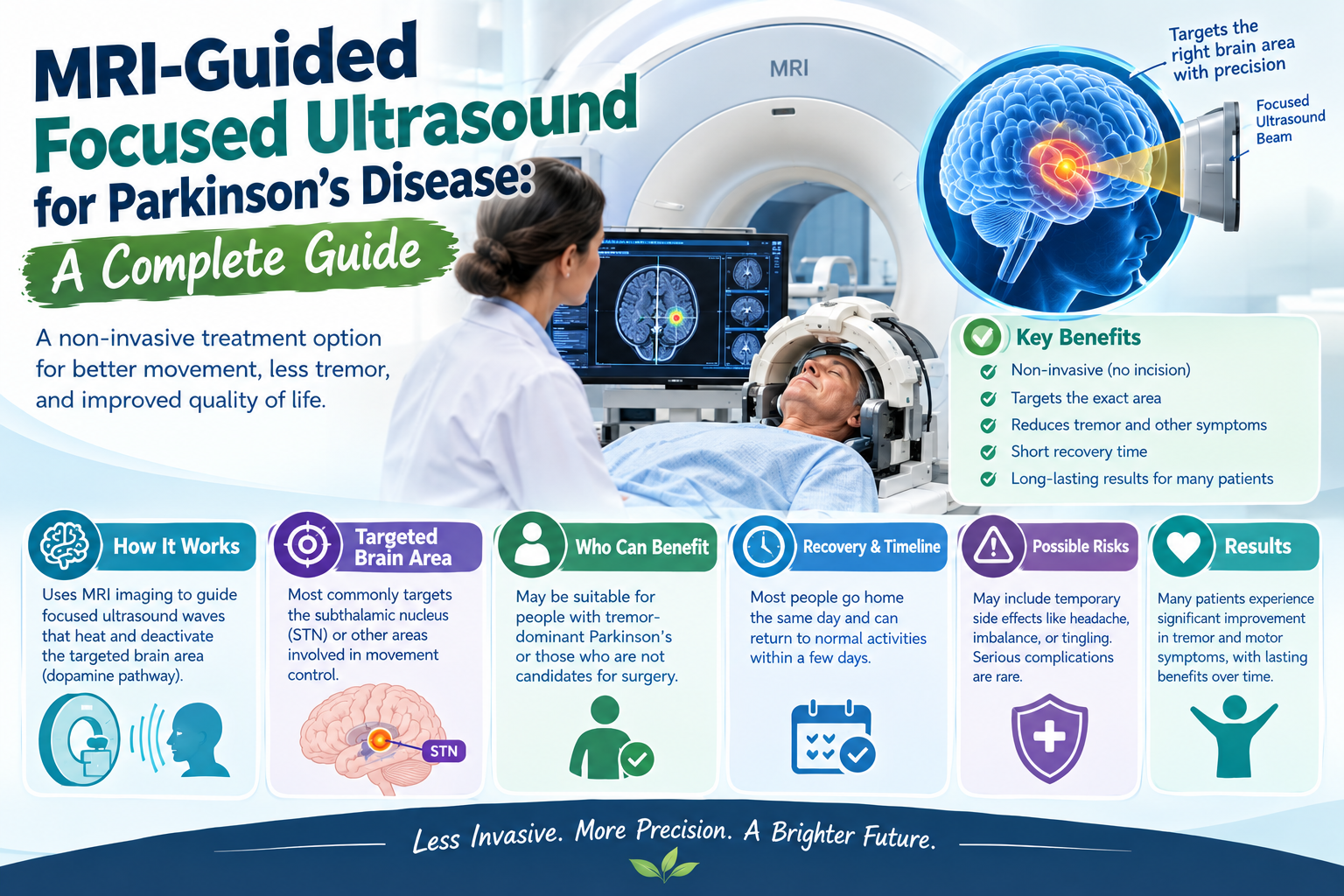
MRI-guided focused ultrasound for Parkinson’s disease (MRgFUS) is an advanced treatment that uses concentrated ultrasound energy to target specific areas of the brain associated with troublesome movement symptoms.
Unlike deep brain stimulation (DBS), focused ultrasound does not require an implanted brain electrode, extension wire, or pulse generator. Instead, ultrasound energy is directed through the skull while magnetic resonance imaging (MRI) is used to identify the treatment target and monitor temperature during the procedure.
Focused ultrasound is now an established treatment option for selected people with Parkinson’s disease, particularly those with medication-refractory tremor and, depending on the specific regulatory indication, other medication-refractory motor complications. The exact approved uses vary by country. In the United States, FDA indications have expanded over time, including unilateral treatment for tremor-dominant Parkinson’s disease and, more recently, staged procedures for selected motor complications.
It is important to understand that focused ultrasound does not cure Parkinson’s disease or stop its progression. Instead, it is designed to reduce specific symptoms that continue to interfere with daily life despite medication.
What Is MRI-Guided Focused Ultrasound?

Click Here To Watch Video to Treat Parkinson’s Disease Naturally!..
MRI-guided focused ultrasound combines two technologies:
- MRI: Provides detailed images of the brain and helps doctors precisely locate the treatment target.
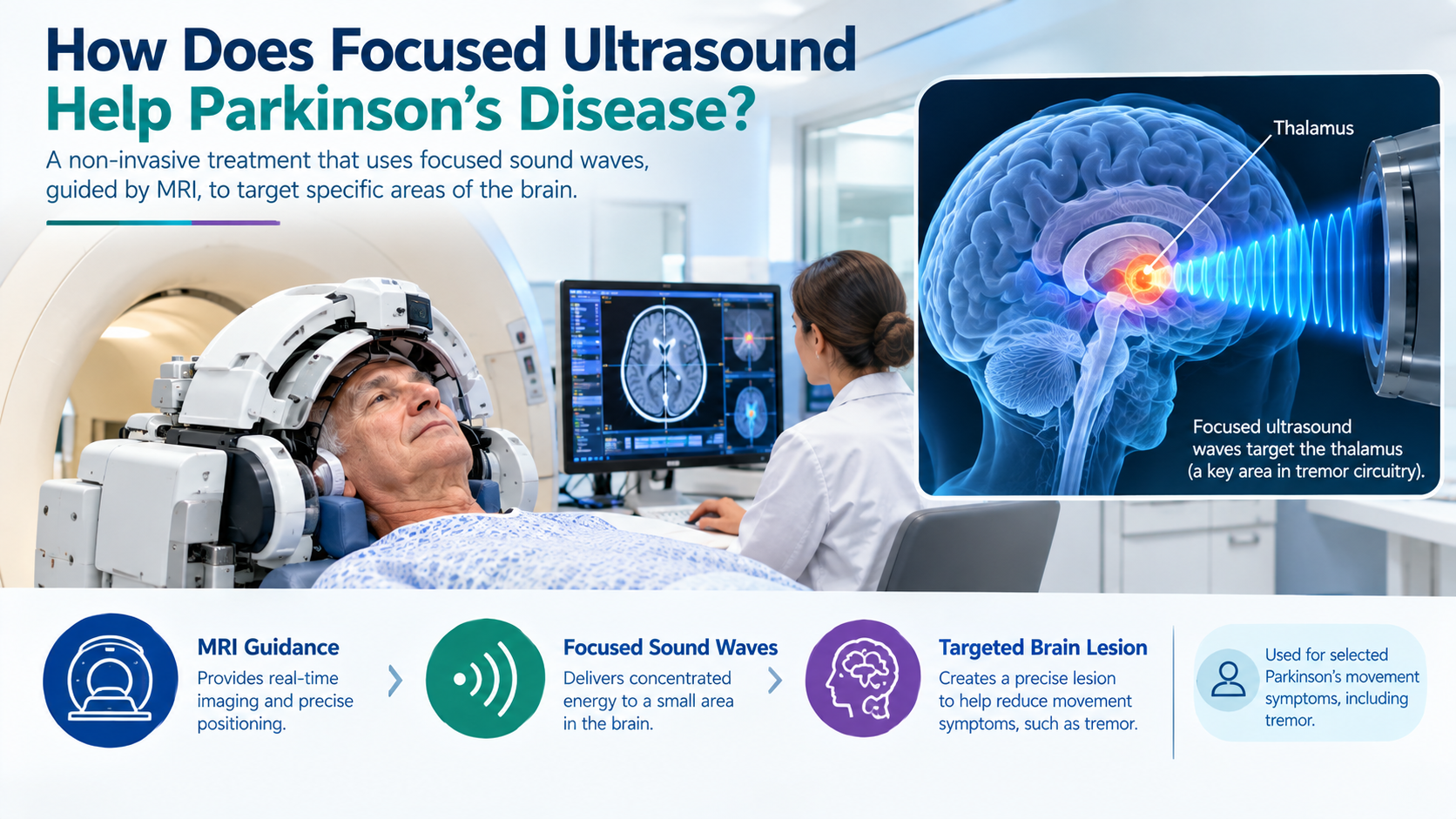
- Focused ultrasound: Delivers multiple ultrasound beams through the skull that converge at a specific point.
At the focal point, the ultrasound energy raises tissue temperature enough to create a controlled lesion.
The MRI system helps monitor the temperature and allows the treatment team to make adjustments during the procedure. This makes it possible to target a small region while limiting exposure to surrounding brain tissue.
Although the procedure is often described as “non-invasive” or “incisionless,” it is more accurate to describe it as an incisionless brain lesioning procedure. The ultrasound does not require an incision or opening of the skull, but it intentionally changes or destroys a small area of brain tissue. That change is generally irreversible.
How Does Focused Ultrasound Help Parkinson’s Disease?
Click Here To Watch Video to Treat Parkinson’s Disease Naturally!..
Parkinson’s disease involves abnormal activity within brain circuits that control movement.
Medication such as levodopa can improve many movement symptoms, but some people eventually develop symptoms that remain difficult to control.
Focused ultrasound can target a specific part of these movement circuits.
Depending on the treatment target and regulatory indication, the procedure may be used to address:
- Medication-resistant tremor
- Certain motor complications
- Dyskinesia
- Rigidity or other selected movement symptoms
The exact symptoms that can be treated depend on the target selected, the patient’s condition, the technology available, and local regulatory approval.
Research is continuing to evaluate different targets and applications.
Which Brain Areas Can Be Targeted?
Focused ultrasound is not simply directed at one universal location for every patient.
Different targets can be used for different symptoms.
Ventral Intermediate Nucleus of the Thalamus
The ventral intermediate nucleus (VIM) of the thalamus is a well-established target for treating tremor.
FDA approval for tremor-dominant Parkinson’s disease has included unilateral thalamotomy for medication-refractory tremor.
Pallidothalamic Tract
The pallidothalamic tract is another target that has become important in the treatment of Parkinson’s motor complications.
In 2025, the FDA authorized an indication for unilateral pallidothalamic tractotomy in selected adults with advanced idiopathic Parkinson’s disease and medication-refractory moderate-to-severe motor complications. A staged procedure for symptoms affecting the opposite side was also included, with at least six months between procedures under the approved indication.
Other targets, including areas involving the pallidum, continue to be studied for different Parkinson’s symptoms.
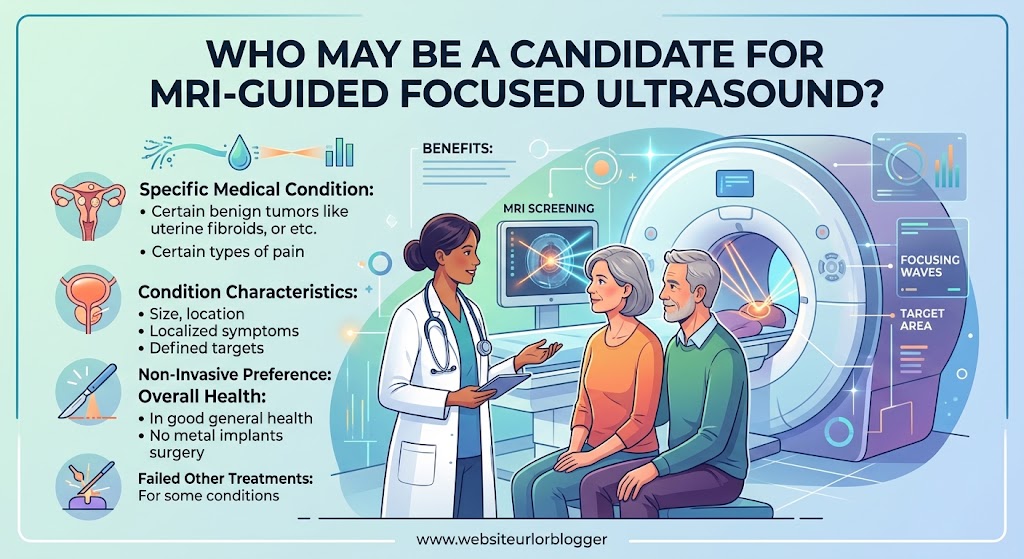
Who May Be a Candidate for MRI-Guided Focused Ultrasound?
Click Here To Watch Video to Treat Parkinson’s Disease Naturally!..
Focused ultrasound is not appropriate for everyone with Parkinson’s disease.
A specialist team may consider factors such as:
1. Symptom Severity
The symptoms should generally be significant enough to justify an advanced treatment.
2. Medication Response
Doctors may determine whether symptoms remain problematic despite appropriate medication treatment.
3. Type of Symptoms
Focused ultrasound may be particularly relevant for people with medication-refractory tremor or selected motor complications.
4. Overall Health
A person’s general health and ability to undergo an MRI-guided procedure must be considered.
5. Brain Anatomy
The treatment requires the ultrasound energy to reach the intended brain target effectively.
The skull itself is particularly important because the ultrasound must pass through it. Certain skull characteristics can make treatment difficult or impossible.
6. Ability to Undergo MRI
Patients must be able to safely undergo MRI and remain appropriately positioned during the procedure.
7. Treatment Goals
The specialist should determine whether the expected benefits match the symptoms the patient most wants to improve.
What Happens Before Focused Ultrasound Treatment?

Click Here To Watch Video to Treat Parkinson’s Disease Naturally!..
Before the procedure, patients typically undergo a detailed evaluation.
This may include:
- Neurological examination
- Medication review
- Assessment of tremor and other motor symptoms
- MRI or other brain imaging
- Evaluation of skull characteristics
- Review of medical history
- Discussion of previous treatments
- Assessment of treatment goals
The medical team will also explain potential benefits, limitations, and complications.
The evaluation is important because focused ultrasound creates a permanent lesion. Unlike DBS, the treatment cannot simply be turned off if the patient does not like the effect.
What Happens During the Procedure?
The exact process can vary between treatment centers, but the general procedure follows several stages.
Step 1: Positioning
The patient’s head is positioned securely so it remains stable during treatment.
A specialized frame or positioning system may be used.
Step 2: MRI Guidance
The patient is placed within the MRI scanner.
The MRI provides detailed images that allow the treatment team to identify the target area.
Step 3: Low-Energy Ultrasound
The team may begin with lower-energy ultrasound applications.
These help confirm that the ultrasound is reaching the intended location and allow the team to monitor the patient’s response.
Step 4: Temperature Monitoring
MRI can measure temperature changes in the targeted tissue.
The treatment team can monitor the heating effect before delivering higher-energy sonications.
Step 5: Therapeutic Sonications
Higher-energy ultrasound is delivered to create the intended lesion.
Depending on the procedure, the patient may be asked to perform movements or describe symptoms during treatment.
This feedback can help the team assess whether the desired effect is occurring.
Step 6: Final MRI Assessment
MRI can be used to evaluate the treatment area and check for unexpected changes.
Is Focused Ultrasound Painful?
Experiences vary.
Patients may experience sensations such as:
- Pressure from the head-positioning equipment
- Heat
- Headache
- Tingling
- Dizziness
- Discomfort during some ultrasound applications
Because the patient is awake and involved in the procedure, they can communicate sensations to the treatment team.
The medical team monitors the patient throughout the procedure and can modify the treatment when necessary.
How Long Does Focused Ultrasound Take?
The procedure can take several hours, depending on the treatment target, preparation, imaging, and number of ultrasound applications required.
Patients should expect to spend a significant portion of the day at the treatment center.
The exact duration varies between individuals and treatment systems.
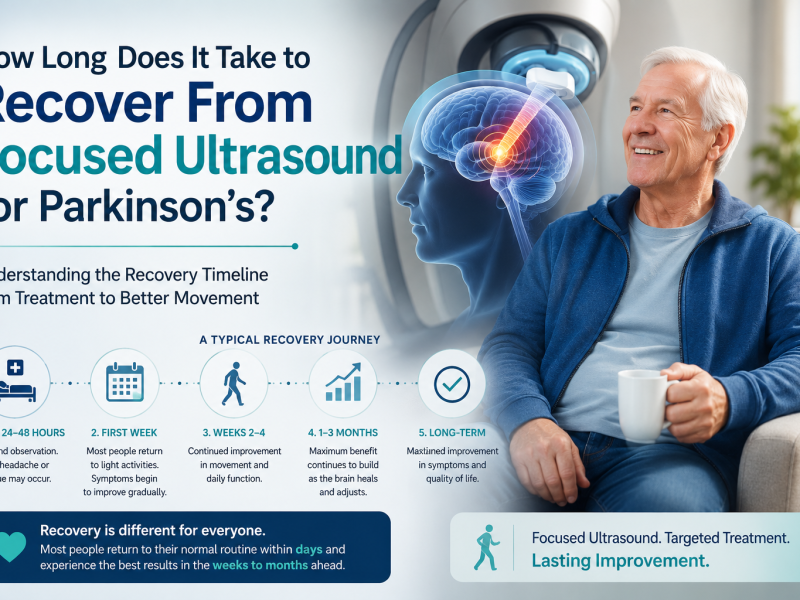
What Is Recovery Like After Focused Ultrasound?
One advantage of focused ultrasound is that it does not require a surgical incision or implanted hardware.
Many patients can leave the treatment center relatively soon after the procedure, depending on their condition and the center’s protocol.
Temporary symptoms may occur during or after treatment, including:
- Headache
- Nausea
- Dizziness
- Fatigue
- Tingling or numbness
- Balance problems
Some symptoms resolve over time, while others can persist.
A 2025 meta-analysis of randomized trials found dizziness to be among the more frequently reported adverse events associated with MRgFUS in Parkinson’s disease. The analysis also examined headache, gait disturbances, and facial symptoms among potential adverse events.
What Are the Risks of Focused Ultrasound?
Although focused ultrasound avoids an incision, it is still a procedure that intentionally changes brain tissue.
Potential complications can include:
- Dizziness
- Balance problems
- Walking difficulties
- Numbness
- Tingling
- Speech changes
- Weakness
- Facial symptoms
- Headache
- Nausea
- Gait problems
The risk depends on the treatment target, patient characteristics, and other factors.
Because the lesion is permanent, unintended effects can potentially persist.
This is an important difference between focused ultrasound and DBS.
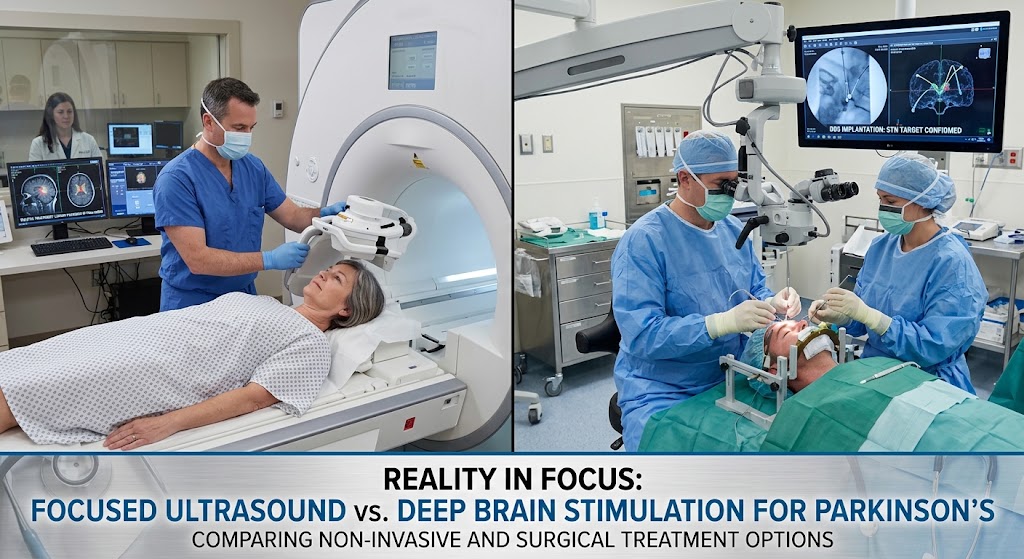
Focused Ultrasound vs. Deep Brain Stimulation
Click Here To Watch Video to Treat Parkinson’s Disease Naturally!..
Focused ultrasound and DBS are both advanced Parkinson’s treatments, but they work very differently.
| Feature | Focused Ultrasound | DBS |
|---|---|---|
| Incision | No brain incision | Requires surgery |
| Brain hardware | No implanted hardware | Implanted electrodes and pulse generator |
| Treatment mechanism | Creates a targeted lesion | Delivers electrical stimulation |
| Adjustability | Limited after treatment | Can be programmed and adjusted |
| Reversibility | Lesion is generally permanent | Stimulation can be changed or stopped |
| Battery | Not required | Requires implanted power source |
| Procedure | MRI-guided ultrasound | Neurosurgical electrode implantation |
| Best use | Selected symptoms and patients | Broader range of motor complications in appropriate candidates |
Neither treatment is automatically better for every person.
DBS may offer greater adjustability because stimulation parameters can be changed after surgery. Focused ultrasound may appeal to selected patients who want an incisionless treatment and do not want implanted hardware.
The decision requires individualized specialist assessment.
Does Focused Ultrasound Replace Parkinson’s Medication?
Usually, no.
Focused ultrasound treats selected movement symptoms but does not eliminate Parkinson’s disease.
Patients may continue taking levodopa or other Parkinson’s medications after treatment.
In some circumstances, medication requirements may change following successful treatment, but medication adjustments should always be made by the treating healthcare professional.
The Parkinson’s Foundation notes that focused ultrasound is an advanced treatment option rather than a cure.
Can Focused Ultrasound Treat Both Sides of the Body?
Historically, focused ultrasound for Parkinson’s disease was primarily used as a unilateral procedure because treating both sides of certain brain circuits can increase the risk of neurological complications.
Regulatory indications have evolved.
In the United States, the FDA’s 2025 approval allows selected staged bilateral treatment for certain Parkinson’s motor complications, with at least six months between procedures under the approved indication.
This does not mean that bilateral treatment is appropriate for every patient or every symptom.
Eligibility depends on the specific indication and medical assessment.
Does Focused Ultrasound Cure Parkinson’s Disease?

Click Here To Watch Video to Treat Parkinson’s Disease Naturally!..
No.
Parkinson’s disease is a progressive neurological disorder, and focused ultrasound does not eliminate the underlying disease.
The treatment creates a targeted lesion to reduce particular symptoms.
Other Parkinson’s symptoms can continue to develop over time, and patients may still require medication, exercise, physical therapy, speech therapy, occupational therapy, and regular neurological care.
What Happens After Treatment?
Follow-up is an important part of focused ultrasound care.
Your medical team may monitor:
- Tremor
- Walking
- Balance
- Speech
- Strength
- Sensation
- Medication requirements
- Overall quality of life
The team may also monitor for delayed side effects.
Rehabilitation or physical therapy may be recommended if balance, walking, or other movement issues occur.
What Questions Should You Ask Before Focused Ultrasound?
Before deciding on treatment, consider asking:
- Which Parkinson’s symptom are you treating?
- What brain target will be used?
- Is this treatment approved for my specific condition where I live?
- Am I a suitable candidate?
- What benefits should I realistically expect?
- What are the potential short-term and long-term complications?
- Could the treatment affect my speech or balance?
- Will I continue taking Parkinson’s medication?
- How long will recovery take?
- What happens if symptoms return?
- Would DBS or infusion therapy be another option?
- How much experience does the treatment center have with Parkinson’s-focused ultrasound?
These questions can help patients make an informed decision with their medical team.
Frequently Asked Questions
Is MRI-guided focused ultrasound safe for Parkinson’s disease?
It can be an appropriate treatment for carefully selected patients, but it carries potential risks, including dizziness, balance problems, sensory symptoms, gait difficulties, and speech-related complications. Individual risk varies.
Is focused ultrasound better than DBS?
Focused ultrasound and DBS have different mechanisms, benefits, limitations, and risks. Focused ultrasound creates a permanent lesion, while DBS provides adjustable electrical stimulation. The appropriate choice depends on the individual patient.
How quickly does focused ultrasound work?
The effect on the targeted symptom may become apparent during or soon after treatment, although recovery and symptom improvement can vary.
Does focused ultrasound require brain surgery?
It does not require an incision into the skull or implantation of electrodes, but it is still a medical brain procedure that intentionally creates a lesion.
Can focused ultrasound reduce Parkinson’s tremor?
Yes. Medication-refractory tremor, particularly tremor-dominant Parkinson’s disease, is an established use of MRgFUS in appropriate patients.
Does focused ultrasound stop Parkinson’s progression?
No. It targets selected symptoms and does not stop the underlying progression of Parkinson’s disease.
Conclusion
MRI-guided focused ultrasound for Parkinson’s disease is an important advanced treatment option for selected patients whose symptoms remain difficult to control despite medication.
The procedure combines MRI imaging with concentrated ultrasound energy to create a precisely targeted lesion without an incision or implanted brain hardware. Depending on the treatment target and regulatory approval, it can be used for medication-refractory tremor and certain other Parkinson’s motor complications.
Its major advantages include an incisionless procedure and the absence of implanted stimulation hardware. However, the treatment is not reversible in the same way that DBS stimulation can be adjusted, and potential neurological side effects must be carefully considered.
Focused ultrasound is not a cure for Parkinson’s disease. Patients may continue to need medication and other therapies after treatment.
If Parkinson’s tremor, dyskinesia, or other motor complications are significantly affecting daily life despite optimized medication, discuss MRgFUS, DBS, infusion therapies, and other options with a movement-disorder specialist. A detailed evaluation can help determine which treatment is appropriate for your symptoms, health, and treatment goals.