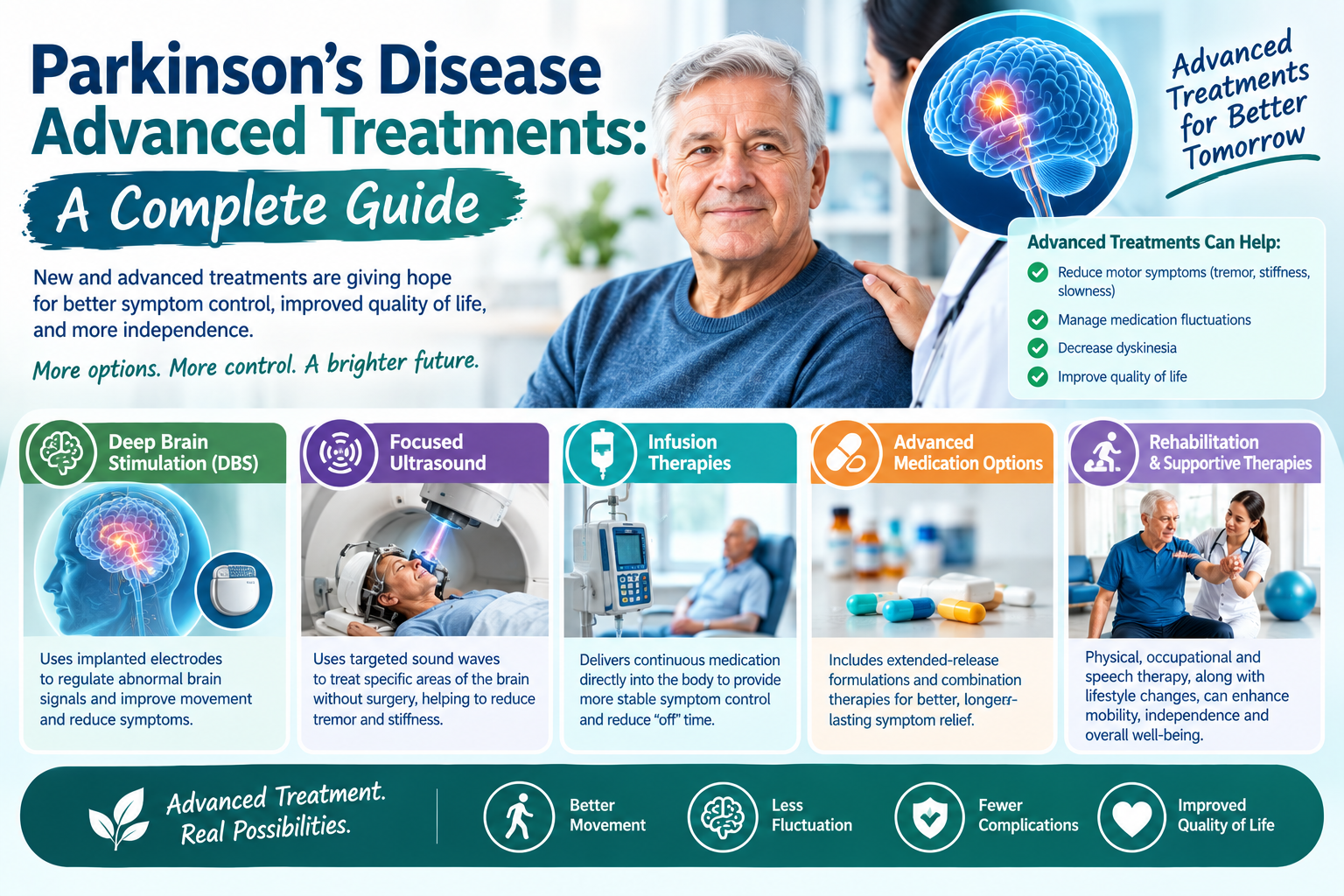
Parkinson’s disease is a progressive neurological condition that can become more difficult to manage as symptoms change over time. Many people achieve good symptom control for years with medications such as levodopa and other Parkinson’s treatments. However, some eventually experience motor fluctuations, wearing-off periods, dyskinesia, tremor, or other symptoms that are not adequately controlled with conventional medication schedules.
When this happens, doctors may discuss advanced treatments for Parkinson’s disease.
Advanced treatments do not cure Parkinson’s disease or stop the underlying disease process. Instead, they are designed to provide more consistent symptom control, reduce medication-related fluctuations, or target specific troublesome symptoms.
Options can include deep brain stimulation (DBS), levodopa-based infusion therapy, continuous apomorphine infusion, MRI-guided focused ultrasound, and other emerging approaches.
The appropriate treatment depends on symptoms, age, overall health, medications, cognitive status, treatment goals, and other individual factors.
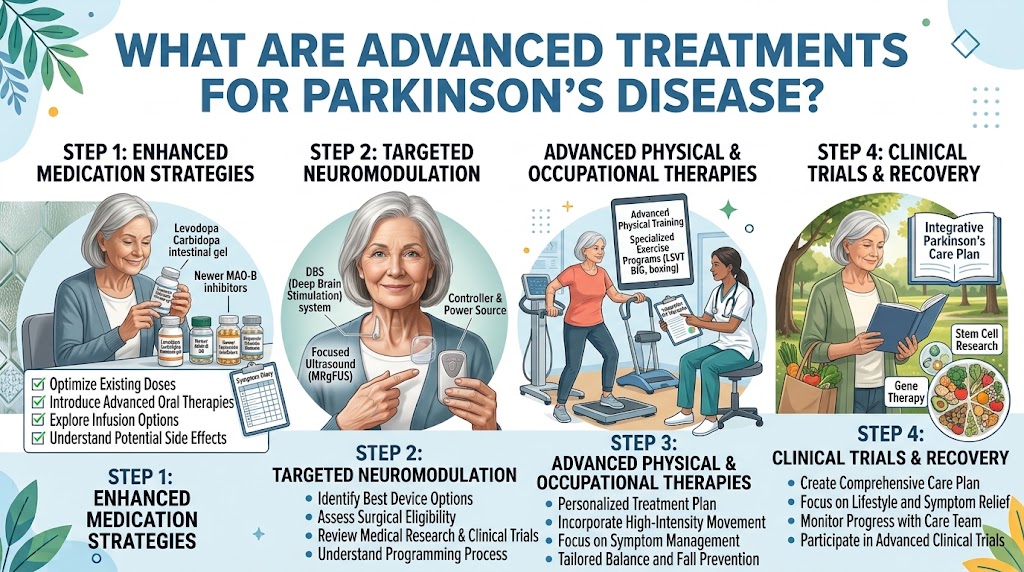
What Are Advanced Treatments for Parkinson’s Disease?
Click Here To Watch Video to Treat Parkinson’s Disease Naturally!..
Advanced Parkinson’s treatments are generally considered when standard medications no longer provide adequate or consistent symptom control.
A person may experience a pattern such as:
Medication → good movement → wearing off → stiffness/tremor → next dose → improvement
As Parkinson’s progresses, these fluctuations may become more complicated.
Advanced therapies attempt to smooth out these changes or directly modify abnormal brain activity associated with Parkinson’s symptoms.
They are usually considered as part of a comprehensive treatment plan rather than as replacements for all other Parkinson’s care.
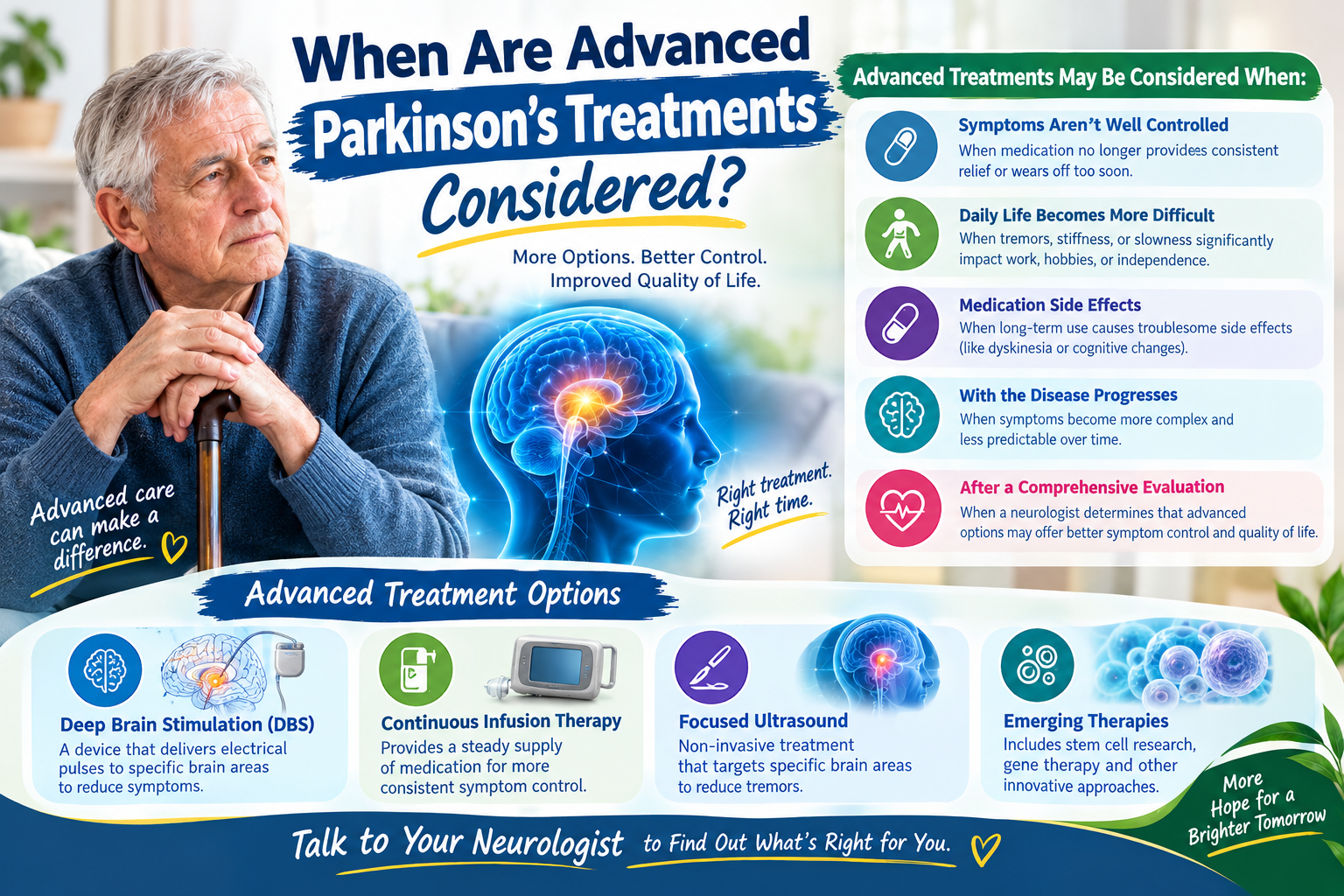
When Are Advanced Parkinson’s Treatments Considered?
Click Here To Watch Video to Treat Parkinson’s Disease Naturally!..
Advanced treatment may be discussed when symptoms are significantly affecting daily life despite optimized conventional therapy.
Potential reasons include:
- Frequent wearing-off periods
- Unpredictable “off” episodes
- Troublesome dyskinesia
- Medication-resistant tremor
- Significant motor fluctuations
- Difficulty maintaining consistent medication response
- Symptoms that interfere with work or daily activities
- Increasing difficulty managing medication schedules
Not everyone with Parkinson’s needs advanced therapy.
Doctors typically review the patient’s symptoms, medication response, medical history, neurological examination, and treatment goals before recommending a specific option.
1. Deep Brain Stimulation for Parkinson’s Disease
Click Here To Watch Video to Treat Parkinson’s Disease Naturally!..
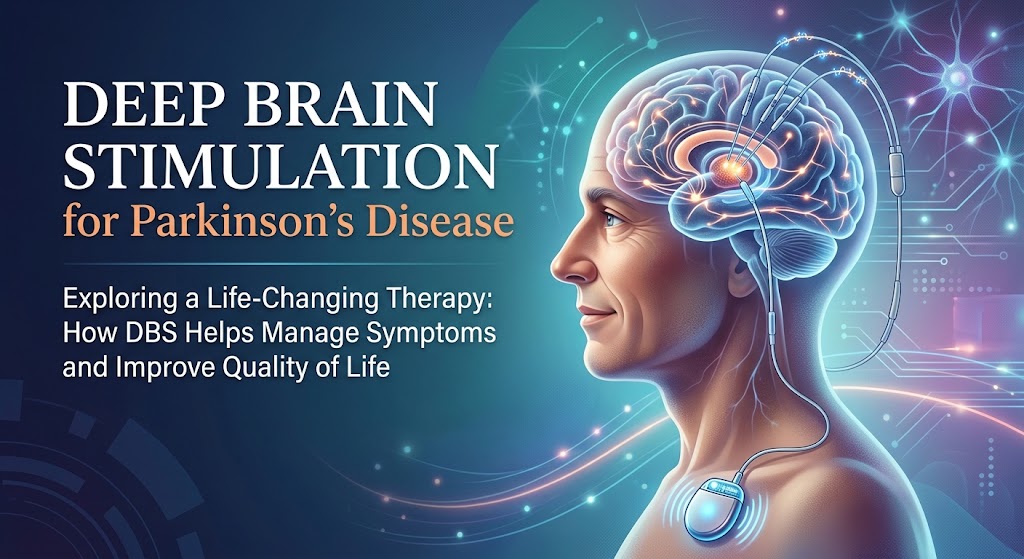
Deep brain stimulation (DBS) is one of the best-established advanced surgical treatments for Parkinson’s disease.
DBS uses a small implanted device to deliver electrical stimulation to specific areas of the brain involved in movement.
The system generally consists of:
- One or more electrodes placed in the brain
- Extension wires
- A pulse generator implanted under the skin
The pulse generator sends controlled electrical signals through the electrodes.
Common DBS Brain Targets
Two commonly used targets are:
Subthalamic Nucleus (STN)
STN stimulation can improve several motor symptoms and may allow some patients to reduce Parkinson’s medication under medical supervision.
Globus Pallidus Internus (GPi)
GPi stimulation can improve motor symptoms and can be particularly useful when dyskinesia is a major treatment concern.
The appropriate target depends on the patient’s symptoms and treatment goals.
Which Symptoms Can DBS Help?
DBS may improve symptoms such as:
- Tremor
- Rigidity
- Bradykinesia
- Motor fluctuations
- Dyskinesia
DBS is generally less effective for some non-motor symptoms and certain problems such as advanced balance impairment or cognitive difficulties.
What Are the Risks of DBS?
Because DBS requires brain surgery, it carries surgical risks.
Potential complications can include:
- Bleeding
- Infection
- Seizures
- Hardware problems
- Speech changes
- Balance problems
- Mood or cognitive changes
Careful patient selection and specialist evaluation are therefore important.
2. Levodopa Infusion Therapy

Click Here To Watch Video to Treat Parkinson’s Disease Naturally!..
Levodopa remains one of the most effective medications for Parkinson’s motor symptoms. However, tablets may produce fluctuating medication levels as the disease progresses.
Levodopa infusion therapy provides medication continuously through a pump rather than relying only on repeated oral doses.
One approach delivers levodopa-based medication into the intestine through a specialized system.
The goal is to provide a more continuous supply of medication and reduce fluctuations between “on” and “off” periods.
Potential Benefits
Depending on the individual, continuous levodopa delivery may help:
- Reduce off time
- Improve motor fluctuations
- Provide more consistent symptom control
- Reduce the need for frequent oral dosing
Possible Challenges
Infusion therapy involves specialized equipment and requires training.
Potential problems can include:
- Infusion-site or device complications
- Skin irritation
- Infection
- Tube-related problems
- Medication side effects
- Need for ongoing pump management
The specific risks depend on the infusion system being used.
3. Continuous Apomorphine Infusion
Click Here To Watch Video to Treat Parkinson’s Disease Naturally!..
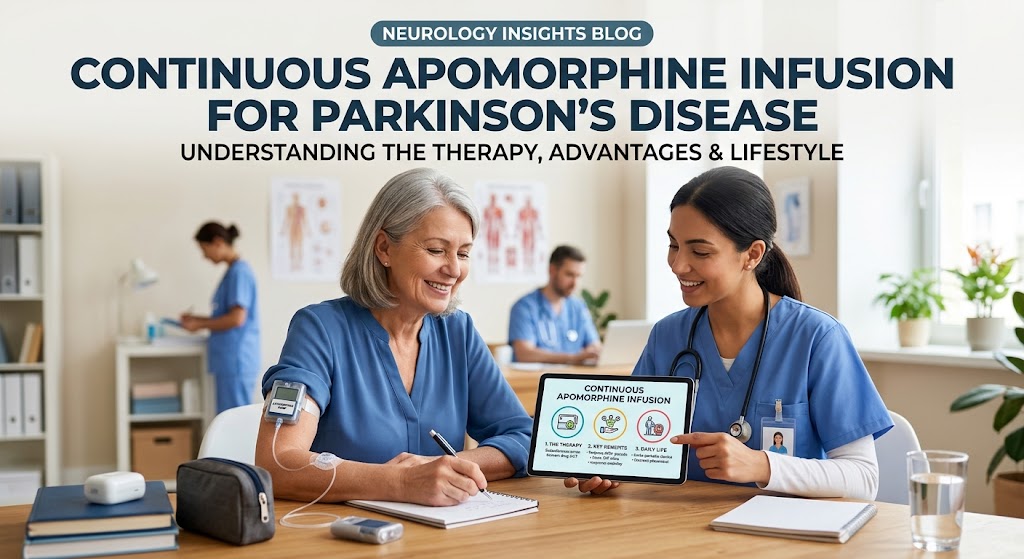
Apomorphine is a dopamine agonist that can be delivered continuously through a small infusion pump in appropriate patients.
Unlike levodopa infusion, apomorphine is a dopamine receptor agonist rather than levodopa itself.
Continuous delivery may help reduce unpredictable fluctuations in some people with advanced Parkinson’s disease.
Possible side effects include:
- Nausea
- Low blood pressure
- Sleepiness
- Injection-site reactions
- Confusion or hallucinations in susceptible individuals
- Impulse-control problems
Because of these potential effects, careful medical supervision is required.
4. MRI-Guided Focused Ultrasound

Click Here To Watch Video to Treat Parkinson’s Disease Naturally!..
Focused ultrasound is a non-invasive procedure that uses concentrated ultrasound energy to create a precisely targeted lesion in a specific area of the brain.
MRI is used to identify and monitor the treatment area.
Unlike DBS, focused ultrasound does not require implanted electrodes or a pulse generator.
Depending on the specific indication and regulatory approvals in a patient’s location, focused ultrasound may be used to treat certain Parkinson’s symptoms, particularly medication-resistant tremor.
Potential Advantages
Focused ultrasound may offer:
- No implanted brain hardware
- No implanted battery
- No stimulation programming
- Incision-free treatment
Limitations
Focused ultrasound is not appropriate for everyone.
It is also different from DBS because the treatment creates a lesion rather than delivering adjustable electrical stimulation.
The effects may therefore be less adjustable than DBS.
Potential adverse effects can include:
- Balance problems
- Numbness
- Tingling
- Weakness
- Speech difficulties
- Gait problems
- Headache or dizziness
Patient selection is particularly important.
5. Medication Optimization Before Advanced Therapy
Click Here To Watch Video to Treat Parkinson’s Disease Naturally!..
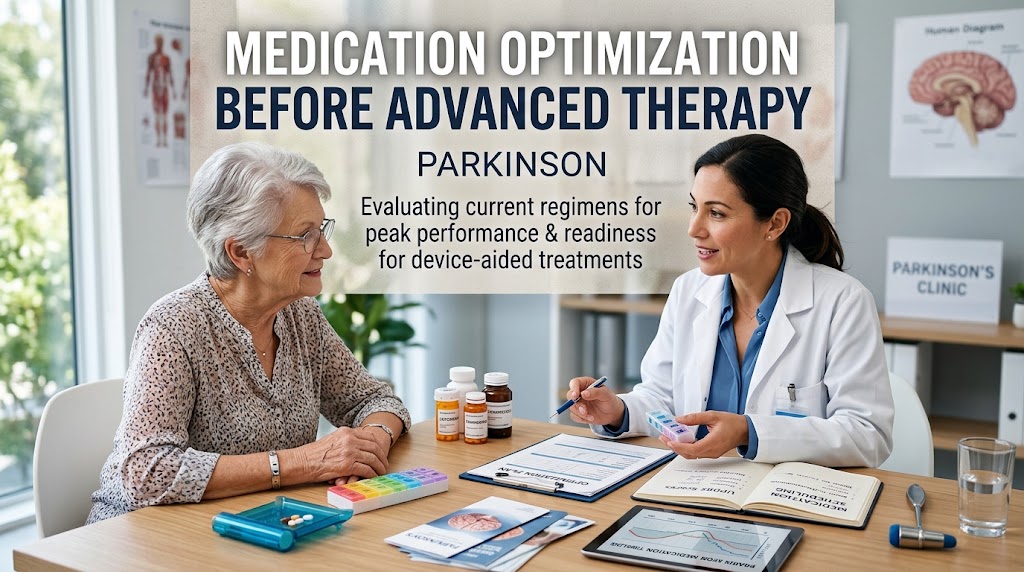
Before moving to an advanced treatment, doctors often make sure conventional treatment has been optimized.
Medication adjustments may involve:
- Changing levodopa timing
- Adjusting individual doses
- Using extended-release formulations
- Adding medications that extend levodopa effects
- Treating dyskinesia
- Addressing specific non-motor symptoms
In some cases, these adjustments can significantly improve symptom control.
Advanced treatment is generally considered when medication optimization is no longer sufficient or causes troublesome complications.
Advanced Treatment for Motor Fluctuations
Motor fluctuations occur when Parkinson’s symptoms vary throughout the day.
A person may feel relatively mobile after taking medication and then experience increasing stiffness or slowness as the medication wears off.
Advanced therapies can provide more continuous treatment.
Options may include:
- DBS
- Levodopa infusion
- Continuous apomorphine infusion
- Medication adjustments
Keeping a symptom diary can help identify patterns.
Record:
- Medication times
- Meals
- “On” periods
- “Off” periods
- Dyskinesia
- Tremor
- Walking problems
- Other symptoms
This information can help your specialist determine whether advanced therapy should be considered.
Advanced Treatment for Parkinson’s Dyskinesia
Dyskinesia refers to involuntary, often twisting or flowing movements that may develop in people receiving long-term levodopa therapy.
Treatment may include medication adjustments and, when appropriate, advanced therapies.
DBS can reduce medication-related motor complications in appropriately selected patients.
Levodopa infusion may also help by producing more consistent medication delivery.
Some patients may receive medication specifically intended to reduce dyskinesia.
The best approach depends on the timing and severity of dyskinesia and the relationship between dyskinesia and medication levels.
Who May Be a Candidate for Advanced Parkinson’s Treatment?
There is no single checklist that makes someone automatically eligible.
Doctors may consider:
Symptom Pattern
Is the main problem tremor, wearing off, dyskinesia, or another motor complication?
Medication Response
Does levodopa still provide meaningful improvement?
Overall Health
Can the patient safely undergo surgery or another procedure?
Cognitive Function
Cognitive impairment can influence whether certain treatments are appropriate.
Psychiatric Symptoms
Significant uncontrolled psychiatric symptoms may require careful assessment before some advanced treatments.
Patient Goals
Treatment should reflect what the person wants to improve, such as walking, tremor, medication consistency, independence, or time spent in the “on” state.
DBS vs. Focused Ultrasound vs. Infusion Therapy
Click Here To Watch Video to Treat Parkinson’s Disease Naturally!..
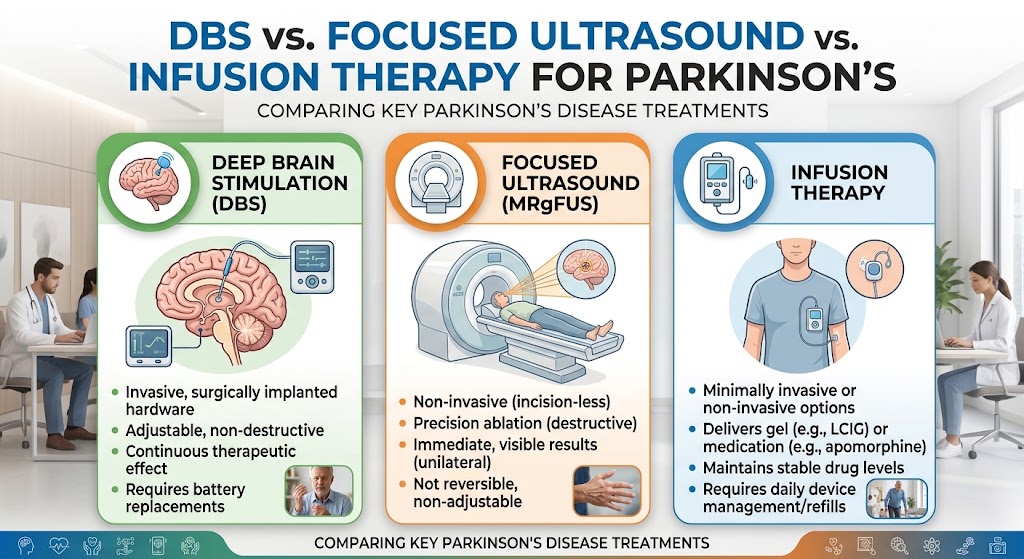
These treatments work differently.
| Treatment | How It Works | Common Purpose |
|---|---|---|
| DBS | Electrical stimulation of targeted brain circuits | Tremor, rigidity, bradykinesia, fluctuations, dyskinesia |
| Focused ultrasound | Creates a targeted brain lesion | Selected medication-resistant symptoms, including certain tremor indications |
| Levodopa infusion | Continuous delivery of levodopa-based medication | Motor fluctuations and off time |
| Apomorphine infusion | Continuous dopamine-receptor stimulation | Motor fluctuations and off episodes |
The “right” treatment cannot be determined simply by comparing these options. Each has different eligibility requirements, benefits, limitations, risks, and practical considerations.
What Happens Before an Advanced Treatment?
Evaluation may involve several steps.
Neurological Assessment
A movement-disorder specialist evaluates symptoms and medication response.
Medication Review
Your current Parkinson’s medications and their effects are reviewed.
Imaging
Depending on the treatment, brain imaging may be required.
Cognitive and Psychological Assessment
For certain advanced treatments, doctors may assess memory, thinking, mood, and other factors.
Physical Therapy Assessment
Mobility, gait, balance, and fall risk may be evaluated.
Treatment Planning
The medical team discusses expected benefits, risks, alternatives, and practical requirements.
Life After Advanced Parkinson’s Treatment
Advanced treatment does not mean Parkinson’s disease disappears.
People may still need:
- Parkinson’s medications
- Exercise
- Physical therapy
- Occupational therapy
- Speech therapy
- Regular neurological appointments
- Nutrition support
- Management of non-motor symptoms
After DBS, programming appointments may be necessary to optimize stimulation.
Infusion therapies require pump or device management.
Focused ultrasound patients may require follow-up to monitor symptom response and possible side effects.
Long-term follow-up remains an important part of Parkinson’s care.
Emerging Parkinson’s Treatments
Researchers continue to investigate new approaches to Parkinson’s disease.
Areas of research include:
- Adaptive DBS
- New infusion technologies
- Cell-based therapies
- Gene therapies
- Alpha-synuclein-targeting treatments
- Neuroprotective strategies
- New drug-delivery systems
- Biomarker-guided treatment
Many of these approaches remain experimental or are being evaluated in clinical trials.
Patients should distinguish between an approved treatment and a treatment still under investigation.
Frequently Asked Questions
What is the most advanced treatment for Parkinson’s disease?
There is no single advanced treatment that is appropriate for everyone. DBS, infusion therapies, and focused ultrasound are different approaches used for selected patients.
When should I consider advanced Parkinson’s treatment?
It may be discussed when optimized medications no longer provide adequate symptom control or when wearing off, dyskinesia, tremor, or other motor complications significantly affect daily life.
Does DBS cure Parkinson’s disease?
No. DBS can improve certain Parkinson’s symptoms but does not cure the disease or stop its underlying progression.
Is focused ultrasound better than DBS?
These treatments work differently and have different eligibility requirements, benefits, risks, and limitations. A specialist can determine which options are appropriate for an individual patient.
Can advanced treatment reduce Parkinson’s medications?
Some treatments may allow medication reduction in selected patients, but this varies. Medication changes should always be made under medical supervision.
Are advanced Parkinson’s treatments safe?
Every advanced treatment has potential risks. Safety depends on the treatment, patient’s health, eligibility, procedure, and experience of the treating team.
Conclusion
Advanced treatments for Parkinson’s disease can provide additional options when conventional medications no longer offer consistent symptom control.
Deep brain stimulation can deliver adjustable electrical stimulation to movement-related brain circuits. Levodopa and apomorphine infusion therapies can provide more continuous medication delivery. MRI-guided focused ultrasound can target selected brain regions without implanted hardware and is used for specific indications.
These treatments are not cures, and none is appropriate for every person with Parkinson’s disease.
The decision to consider advanced therapy should be based on symptom patterns, medication response, overall health, cognitive and psychological factors, treatment goals, and a detailed specialist evaluation.
If Parkinson’s symptoms are becoming increasingly difficult to control despite medication adjustments, discuss advanced treatment options with a neurologist or movement-disorder specialist. A personalized assessment can help determine which treatments, if any, are appropriate for your situation.