
Living with Parkinson’s disease can bring changes to movement, sleep, energy, digestion, mood, communication, and everyday activities. While lifestyle changes cannot cure Parkinson’s disease or stop its progression, practical adjustments can help people manage symptoms, maintain independence, and support overall well-being.
The most useful Parkinson’s disease lifestyle changes are usually realistic habits that can be incorporated into an individual’s existing routine. Exercise, healthy nutrition, good sleep, medication organization, fall prevention, and social connection can all play an important role in daily living.
Everyone experiences Parkinson’s differently. A lifestyle plan should therefore be personalized according to symptoms, medications, mobility, other medical conditions, and personal goals.
Here are 10 lifestyle changes that may help support daily living with Parkinson’s disease.

Click Here To Watch Video to Treat Parkinson’s Disease Naturally!..
1. Make Regular Exercise Part of Your Routine
Exercise is one of the most important lifestyle strategies for people with Parkinson’s disease.
Regular physical activity can help support:
- Strength
- Flexibility
- Balance
- Cardiovascular fitness
- Mobility
- Posture
- Energy
- Overall quality of life
Exercise does not replace Parkinson’s medication, but maintaining physical activity can be an important part of comprehensive care.
Useful activities may include walking, cycling, swimming, dancing, strength training, stretching, tai chi, and balance exercises.
How to Start
You do not necessarily need a complicated workout program.
Start with activities that match your current ability and gradually build consistency. A physical therapist familiar with Parkinson’s disease can help develop an individualized exercise program.
If you have significant balance problems, freezing, or a history of falls, ask your healthcare professional about safe exercise options before starting a new routine.
2. Follow a Balanced Eating Pattern
Nutrition is another important part of Parkinson’s lifestyle management.
A healthy eating pattern can provide nutrients needed for muscles, bones, digestion, energy, and general health.
Focus on foods such as:
- Vegetables
- Fruits
- Whole grains
- Beans and lentils
- Nuts and seeds
- Fish
- Eggs
- Lean proteins
- Healthy fats
Fiber-rich foods and adequate fluids may be particularly helpful for people experiencing constipation.
Pay Attention to Protein and Levodopa
People taking levodopa may notice that high-protein meals affect how well their medication works. Protein can compete with levodopa for absorption and transport in some people.
This does not mean protein should be avoided.
Instead, ask your doctor or dietitian whether meal timing or protein distribution throughout the day could improve medication effectiveness.
Never make major dietary changes or change medication timing without professional guidance.
3. Improve Sleep Habits
Sleep problems are common in Parkinson’s disease and may include insomnia, frequent nighttime waking, vivid dreams, restless legs, excessive daytime sleepiness, or REM sleep behavior disorder.
Poor sleep can contribute to:
- Daytime fatigue
- Difficulty concentrating
- Irritability
- Reduced motivation
- Greater difficulty managing movement symptoms
Developing consistent sleep habits may help.
Try to:
- Go to bed and wake up at similar times.
- Keep your bedroom comfortable and quiet.
- Limit stimulating activities before bedtime.
- Get regular daytime physical activity.
- Avoid excessive caffeine later in the day.
- Discuss persistent sleep problems with your healthcare professional.
If you physically act out dreams by shouting, kicking, punching, or moving violently during sleep, tell your doctor. REM sleep behavior disorder can occur with Parkinson’s disease and should be evaluated.
4. Create a Reliable Medication Routine
Taking Parkinson’s medications at the prescribed times can be an important part of maintaining consistent symptom control.
As Parkinson’s progresses, medication schedules can become more complicated. Missing doses or taking medications at inconsistent times may affect symptom control for some people.
Practical strategies include:
- Use a pill organizer.
- Set alarms on your phone.
- Keep a written medication schedule.
- Maintain an updated medication list.
- Ask your pharmacist about medication interactions.
- Record changes in symptoms after medication doses.
Some people find it useful to keep a Parkinson’s symptom diary.
Record when medications are taken and note periods of good mobility, wearing off, tremor, stiffness, dyskinesia, or other symptoms.
This information can help your healthcare professional adjust treatment when appropriate.
Do not stop Parkinson’s medications suddenly unless specifically instructed by your healthcare team.
5. Make Your Home Safer
Parkinson’s disease can increase the risk of falls, particularly when balance problems, freezing, dizziness, or medication-related blood pressure changes are present.
Simple changes around the home can reduce hazards.
Consider:
- Removing loose rugs.
- Keeping walking areas clear.
- Improving lighting.
- Installing grab bars where appropriate.
- Using handrails on stairs.
- Keeping frequently used objects within easy reach.
- Wearing supportive footwear.
- Using mobility aids when recommended.
Bathroom safety deserves particular attention because wet surfaces can increase fall risk.
An occupational therapist can assess the home and recommend modifications based on individual needs.
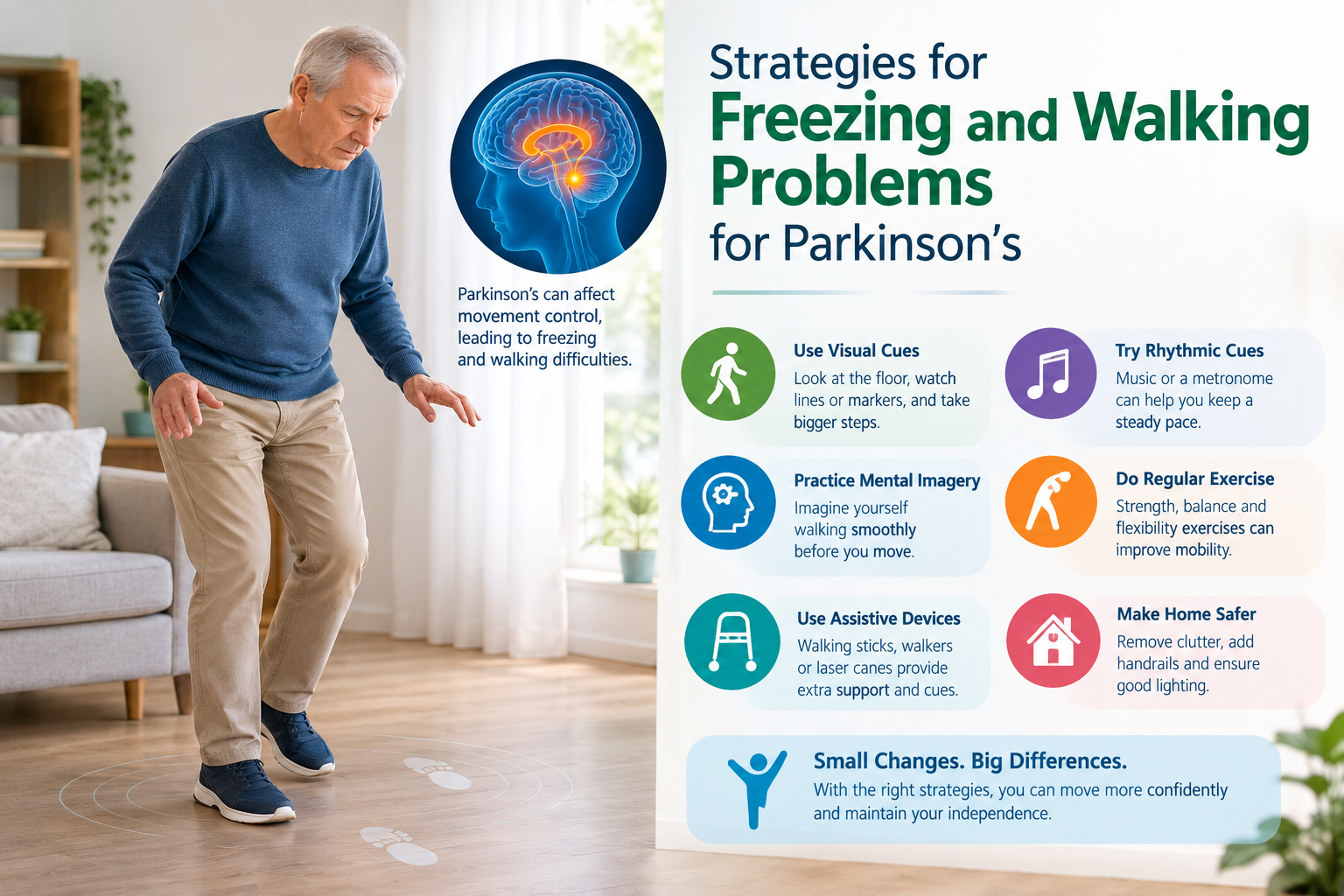
6. Use Strategies for Freezing and Walking Problems
Click Here To Watch Video to Treat Parkinson’s Disease Naturally!..
Freezing of gait can make it difficult to start walking or move through doorways, narrow spaces, or crowded areas.
Some people find external cues helpful.
Strategies may include:
- Counting steps aloud.
- Listening to rhythmic cues.
- Visualizing stepping over a line.
- Using floor markings.
- Shifting weight from one side to the other before stepping.
- Avoiding rushing.
A physical therapist can teach specific techniques for freezing and gait problems.
If freezing occurs frequently or causes falls, discuss it with your healthcare professional because medication adjustments, therapy, or assistive devices may sometimes help.
7. Protect Your Mental and Emotional Well-Being
Parkinson’s affects more than movement.
Depression, anxiety, apathy, frustration, and changes in motivation can occur.
Emotional symptoms can make it harder to exercise, socialize, maintain routines, or manage other aspects of treatment.
Lifestyle strategies that may support emotional well-being include:
- Staying socially connected.
- Maintaining hobbies.
- Exercising regularly.
- Spending time outdoors when possible.
- Practicing relaxation techniques.
- Maintaining meaningful daily activities.
- Asking for professional support when needed.
Do not assume persistent depression or anxiety is simply an unavoidable part of Parkinson’s.
Tell your healthcare professional about significant changes in mood, motivation, or behavior. Treatment options may include counseling, medication, exercise, or other supportive approaches.
Social isolation can affect quality of life.
Maintaining relationships with family members, friends, community groups, and Parkinson’s support organizations can provide emotional and practical support.
Mental activity can also be incorporated into everyday life.
Examples include:
- Reading
- Puzzles
- Learning new skills
- Playing music
- Writing
- Art
- Conversation
- Games
- Social activities
These activities are not proven to prevent Parkinson’s-related cognitive changes, but staying engaged can support overall mental and social well-being.
If you notice persistent memory, attention, reasoning, or other cognitive changes, discuss them with your healthcare professional.
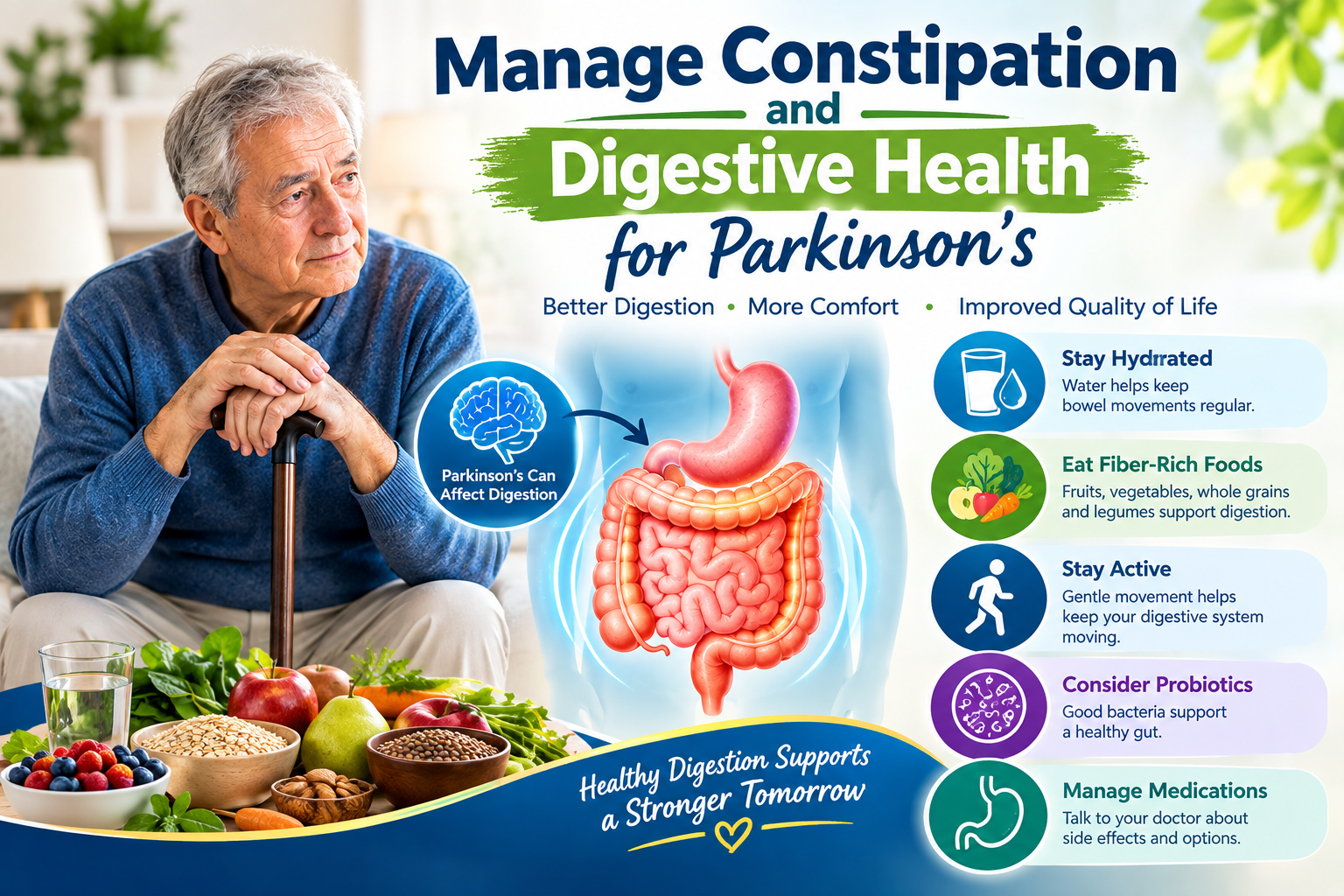
9. Manage Constipation and Digestive Health
Click Here To Watch Video to Treat Parkinson’s Disease Naturally!..
Constipation is a common non-motor symptom of Parkinson’s disease.
Lifestyle strategies can include:
- Eating fiber-rich foods.
- Drinking adequate fluids.
- Exercising regularly.
- Maintaining consistent bathroom habits.
- Including fruits and vegetables in meals.
- Discussing persistent constipation with your doctor.
Foods containing fiber include whole grains, beans, lentils, vegetables, fruits, nuts, and seeds.
Increase fiber gradually if your current diet contains very little. A sudden increase can cause bloating or discomfort.
If constipation becomes severe or is accompanied by significant abdominal pain, vomiting, blood in the stool, or inability to pass stool or gas, seek medical attention.
10. Build a Support Team and Plan Ahead
Parkinson’s care often involves more than one healthcare professional.
Depending on symptoms and needs, your care team may include:
- Neurologist
- Movement-disorder specialist
- Primary-care physician
- Physical therapist
- Occupational therapist
- Speech-language pathologist
- Registered dietitian
- Pharmacist
- Mental health professional
Each professional can address different aspects of daily living.
For example, physical therapy can focus on walking and balance, occupational therapy can address daily activities and home safety, and speech therapy can help with communication and swallowing.
Keep Important Information Organized
Maintain an up-to-date record of:
- Medications
- Allergies
- Healthcare contacts
- Medical conditions
- Previous procedures
- Important test results
- Emergency contacts
As Parkinson’s progresses, planning ahead can also help you communicate your preferences and prepare for potential changes in mobility, transportation, work, or daily activities.
How to Make Parkinson’s Lifestyle Changes Sustainable

Click Here To Watch Video to Treat Parkinson’s Disease Naturally!..
Trying to change everything at once can feel overwhelming.
Instead, focus on one or two habits at a time.
For example:
Week 1: Establish a consistent medication and sleep schedule.
Week 2: Add a short daily walk or another appropriate activity.
Week 3: Improve one meal each day by adding vegetables, whole grains, or another nutrient-rich food.
Week 4: Review home safety and remove potential fall hazards.
Small improvements that become consistent habits can be more practical than attempting a complete lifestyle overhaul overnight.
When Should You Talk to Your Healthcare Team?

Click Here To Watch Video to Treat Parkinson’s Disease Naturally!..
Lifestyle changes are helpful, but new or worsening symptoms should not automatically be managed through lifestyle adjustments alone.
Contact your healthcare professional if you experience:
- Increasing falls
- New or worsening tremor
- Frequent freezing
- Significant medication wearing off
- Troublesome dyskinesia
- Difficulty swallowing
- Unintentional weight loss
- Persistent constipation
- Major sleep changes
- Depression or anxiety
- New confusion or cognitive changes
- Dizziness or fainting
These symptoms may require medical evaluation or changes to your treatment plan.
Frequently Asked Questions
Can lifestyle changes cure Parkinson’s disease?
No. There is currently no lifestyle change or diet proven to cure Parkinson’s disease. Healthy habits can support symptom management, physical function, and overall well-being.
What is the most important lifestyle change for Parkinson’s?
Regular physical activity is one of the most important lifestyle strategies. However, the most appropriate exercise depends on a person’s symptoms, mobility, fitness, and other health conditions.
Should people with Parkinson’s avoid exercise?
Generally, exercise is encouraged for people with Parkinson’s, provided it is appropriate and safe for their abilities. People with significant balance problems or other medical concerns should seek professional guidance.
Can diet improve Parkinson’s symptoms?
A balanced diet supports general health and can help address issues such as constipation, weight changes, and nutritional deficiencies. Meal timing may also matter for some people taking levodopa.
How can I reduce falls at home?
Remove trip hazards, improve lighting, use handrails and grab bars where appropriate, keep pathways clear, and discuss mobility aids or home modifications with a physical or occupational therapist.
Can stress make Parkinson’s symptoms worse?
Stress and anxiety can make some Parkinson’s symptoms feel more difficult to manage, although stress is not considered a primary cause of Parkinson’s disease. Relaxation strategies and appropriate professional support may help.
Conclusion
Making thoughtful Parkinson’s disease lifestyle changes can help people manage everyday challenges while supporting overall health and independence. Regular exercise, nutritious eating, good sleep, medication organization, fall prevention, social engagement, digestive-health strategies, and professional support can all contribute to a comprehensive approach to living with Parkinson’s disease.
The goal is not to create a perfect routine. Instead, focus on practical habits that fit your abilities, preferences, medications, and daily responsibilities.
Parkinson’s symptoms can change over time, so lifestyle strategies may need to change as well. Working with your healthcare team can help ensure that exercise, nutrition, medication timing, home modifications, and other strategies remain safe and appropriate.
Lifestyle changes are an important complement to medical treatment—but they should work with, rather than replace, an individualized Parkinson’s treatment plan.