Parkinson’s disease (PD) can affect much more than movement. Stiffness, tremor, slowed movement, balance problems, posture changes, fatigue, anxiety, sleep difficulties, and reduced flexibility can all interfere with everyday activities.
Alongside prescribed medications, physical therapy, and other treatments, regular exercise is an important part of Parkinson’s management. One gentle option that many people with Parkinson’s may find useful is yoga.
But can yoga actually help Parkinson’s disease symptoms?
Research suggests that yoga may help improve certain motor and non-motor symptoms, particularly flexibility, balance, posture, mobility, relaxation, and quality of life. However, yoga is not a cure for Parkinson’s and should be considered a complementary activity rather than a replacement for medical treatment. (PubMed)
In this article, we’ll look at what the research says, potential benefits, safety considerations, and several easy yoga exercises that can be adapted for people living with Parkinson’s.
What Is Yoga?
Yoga is a mind-body practice that combines physical movements or poses, breathing techniques, body awareness, and relaxation.
Unlike some forms of exercise that focus primarily on cardiovascular fitness or muscle strength, yoga can work on several areas simultaneously:
- Flexibility
- Posture
- Balance
- Muscle control
- Body awareness
- Breathing
- Relaxation
- Mindfulness
Yoga is also highly adaptable. Some poses can be performed standing, sitting on a chair, or lying down, depending on a person’s abilities.
The Parkinson’s Foundation notes that yoga can increase flexibility, breathing and posture awareness and help with relaxation and stress reduction. Many poses can be modified according to individual needs. (Parkinson’s Foundation)
Can Yoga Help Parkinson’s Disease Symptoms?
Yes, potentially—but the benefits vary from person to person.
Research into yoga for Parkinson’s disease is still developing, but studies have produced encouraging findings.
A systematic review and meta-analysis examined 14 randomized controlled trials involving yoga and Parkinson’s disease. The researchers concluded that yoga appeared to be a safe and feasible rehabilitation approach for people with mild to moderate Parkinson’s disease. The evidence also suggested potential physical and psychological benefits, with some evidence of improvement in motor symptoms compared with passive control groups. (PubMed)
Importantly, researchers have not established yoga as a treatment that stops or reverses Parkinson’s disease.
Instead, yoga may be useful as one component of a broader exercise and rehabilitation program.
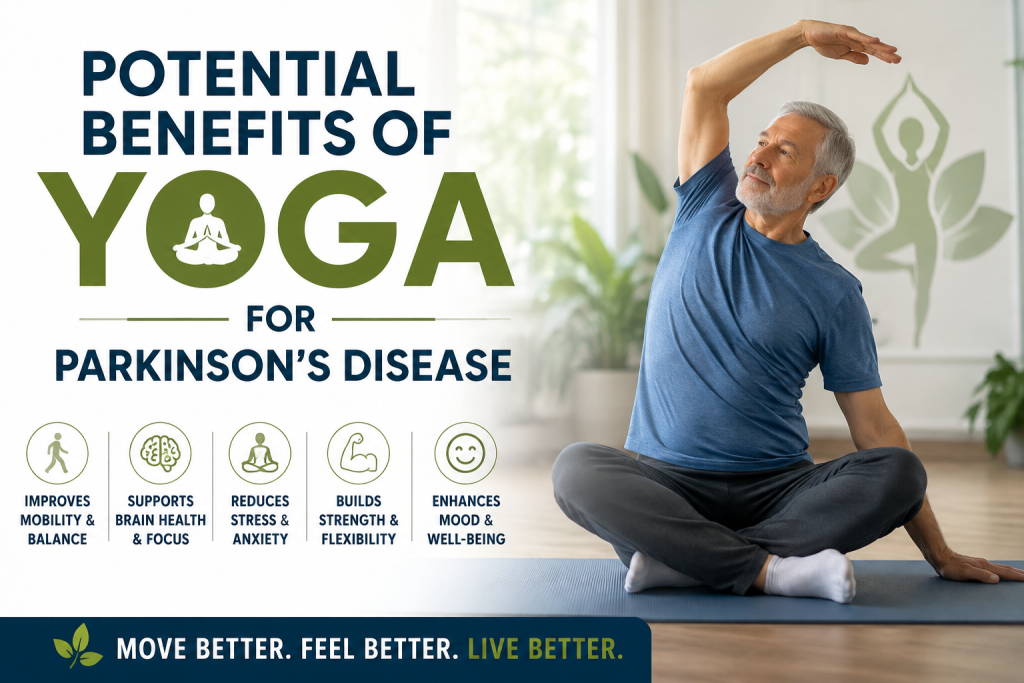
Potential Benefits of Yoga for Parkinson’s Disease
Click Here To Watch Video to Treat Parkinson’s Disease Naturally!..
1. May Improve Flexibility
Muscle stiffness and rigidity can make movement more difficult for people with Parkinson’s.
Gentle yoga stretches may help maintain joint mobility and flexibility.
Regular stretching can be particularly useful for areas that commonly become tight, including:
- Neck
- Shoulders
- Chest
- Hips
- Hamstrings
- Calves
- Lower back
Improving flexibility may make everyday movements—such as getting dressed, turning in bed, reaching for objects, or standing up—more comfortable.
The Parkinson’s Foundation includes stretching as an important component of an exercise program for people with Parkinson’s. (Parkinson’s Foundation)
2. May Support Better Posture
Parkinson’s disease can contribute to changes in posture, including a tendency to bend forward.
Yoga encourages awareness of body alignment and controlled movement.
Simple exercises that gently open the chest and strengthen the muscles supporting the trunk may help people become more aware of their posture.
Yoga should not be expected to permanently correct Parkinson’s-related postural changes, but incorporating posture-focused movements into an exercise routine may help maintain mobility and body awareness.
3. May Help With Balance
Balance problems are an important concern for many people with Parkinson’s.
Yoga can incorporate:
- Weight shifting
- Controlled movements
- Core strengthening
- Standing poses
- Body awareness
- Changes in position
These activities can challenge balance in a controlled environment.
However, standing yoga poses can increase fall risk for someone who already has significant balance problems. In that situation, seated or supported exercises may be more appropriate.
Current Parkinson’s exercise recommendations specifically include balance, agility and multitasking activities, with yoga listed among examples of activities that can address these areas. (Parkinson’s Foundation)
4. May Help Reduce Stress and Anxiety
Living with a chronic neurological condition can be stressful.
Yoga combines movement with controlled breathing and relaxation, which may provide an opportunity to slow down and reduce physical tension.
The Parkinson’s Foundation notes that yoga and similar mind-body practices can support relaxation, body awareness, posture, flexibility, balance, core strength, and breath control. (Parkinson’s Foundation)
This doesn’t mean yoga treats anxiety or depression on its own. People experiencing significant anxiety, depression, or other mental-health symptoms should discuss them with their healthcare professional.
5. May Support Quality of Life
Regular physical activity is strongly encouraged for people with Parkinson’s.
The Parkinson’s Foundation reports that exercise can benefit mobility, flexibility, balance, coordination, sleep, mood, and other aspects of quality of life. (Parkinson’s Foundation)
Yoga may be particularly attractive because it can be adapted to different fitness levels and performed at home, in a group, or with an instructor.
Finding an activity that is enjoyable can make it easier to remain physically active consistently.
What Does the Research Say About Yoga and Parkinson’s?
The research is promising but should be interpreted realistically.
A systematic review of randomized controlled trials found that yoga was generally safe and well accepted among people with mild to moderate Parkinson’s disease. The review reported preliminary evidence of physical and psychological benefits and found that yoga may have comparable effects to exercise in some outcomes. (PubMed)
More recent research has also examined yoga and dance for non-motor symptoms of Parkinson’s disease, including anxiety, depression, cognition, self-esteem, and bladder or bowel symptoms. This area of research is still developing, so stronger and larger studies are needed before firm conclusions can be made about specific non-motor symptoms. (PubMed)
The important takeaway
Yoga appears to be a promising complementary exercise, but it should not be presented as a cure for Parkinson’s.
It also shouldn’t replace:
- Parkinson’s medications
- Physical therapy
- Occupational therapy
- Speech therapy
- Neurology appointments
- Fall-prevention strategies
- Other treatments recommended by your healthcare team
7 Easy Yoga Exercises to Try
The following movements are examples of gentle exercises that may be adapted for people with Parkinson’s. Use a sturdy chair or another stable support when necessary, and stop if you experience pain, dizziness, unusual shortness of breath, or significant instability.
1. Seated Deep Breathing
This is a simple way to begin.

Click Here To Watch Video to Treat Parkinson’s Disease Naturally!..
How to do it:
- Sit upright in a sturdy chair.
- Place your feet comfortably on the floor.
- Relax your shoulders.
- Slowly inhale through your nose.
- Gently expand your chest and abdomen.
- Slowly exhale.
- Repeat for 5–10 breaths.
Focus on keeping the shoulders relaxed rather than lifting them toward your ears.
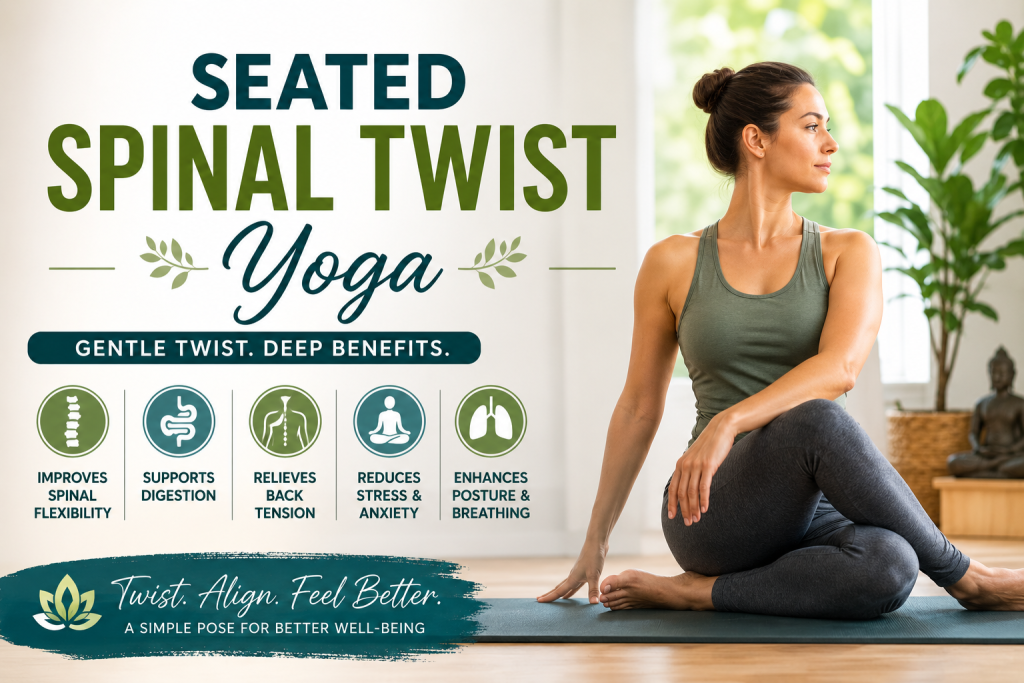
2. Seated Spinal Twist
Click Here To Watch Video to Treat Parkinson’s Disease Naturally!..
This gentle movement can encourage trunk mobility.
How to do it:
- Sit near the front of a sturdy chair.
- Keep both feet flat on the floor.
- Sit as tall as comfortably possible.
- Slowly rotate your upper body toward one side.
- Avoid forcing the movement.
- Return to the center.
- Repeat on the opposite side.
Perform several gentle repetitions on each side.
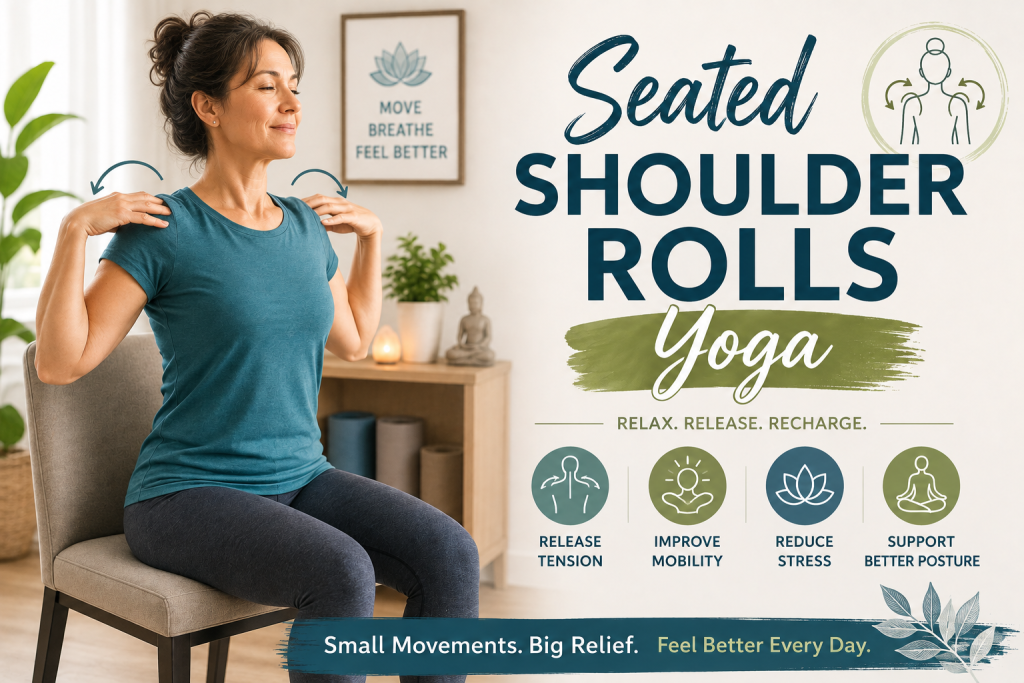
3. Seated Shoulder Rolls
Shoulder movement can help reduce feelings of upper-body tightness.
Click Here To Watch Video to Treat Parkinson’s Disease Naturally!..
How to do it:
- Sit comfortably.
- Slowly lift your shoulders toward your ears.
- Move them backward and down.
- Relax.
- Repeat several times.
- Reverse the direction if comfortable.
Keep the movement slow and controlled.
4. Cat-Cow Variation
A traditional cat-cow movement is performed on the hands and knees, but a chair version may be safer for some people with Parkinson’s.

Click Here To Watch Video to Treat Parkinson’s Disease Naturally!..
Chair version:
- Sit upright.
- Place your hands on your thighs.
- Slowly arch your upper back while gently looking downward.
- Then return toward an upright position and gently open your chest.
- Move slowly with your breathing.
This can provide gentle movement through the spine.
5. Seated Side Stretch

Click Here To Watch Video to Treat Parkinson’s Disease Naturally!..
This exercise targets the sides of the torso and can encourage flexibility.
How to do it:
- Sit upright.
- Place one hand beside you or on the chair.
- Raise the opposite arm.
- Gently lean toward the supporting side.
- Hold for several comfortable breaths.
- Return to center.
- Repeat on the other side.
Never force the stretch.
6. Supported Standing Mountain Pose

Click Here To Watch Video to Treat Parkinson’s Disease Naturally!..
This exercise focuses on posture and body awareness.
How to do it:
- Stand behind a sturdy chair or near a stable support.
- Place your feet comfortably apart.
- Keep your knees relaxed.
- Gently lengthen your spine.
- Let your shoulders relax.
- Take several slow breaths.
- Hold the chair if needed.
If standing balance is poor, perform a similar posture exercise while seated.
7. Gentle Seated Forward Stretch
This can provide a gentle stretch through the back and legs.

Click Here To Watch Video to Treat Parkinson’s Disease Naturally!..
How to do it:
- Sit toward the front of a sturdy chair.
- Keep your feet comfortably apart.
- Slowly lean forward from the hips.
- Allow your arms to relax toward your legs.
- Keep the movement comfortable.
- Slowly return to an upright position.
Avoid this exercise if your healthcare professional has advised you to avoid forward bending.
How Often Should You Do Yoga?
There isn’t one universal yoga schedule for everyone with Parkinson’s.
The goal should be consistency rather than perfection.
Current Parkinson’s exercise recommendations emphasize several exercise categories, including aerobic activity, strength training, stretching, and balance/agility/multitasking. The updated recommendations include yoga among activities that can contribute to balance, agility and multitasking training. (Parkinson’s Foundation)
A beginner might start with:
- 5–10 minutes: gentle movements and breathing
- 10–20 minutes: a comfortable yoga session
- Several days per week: depending on ability and medical advice
Over time, yoga can be combined with walking, cycling, resistance exercises, balance training, and other activities.
The Parkinson’s Foundation emphasizes that there is no single exercise prescription suitable for everyone with Parkinson’s. The program should be adapted to the person’s symptoms and challenges. (Parkinson’s Foundation)
Yoga Safety Tips for People With Parkinson’s
Safety is especially important when balance or mobility is affected.

Click Here To Watch Video to Treat Parkinson’s Disease Naturally!..
Keep these tips in mind:
- Start with simple movements.
- Use a sturdy chair or wall for support.
- Avoid difficult balancing poses when practicing alone.
- Consider chair yoga if standing is difficult.
- Move slowly between positions.
- Avoid forcing stiff joints.
- Stop if you feel pain or significant dizziness.
- Keep your exercise area free of obstacles.
- Wear stable footwear when appropriate.
- Consider practicing during a medication “on” period if recommended by your healthcare professional.
- Work with a physical therapist familiar with Parkinson’s when possible.
The Parkinson’s Foundation recommends consulting a physician and, when available, a physical therapist experienced with Parkinson’s before starting a new exercise program. (Parkinson’s Foundation)
Should You Try Yoga If You Have Parkinson’s Disease?
For many people, gentle, appropriately modified yoga may be a useful addition to a Parkinson’s exercise routine.
It can provide several things that are valuable in Parkinson’s management:
- Gentle stretching
- Flexibility work
- Posture awareness
- Controlled movement
- Balance practice
- Breathing exercises
- Relaxation
- Mind-body awareness
But yoga shouldn’t be viewed as a standalone Parkinson’s treatment.
A well-rounded exercise program is generally more useful than relying on one activity. Current recommendations emphasize aerobic exercise, strengthening, stretching, and balance/agility/multitasking. (Parkinson’s Foundation)
Final Thoughts
Can yoga help Parkinson’s disease symptoms?
The evidence suggests that it may help, particularly with areas such as flexibility, posture, balance, mobility, relaxation, and some aspects of psychological well-being. Research has found yoga to be a promising and generally feasible complementary activity, particularly for people with mild to moderate Parkinson’s disease. (PubMed)
However, yoga does not cure Parkinson’s disease, and it should not replace prescribed treatment.
The best approach is to make movement a regular part of your overall Parkinson’s management plan. Start at an appropriate level, modify exercises when necessary, and work with your healthcare team to determine which activities are safest for you.
Even a few gentle movements each day can be a meaningful step toward staying active, flexible, and confident.
Important: This article is for educational purposes only and is not medical advice. People with Parkinson’s disease should discuss new exercise programs with their doctor or a qualified physical therapist, particularly if they have significant balance problems, frequent falls, dizziness, or other medical conditions.